How Constructive Notice Shapes Spill Claims Against Stores
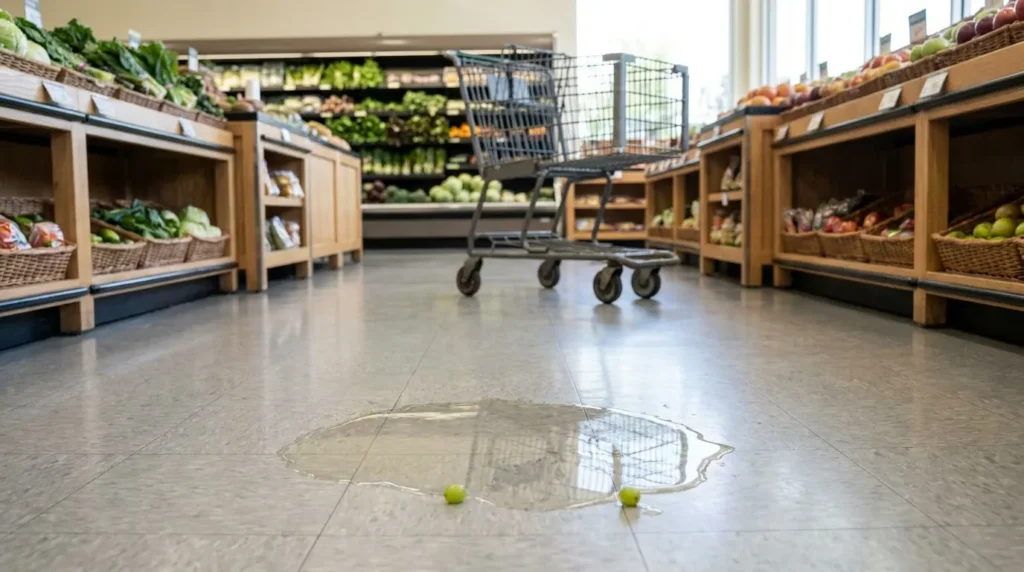
Key Takeaways: Yes, a store in Orange County can potentially be held liable for a spill it never checked for. California law generally does not require proof that an employee actually saw the hazard. Under the constructive notice doctrine and Ortega v. Kmart, injured shoppers may use circumstantial evidence to show a spill sat long enough that a reasonable inspection would have found it.
Sweep logs, surveillance video, photos, and witness statements often decide these cases. California’s pure comparative negligence rule means you may still recover even if you were partly at fault, though your share of fault reduces the award. Acting quickly helps preserve evidence, and you must meet the deadlines: generally two years for personal injury claims and often six months to file an administrative claim against a public entity.
Often, yes, a store can be held liable for a spill its employees never saw. California law generally does not require you to prove that a manager or clerk actually knew about the hazard. Under the constructive notice doctrine, a business may be charged with knowledge of a dangerous condition if it existed long enough that a reasonable inspection would have found it.
The California Supreme Court’s decision in Ortega v. Kmart Corp., 26 Cal.4th 1200 (2001), confirms that injured shoppers may prove constructive notice with circumstantial evidence, including proof that the store did not inspect its aisles within a reasonable time. For people hurt in an Orange County slip and fall, this often shifts the question from “who saw the spill” to “did the store inspect reasonably?”
If you were hurt in a grocery store fall in Newport Beach or anywhere in Orange County, you do not have to work out these questions alone. The premises liability team at Bisnar Chase can review your situation, help preserve evidence, and explain your options. Call 800-561-4887 or contact us now to schedule a free consultation.
The Legal Foundation: A Store’s Duty of Ordinary Care
Every California premises liability claim starts with a basic negligence rule. California Civil Code § 1714(a) makes everyone responsible for injuries caused by their “want of ordinary care or skill in the management of his or her property.” Courts have read this statute to require businesses to use reasonable care to keep their premises reasonably safe for customers.
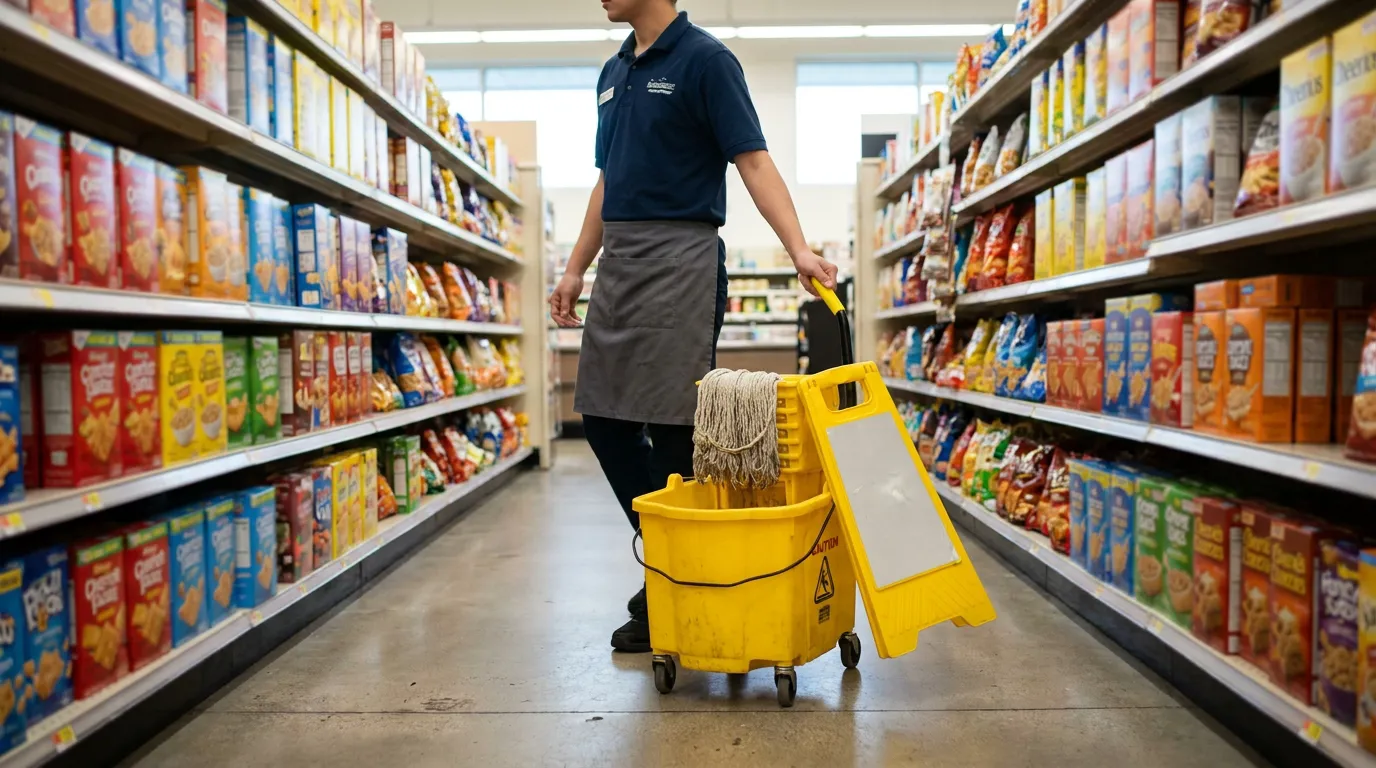
Reasonable care includes a duty to inspect. A store owner is generally responsible, even if they never look for problems. California courts, including the Supreme Court in Ortega, have held that business owners must make reasonable inspections to find hazardous conditions. A store that fails to inspect may be charged with knowledge of what a reasonable inspection would have revealed.
Why This Matters for Store Spill Liability
Spills are often temporary and invisible to the people in charge. A shopper drops a jar of salsa, a freezer leaks, or a customer tracks rainwater down an aisle. The store may argue that no employee saw it, so it cannot be blamed. California’s notice rules may help address that defense. And if the store itself created the hazard, such as a leaking display or an employee mopping, notice generally need not be proven at all.
Constructive Notice Premises Liability California: Actual vs. Constructive Notice
California law recognizes two ways a property owner can be “on notice” of a hazard. Actual notice means the owner knew the condition existed and knew, or should have known, that it was dangerous. Constructive notice means the hazard existed long enough, and was obvious enough, that an owner using reasonable care would have discovered it.
| Type of Notice | What It Means | Typical Example |
|---|---|---|
| Actual notice | The owner knew of the condition and knew or should have known it was dangerous | An employee saw spilled oil and walked past it |
| Constructive notice | The condition existed long enough and was obvious enough that reasonable inspection would have found it | Dried, tracked-through juice sat in an aisle nobody checked for an hour |
The clearest statutory definitions appear in the Government Claims Act. For public property, Government Code § 835.2 defines actual notice in subdivision (a) and constructive notice in subdivision (b). Under § 835.2(b), constructive notice exists when the condition “had existed for such a period of time and was of such an obvious nature” that the entity, using due care, should have discovered it. These statutes apply only to public entities, but they closely track the common-law principles courts apply to private businesses.
What the Statute Says About Inspection Systems
Government Code § 835.2(b) also identifies inspection evidence as central to constructive notice. Courts may consider whether a reasonably adequate inspection system would have discovered the condition, weighing the practicability and cost of inspection against the likelihood and seriousness of the danger. Evidence may also include whether the entity actually maintained and operated its inspection system with due care.
That second point can carry real weight in practice. A written sweep policy that employees ignore may offer little protection. Sweep logs, inspection records, and staffing schedules are often key evidence in Orange County slip and fall claims, which is why our attorneys typically request them early.
What Ortega v. Kmart Changed for Injured Shoppers
Ortega v. Kmart made it more practical for injured customers to prove constructive notice. In that case, a shopper slipped on a puddle of milk, and the store argued he could not show how long the milk had been there. The California Supreme Court held that plaintiffs may prove constructive notice by circumstantial evidence. A jury may infer that a hazard existed long enough to be discovered if the store did not inspect the premises within a reasonable period of time.
Circumstantial evidence can take many forms. Courts may consider the physical condition of the substance, such as whether it was dirty, dried, or marked with cart tracks. Evidence about the store’s inspection practices can matter just as much. Helpful evidence often includes:
- Photos showing footprints, cart tracks, or dried edges in the spill
- Sweep logs or inspection records, or the lack of them
- Testimony about when an employee last walked the aisle
- Surveillance video showing how long the hazard sat untouched
- Witness statements from other shoppers or employees
Ortega did not create automatic liability. The plaintiff still bears the burden of proving the store had notice and failed to use reasonable care. If a store inspected an aisle two minutes before the fall, a court may find it had no fair opportunity to discover the spill.
💡 Pro Tip: Before you leave the store, photograph the substance both up close and from a distance. Texture, footprints, and spread can later help show how long the spill had been there.
How Stores Typically Defend Spill Injury Claims
The most common defense is that the spill happened only moments before the fall. For public entities, Government Code § 835.4(b) provides that an entity is not liable if its actions or failure to act were reasonable, considering the time and opportunity it had to act. Private stores raise similar arguments under general negligence principles. Your evidence about the condition of the spill and the store’s inspection habits is often the best response.
Stores also frequently argue that the shopper was not paying attention. California follows a pure comparative negligence rule. You may still recover damages even if you were partly at fault, but your recovery is reduced by your percentage of fault. A shopper found 20 percent responsible, for example, could still recover 80 percent of their damages.
Building the Elements of Your Claim
A strong claim generally connects several pieces. Under Government Code § 835, public entity liability requires a dangerous condition at the time of injury, proximate causation, a reasonably foreseeable risk of that kind of injury, and either that an employee’s negligence created the condition or that the entity had actual or constructive notice early enough to take protective measures. Private store claims follow a similar logic. To learn more, read our guide on proving a property owner’s negligence.
Protecting Your Rights After an Orange County Grocery Store Fall
What you do in the first hours after a fall can shape your case. Report the incident to a manager and ask for a written incident report. Get medical care promptly, even if your injuries feel minor. Write down the names of witnesses and employees you spoke with.
Evidence held by the store can disappear. Surveillance footage is sometimes recorded over within days or weeks. An attorney may send a preservation letter requesting that the store retain video, sweep logs, and incident reports. Talking with a spill injury claim lawyer early can help protect that evidence.
💡 Pro Tip: Keep the shoes and clothing you wore during the fall in a bag, unwashed. Residue on your soles may help confirm what you slipped on.
Deadlines That Can Affect Your Case
California’s statute of limitations for personal injury is generally two years from the date of injury under Code of Civil Procedure § 335.1. Claims against a public entity generally require a written government claim within six months under Government Code § 911.2 before a lawsuit can be filed. Limited exceptions exist, but they are applied strictly, so please consult an attorney promptly to confirm which deadlines apply to your situation. (Attorney review flag: confirm current deadlines.)
Constructive Notice Premises Liability California Claims Depend on the Details
No two spill cases look the same. A store with a documented, enforced inspection schedule stands in a different position from one with no records at all. Our Newport Beach team regularly hears from injured shoppers who assumed that if no employee saw the spill, they had no claim. In many cases, that assumption is wrong, though every claim depends on its evidence.
Frequently Asked Questions
1. Do I have to prove an employee saw the spill?
No, actual knowledge is generally not required. Under California’s constructive notice doctrine, you may show the hazard existed long enough that a reasonable inspection would have found it. Ortega v. Kmart allows this to be proven with circumstantial evidence.
2. What if I don’t know how long the spill was there?
Many injured shoppers don’t know, and that is common. Evidence such as dried edges, cart tracks, video footage, or a lack of inspection records may allow a jury to infer how long the spill existed.
3. Can I recover if I was looking at my phone?
You may still recover under California’s pure comparative negligence rule. Your damages would be reduced by your share of fault. The store may still bear responsibility for its own failure to inspect.
4. Does a store’s written inspection policy defeat my claim?
Not necessarily. Courts may consider whether the store actually followed its policy. A sweep schedule that employees skipped may help show the store failed to use reasonable care.
5. Are claims against city property handled differently?
Yes, public property claims fall under the Government Claims Act. They involve specific notice rules under Government Code §§ 835 and 835.2, plus shorter administrative claim deadlines. Speak with an attorney quickly if a public entity may be involved.
Holding Stores Accountable When They Fail to Inspect
A store that never checks its aisles may still be responsible for the spill that injured you. California Civil Code § 1714 requires ordinary care, and Ortega v. Kmart allows injured shoppers to prove constructive notice through circumstantial evidence, including a failure to inspect within a reasonable time. Comparative fault may reduce your recovery, but it does not bar it by itself. Documenting the hazard quickly and acting before deadlines pass can make a meaningful difference.
Reach out to our Newport Beach personal injury attorneys. The team at Bisnar Chase has extensive experience helping Orange County residents injured by hazardous property conditions. Call 800-561-4887 or schedule your free consultation. Call us today for a free consultation.
Disclaimer: This content is for informational purposes only and is not legal advice. Every case is unique, and results may vary. Consult an attorney about your specific circumstances.