


When a Marriage Turns Out to Be Invalid After a Death
Key Takeaways: You may still be able to sue for wrongful death in California even if your marriage wasn’t legally valid, as long as you qualify as a "putative spouse" under CCP § 377.60(b). To qualify, a court must find that you believed in good faith that the marriage was valid, and you must prove that you depended on your partner, usually financially. Courts judge good faith by what you actually believed, so wedding records, joint tax returns, and everyday documents showing you lived as a married couple can be key evidence. Living together for many years doesn’t give you standing by itself. In fatal dog attack cases, California’s strict liability rule under Civil Code § 3342 can support a wrongful death claim against the owner when the death was caused by a bite. Wrongful death claims generally must be filed within two years of the death. Claims against a public entity usually require a government claim within six months, so talking to an attorney early matters.
You may still be able to bring a wrongful death claim in California even if your marriage was not legally valid. California law gives standing to a "putative spouse," meaning a surviving partner who believed in good faith that the marriage was valid. First, a court must find that your belief was genuine. Second, you must show that you depended on your partner, usually financially. These questions often come up after sudden deaths, including fatal dog attacks, when families learn that a divorce was never finalized, a license was never filed, or a prior marriage made theirs void.
Learning that your marriage may not count in the eyes of the law is painful, especially while you are grieving. The legal team at Bisnar Chase can review your situation with care and explain what the law allows. Call 800-561-4887 or contact us now to talk through your options. Call us today for a free consultation.
Who California Allows to File a Wrongful Death Claim
California Code of Civil Procedure § 377.60 decides who may sue when a person dies because of another person’s wrongful act or neglect. The claim may be brought by an eligible survivor or by the decedent’s personal representative on the survivors’ behalf. The court must first confirm the person filing has legal standing. You can read the full text of California CCP 377.60 on the Legislature’s official website.
The statute sets out eligibility in tiers. Families sometimes assume only a legal spouse can sue, but the law reaches further:
- Subdivision (a): The surviving spouse, registered domestic partner, children, and issue of deceased children. If there is no surviving issue, anyone entitled to inherit by intestate succession may sue.
- Subdivision (b): Whether or not they qualify under (a), a putative spouse, children of the putative spouse, stepchildren, parents, or the decedent’s legal guardians, as long as they were dependent on the decedent.
- Subdivision (c): A minor who lived in the decedent’s household for the 180 days before the death and depended on the decedent for at least half of their support.
Legal spouses and registered domestic partners qualify under subdivision (a) without proving dependency. Putative spouses generally must prove dependency. One narrow exception exists: if the decedent left no surviving issue, a putative spouse who would inherit under intestate succession may be able to sue under subdivision (a). For a wider look at eligible survivors, see our guide on who can file a wrongful death lawsuit.
| Survivor Category | Statutory Basis | Must Prove Dependency? |
|---|---|---|
| Legal spouse | CCP § 377.60(a) | No |
| Registered domestic partner | CCP § 377.60(a), (f)(1) | No |
| Putative spouse | CCP § 377.60(b) | Generally yes |
| Stepchildren and parents | CCP § 377.60(b) | Yes (unless qualified under (a)) |
| Minor in the household | CCP § 377.60(c) | Yes (at least half of support) |
How Putative Spouse Standing Works in a Wrongful Death Case
A putative spouse is the survivor of a void or voidable marriage whom a court finds believed in good faith that the marriage was valid. That definition comes from CCP § 377.60(b)(2). The doctrine exists because people sometimes marry in good faith without knowing of a legal defect.
What the Putative Spouse Doctrine Protects
The doctrine may give a person who honestly believed they were married many of the rights a legal spouse would have. The Cornell Legal Information Institute describes a putative spouse doctrine that applies when someone went through a marriage ceremony and lived with their partner believing they were legally married, even though a technical problem, such as a bigamous marriage, made it invalid. California has written this doctrine into statute, including Family Code § 2251 and CCP § 377.60.
Invalid marriages often come to light only after a death. Common situations include:
- A spouse’s earlier divorce was never finalized, so the later marriage was bigamous.
- The marriage license was never properly recorded after the ceremony.
- A ceremony performed abroad did not meet the legal requirements for validity.
How Courts Evaluate a Good Faith Belief in a Marriage
The court, not a jury, decides whether your belief in the marriage was held in good faith. In Ceja v. Rudolph & Sletten, Inc. (2013) 56 Cal.4th 1113, a wrongful death case, the California Supreme Court held that the test is subjective. Courts look at whether the survivor actually believed the marriage was valid, considering all the circumstances. A belief need not be objectively reasonable, but the surrounding facts still affect how believable it is.
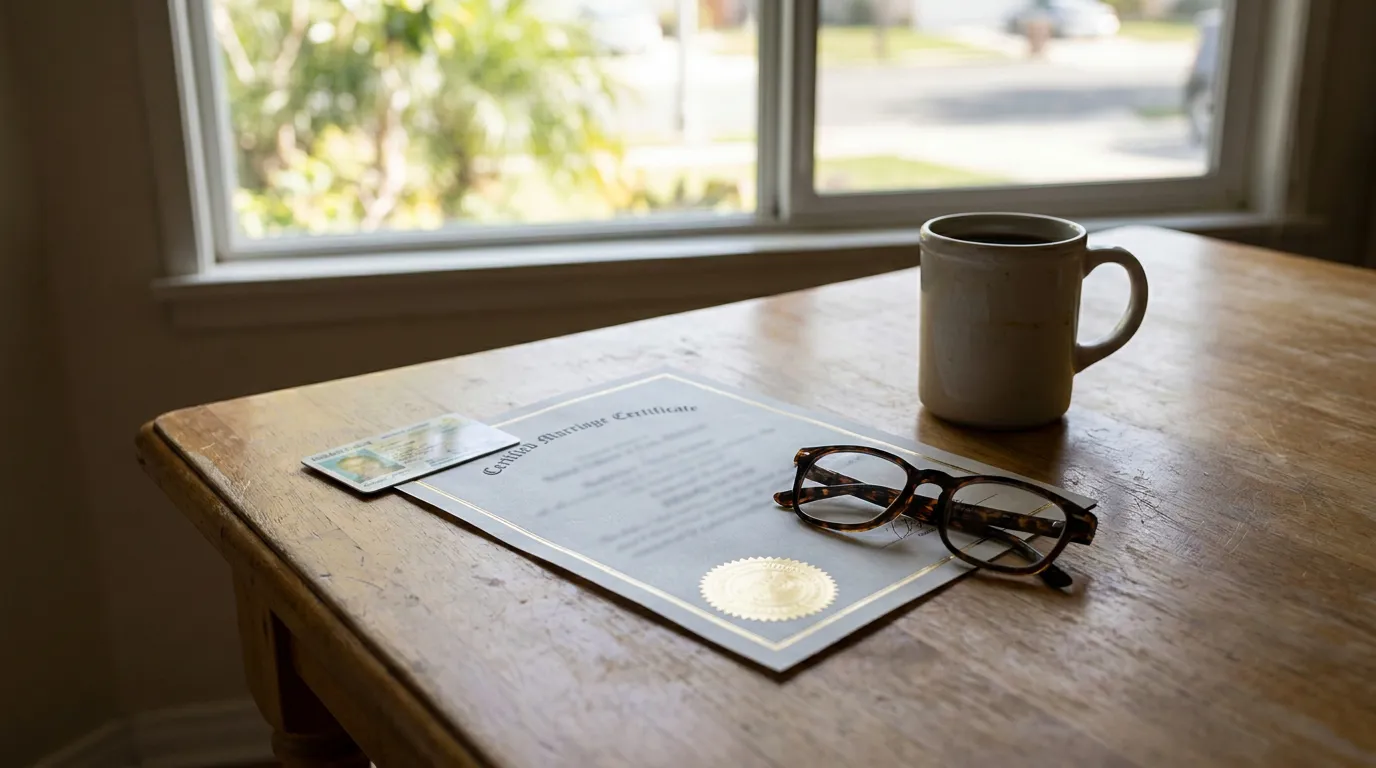
Evidence of your good faith belief can be critical. Helpful records may include a marriage license, photos or video of the ceremony, a shared last name, joint tax returns, and evidence of how you presented yourselves to family, employers, and friends.
💡 Pro Tip: Collect wedding invitations, anniversary cards, insurance forms that list you as a spouse, and messages in which your partner called you their husband or wife. Everyday documents like these often show a sincere belief more convincingly than any single official record.
Where Putative Spouse Claims Fall Short
Couples who never tried to marry and never believed they were married generally do not meet this definition. Living together for many years does not create putative spouse status. Unregistered partners also do not fit the domestic partner category, because CCP § 377.60(f)(1) covers only partnerships registered under Family Code § 297(b) at the time of death.
Proving Dependency as a Surviving Partner
Even with a strong good faith showing, a putative spouse generally must also prove dependence on the decedent. Dependency usually centers on financial support, such as paying rent or the mortgage, covering household bills, providing health insurance, or supporting a partner who stayed home to raise children.
Partial dependency may be enough in some circumstances, but you should not assume it is. Bank statements, pay stubs, tax records, and proof of shared accounts can help show how much you relied on your partner’s income. An early attorney review can help you see whether your evidence may meet the standard.
Fatal Dog Attack Wrongful Death California Claims and Liability
A death caused by a dog attack can support a wrongful death claim when the owner is legally responsible. Under Civil Code § 3342, California generally holds dog owners strictly liable for bite injuries in a public place or while the victim is lawfully on private property. The owner may be liable even if the dog had never bitten anyone before. The statute covers bites only, has some exceptions, and does not protect trespassers. Eligible survivors may be able to pursue a fatal dog attack wrongful death California claim against the owner and, in some cases, others who controlled the dog or the property.
A dog’s earlier bite history can also support a separate negligence theory. Civil Code § 3342.5(a) requires the owner of a dog that has bitten a person to take reasonable steps to remove the danger of bites to others. Defendants sometimes raise comparative fault. California follows pure comparative negligence, so any recovery may be reduced by the decedent’s percentage of fault but generally not eliminated.
Orange County families who suffer a fatal dog mauling often face standing questions on top of their grief. A fatal dog attack wrongful death California lawyer can review standing, good faith, and dependency together.
Wrongful Death Damages Versus a Survival Action
A wrongful death claim compensates survivors for their own losses, while a survival action continues the claims the decedent could have brought. Wrongful death damages may include lost financial support, lost household services, and the loss of love, companionship, comfort, and care. A survival action is generally brought by the estate’s personal representative or successor in interest and may recover damages the decedent suffered before death, subject to CCP § 377.34.
The difference matters for putative spouses. A putative spouse with standing under § 377.60(b) may pursue the wrongful death claim, but the survival action generally belongs to the estate, and who controls it depends on probate and succession rules.
Time Limits That Apply After a Dog Attack Death Claim
California’s deadline for wrongful death claims is generally two years from the date of death under CCP § 335.1. Exceptions are narrow, and tolling does not apply automatically. If a public entity may share responsibility, the Government Claims Act generally requires a written claim within six months of the death (Gov. Code § 911.2). A lawsuit can be filed only after that claim is denied.
💡 Pro Tip: Ask for the animal control report and any earlier bite complaints about the dog as soon as you can. These records can show the owner’s knowledge of danger and help preserve evidence.
Frequently Asked Questions
1. Can I sue if my spouse’s prior divorce was never finalized?
Possibly. You may qualify as a putative spouse if a court finds you believed in good faith that your marriage was valid and you were dependent on the decedent.
2. Does living together for many years give me wrongful death eligibility?
Generally, no. You would usually need to be a legal spouse, a registered domestic partner, or a dependent putative spouse.
3. Can my children sue even if my marriage was invalid?
In many cases, yes. The decedent’s biological or adopted children qualify under § 377.60(a) regardless of the marriage’s validity. Children of a putative spouse and stepchildren may qualify under subdivision (b) if dependent on the decedent.
4. Who decides whether my belief in the marriage was in good faith?
The court decides, applying a subjective standard and considering all the circumstances, so documenting your belief is important.
5. Does strict liability apply if a dog kills someone?
Civil Code § 3342 imposes strict liability for dog bite injuries in a public place or while lawfully on private property, with limited exceptions. Non-bite injuries generally require a negligence theory.
Protecting Your Rights as a Surviving Partner
An invalid marriage does not necessarily end your right to seek justice after a loved one’s death. California’s putative spouse rule under CCP § 377.60(b) may give standing to survivors who sincerely believed they were married and depended on their partner. Every case depends on its own facts.
If you lost your partner in a dog attack or another preventable tragedy, you deserve clear answers about your rights. Bisnar Chase can review your relationship history and the facts of your loss with compassion. Call 800-561-4887 or reach out to our team today. Reach out to our Newport Beach personal injury attorneys.
Disclaimer: This content is for informational purposes only and is not legal advice. Every case is unique, and results may vary. Consult an attorney about your specific circumstances.