


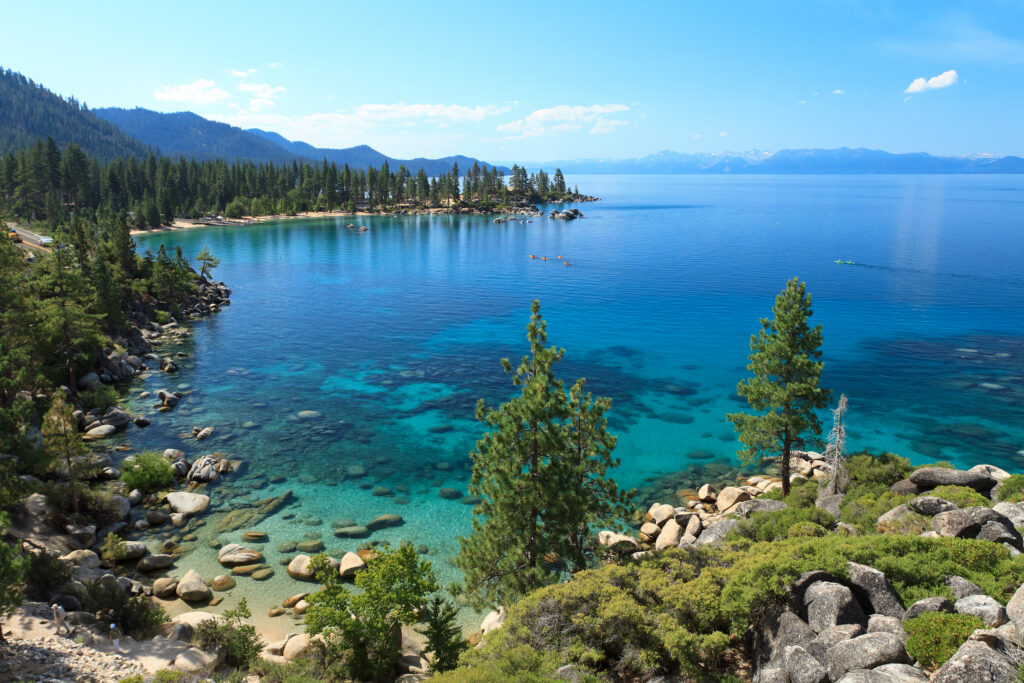
California’s lakes are among the most beautiful in the world. Millions of people every year take to the refreshing, crystal-clear waters. But the picture-perfect scenery can also turn deadly.
Crowded lakes, icy waters, inexperienced boaters, unpredictable mountain weather, and sudden underwater drop-offs can combine to turn a serene swimming spot into a persistent public safety problem.
Read on to find out everything you need to know about the most dangerous lakes in California. This guide details some of the high-risk spots, deadly incidents, and devastating fatalities that have occurred on our waters. We also share tips on staying safe on the water, along with your legal options when an accident happens.
For families who have already lost someone to a California lake accident, these same details often become vital in fighting for compensation through legal claims involving premises liability, negligent boat operation, or inadequate warnings.
Bisnar Chase is a personal injury law firm that handles cases involving injuries and fatalities across California. If you or a loved one has been hurt due to someone else’s negligence, our team is here to help. We offer a free consultation and expert guidance to protect your legal rights and fight for the compensation you deserve. Contact us today to find out if you have a case.
Contents: The Most Dangerous Lakes in California Explained
Lakes in California: An Overview
California is home to a mind-boggling number of lakes, reservoirs, and dry-lake basins. The state has more than 3,000 named bodies of water, including natural and man-made lakes. It also has many more natural lakes tucked away in the Sierra Nevada mountain range, along with other rivers and canals.
These areas are used by huge numbers of people every year, especially as the weather heats up in the summer. The most popular water activities in California include:
⇒ Boating: Many people love getting out on the water in a sailboat or motorboat. From high-speed powerboating to shutting off the engines and relaxing or fishing in a calm spot, you have plenty of options.
⇒ Water Sports: Water-based sports and activities include kayaking, canoeing, paddleboarding, wakeboarding, waterskiing, windsurfing, jet skiing, tubing, and wave running.
⇒ In the Water: Those looking to cool off in the California lake water can go swimming, floating, diving, or snorkeling.
Unfortunately, there are plenty of instances in which these activities have resulted in deaths and injuries.
Why California Lakes are Dangerous
There are plenty of risks facing people on California lakes. Some are environmental hazards that can strike with little warning, while others result from human error that could be easily avoided.
Many people assume that lakes are calm bodies of water, and that means they have to take less care when they are out on the water. But that is not the case.
Some of the most common lake dangers in California include:
Boating Accidents
You can sustain any number of injuries caused by boats on California lakes. Some of the most common types of accidents include people falling out of boats, collisions between multiple vessels, and boats colliding with swimmers. Many lake boating accidents are caused by driver inexperience. Casual or infrequent operators often don’t know how to control their craft safely or adjust to the conditions. A lot of people also fail to wear life jackets or know where the safety gear is kept.
Drowning
There are thousands of unintentional drownings in California every year. Lakes are particularly dangerous because they often appear calm and safe on the surface. But strong winds, sudden temperature changes, and sudden underfoot drop-offs can easily overwhelm even strong swimmers. When people are stranded out of their depth, they are in serious danger.
Weather Volatility
The weather can change very quickly in California, especially in the mountain regions where many of the state’s lakes are located. In many cases, the weather will appear to be clear and sunny. But conditions change very quickly over the water. Microclimate shifts can cause sudden temperature drops, high wind surges, and localized thunderstorms. The conditions can change so quickly that boaters and swimmers don’t have time to get to the shore.
Cold Water
Some of California’s lakes are fed by melting snow and freshwater rivers and streams from the mountains. This can make the lake water surprisingly cold, even on warm days. Sudden immersion in water below 60 degrees Fahrenheit can cause cold water shock, resulting in rapid breathing and a spike in blood pressure. After a few minutes, blood starts to leave the extremities, making it impossible to swim. At about 30 minutes, hypothermia can start to kick in.
Underwater Dangers
You always have to be mindful of what lies below the water surface in California’s lakes. Many lakes have changing depths, along with ledges and steep drop-offs. This is called changing bathymetry. You could go from wading in waist-deep water to having hundreds of feet of watery expanse below you without warning. Some lakes are also known to have underwater currents and undertows.
Submerged Hazards
In addition to the sudden changes in water depth, some lakes also have dangerous debris in shallow waters. This debris can include felled trees, sharp sticks, litter, and boulders. These can be dangerous if you dive in, swing over the water on a rope swing, or even just wade near them.
Human Factors
The natural dangers associated with California’s lakes are bad enough. But many people put themselves in danger. Some of the most common human errors include drinking too much alcohol while on the lake, failing to wear a life jacket, leaving children unsupervised, overestimating your swimming ability or misjudging the distance to shore, or operating a boat without the proper training or expertise.
Seasonal Peaks
In the peak summer months when the weather is at its hottest in California, people often flood to the lake to cool off. But this can be dangerous in itself. Overcrowding in the lakes can make the water choppier and leave swimmers in the water near boat lanes. It also makes it harder to spot an accident when it happens.
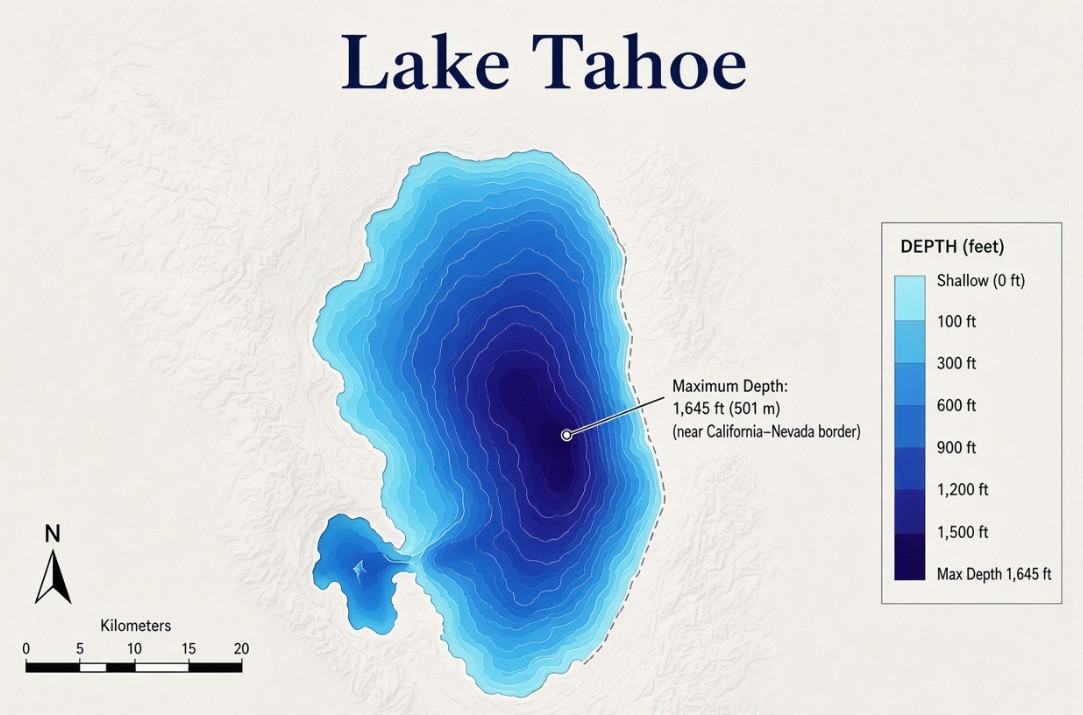
Did You Know…? The deepest lake in California is Lake Tahoe, with a maximum depth at its deepest point of over 1,600 feet – the equivalent of about 4.5 football fields.
The Top 5 Most Dangerous Lakes in California
We have compiled deep-dive profiles of the five most dangerous lakes in California, including their physical characteristics, unique features, and some of the accidents that have occurred.
There have been plenty of accidents at other lakes across the state, but these five lakes have seen the highest volume of accidents and fatalities, making them the most dangerous lakes in California.
Lake Tahoe
Lake Tahoe straddles the California and Nevada border and is the second-deepest lake in the United States, with a maximum depth of 1,645 feet.
Because it is a high-altitude mountain lake, its water can remain cold even in the height of summer. Surface water temperatures range from 40 to 70 degrees, depending on the time of year, and deeper waters usually remain freezing.
Tahoe is also prone to rapid weather changes, including microbursts and strong winds that can create steep, 8-10-foot swells. Changing conditions can also bring layers of freezing water to the surface without warning.
Lake Tahoe Accidents
There is an average of seven drowning deaths every year at Lake Tahoe. Most of these deaths are attributed to cold water shock, which can make even strong swimmers vulnerable. Immersion in cold water causes hyperventilation and a loss of muscle control, preventing people from treading water or swimming. Many victims drown within 10 feet of the shore or a boat because the physiology in cold water makes it impossible for them to get to safety.
Boating accidents also pose a significant danger. Coast Guard data shows 25 deaths on Tahoe over the last decade. Operator inexperience or inattention factored into nearly half of the reported incidents.
Other recorded accidents include boat capsizes, falls from tubes, and incidents at swimming locations such as Emerald Bay and Bonsai Rock. Due to the extreme depths of Lake Tahoe, plus the cold water that can slow decomposition and preserve remains, some bodies were recovered long after the accidents.
The Take Care Tahoe campaign included an initiative called ‘Think Before You Sink’ to raise awareness of the dangers of cold-water shock and the importance of life jackets.
Lake Berryessa
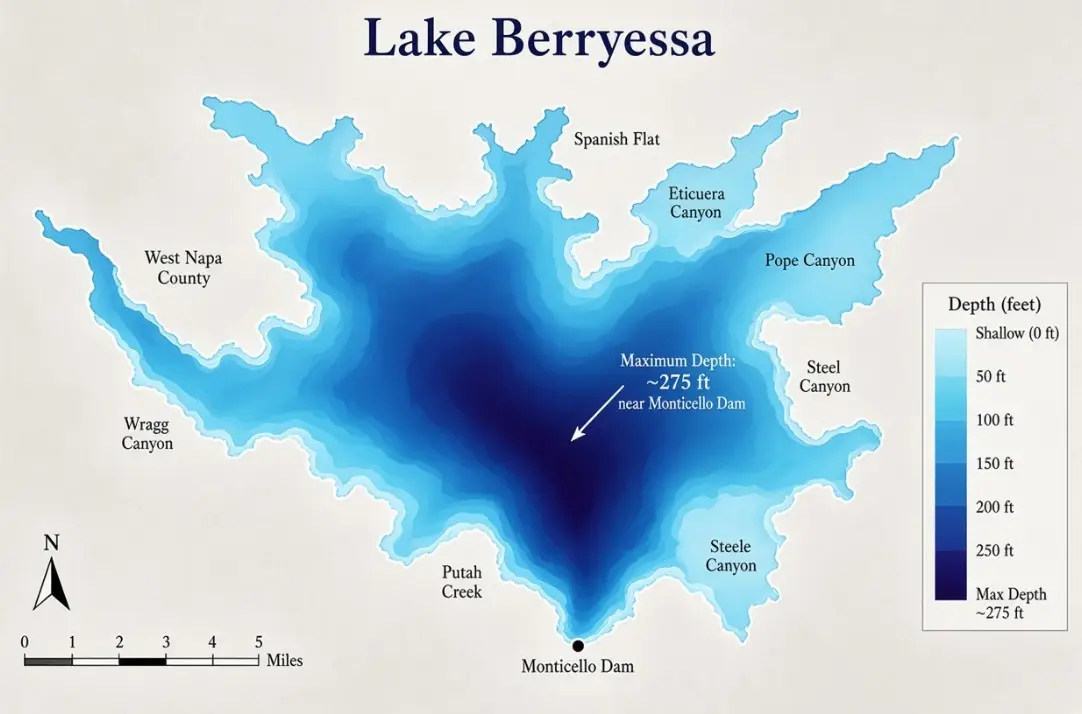
Lake Berryessa is a man-made lake formed in 1957 by the construction of Monticello Dam. The dam was built on Putah Creek, flooding a stretch of the valley to create a reliable reservoir water supply.
The lake covers a surface area of over 20,000 acres, with a maximum depth of 275 feet. It is covered by steep underwater valleys and contours, causing sudden changes in depth. The water temperature ranges from about 50 degrees in winter to 80-85 degrees at the height of summer.
Lake Berryessa Accidents
The reported death toll at Lake Berryessa is roughly 330 people since the first recorded death in August 1957. About half of those victims were swimming at the time. Other incidents on record include people jumping from rocks, boat accidents, and medical emergencies.
In 1965, a woman brought her five sons to the lake to teach them how to swim. But she and three of the boys drowned near the North End Trail. Over the decades, rock-jumping, intoxication, and attempts to swim between shoreline points have claimed more lives. In 1997, a woman drowned after falling into the Morning Glory Spillway.
The problem has not faded in recent years. Between 2020 and mid-2022, multiple deaths occurred on Lake Berryessa. They included a father who drowned while trying to reach his struggling son and several young people at the popular Oak Shores day use area. In 2025, a 17-year-old from Fairfield stepped off a steep underwater ledge in waist-deep water and did not resurface. Life jackets were not being worn in the majority of these cases.
Management responses have included temporary closures of swimming areas, free life-jacket loaner programs, and repeated public warnings about rapid changes in depth. The combination of high visitor numbers, deceptive shoreline geometry, and murky water continues to produce fatalities.
Lake Shasta
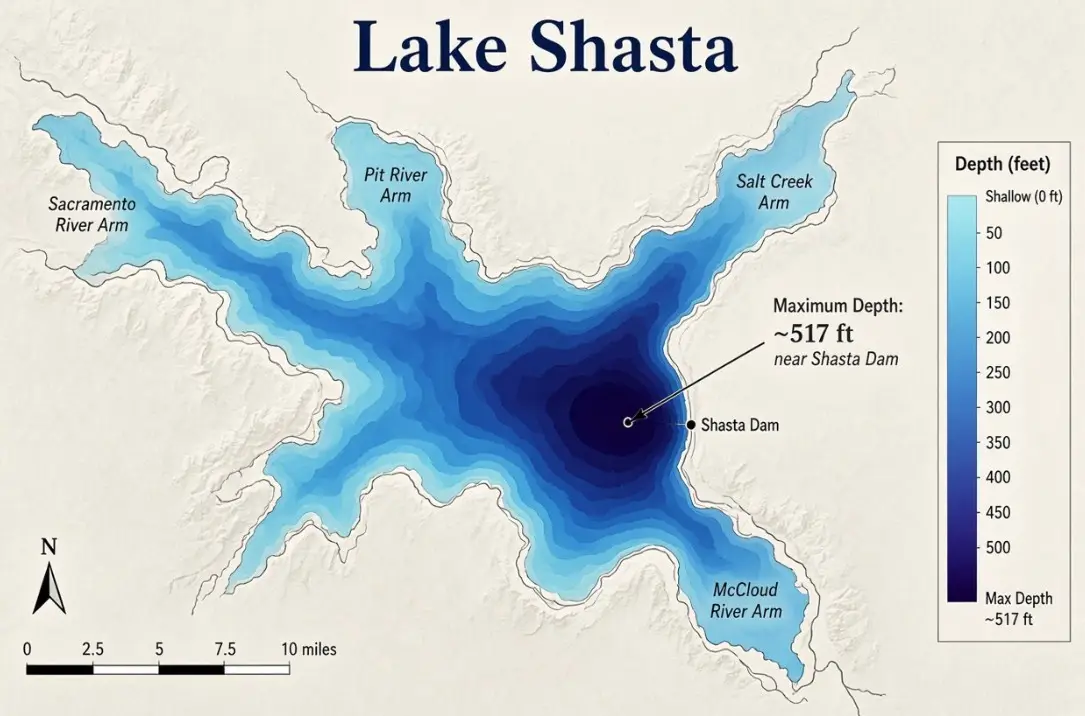
Shasta Lake (commonly referred to as Lake Shasta) is California’s largest man-made reservoir by volume. It was created in 1944 when the Shasta Dam was built to impound the Sacramento River. It has a 30,000-acre surface area, depths over 500 ft at its deepest points, and extensive arms and channels.
The water is very warm in the summer months, reaching about 85 degrees. But it cools off sharply, with extremely cold water from November-March that catches many people off guard.
Lake Shasta Accidents
In recent years, there have been clusters of fatalities at Lake Shasta. In 2026 alone, multiple deaths occurred within a short space of time. A 5-year-old died after entering the water without a life jacket near Turntable Bay, while an adult became unresponsive while swimming near a houseboat.
Separate incidents saw one man die after a boat crashed into the shoreline, a kayaker perish after going missing on the water, and a 60-year-old man die after jumping into the water to save his dog and suffering a medical emergency.
Earlier years show similar patterns, with accidents involving unsupervised children, boat collisions, and swimmers without flotation devices. For example, in 2017, a 7-year-old boy drowned near Shasta Caverns while vacationing with his family on a houseboat.
The common threads in these fatal incidents are cold water, the absence of life jackets, and the speed with which an ordinary outing can turn to disaster. Multi-agency responses involving sheriff’s dive teams, sonar, Forest Service personnel, and CAL Fire are routine.
Lake Piru
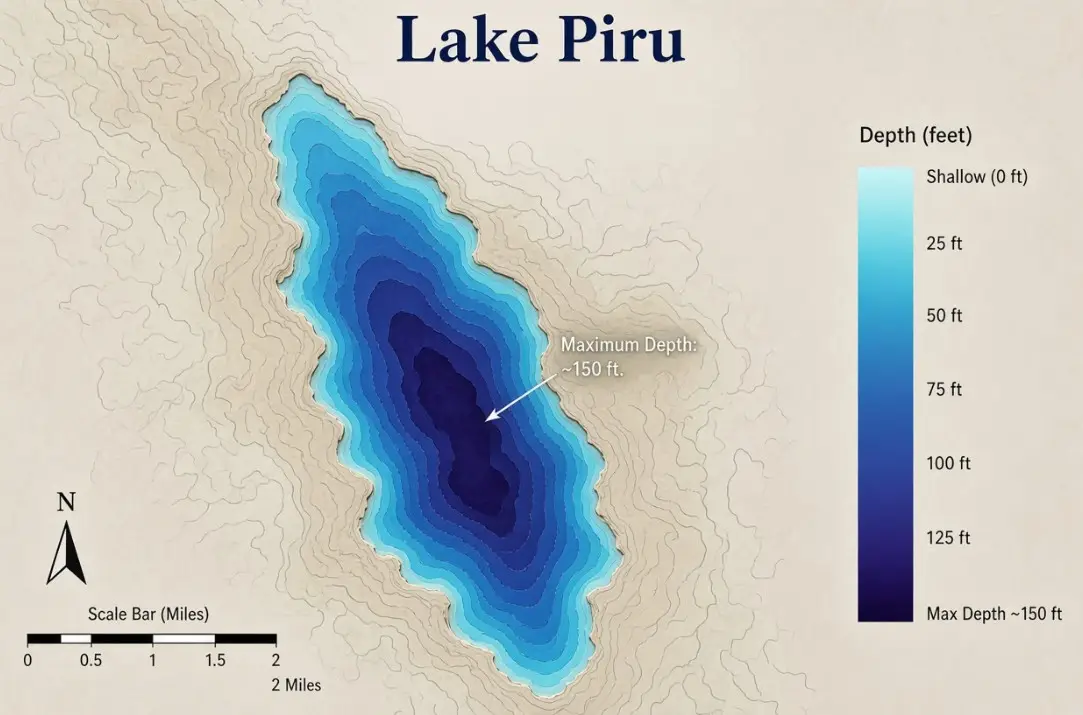
Lake Piru is a man-made reservoir located in the Los Padres National Forest and the Topatopa Mountains. It was created by the construction of the Santa Felicia Dam in 1955, which draws water from Piru Creek and the Santa Clara River.
Lake Piru is not the biggest lake in California, with a surface area of about 1,240 acres and a maximum depth of 130 ft. But it has become infamous for several high-profile incidents. The lake water is usually in the 70-degree range, with peaks in the upper 80s in very hot weather, and lows into the 50s in winter. Deeper water layers register even colder.
Following the drowning death of actress Naya Rivera in 2020, swimming in Lake Piru was massively restricted. Swimming is banned in most areas of the lake, but people can still wade or swim in the designated marked area at Juan Fernandez Beach.
Lake Piru Accidents
Lake Piru has a long record of drowning deaths linked to debris, low visibility, variable currents, strong winds, and cold water. There have been a lot of documented cases in recent decades, headlined by the drowning of Glee actress Naya Rivera in 2020. We will cover that incident in more detail later in this article.
Plenty of other accidents were not as high profile, but no less tragic. In 1994, 27-year-old Jesus Danilo Carranza drowned despite wearing a life jacket. And in 1997, three men drowned in separate incidents, including a dad who perished while rescuing his young daughter. Two further drowning deaths were reported the following year, in 1998.
The deaths have not slowed in more recent years. Eric Cruz drowned close to the shore in 2000, while another dad died rescuing his daughter after she fell from a boat in 2008. Two more deaths occurred in 2009 and 2010, while a lake fatality in 2014 was later ruled a suicide.
Folsom Lake
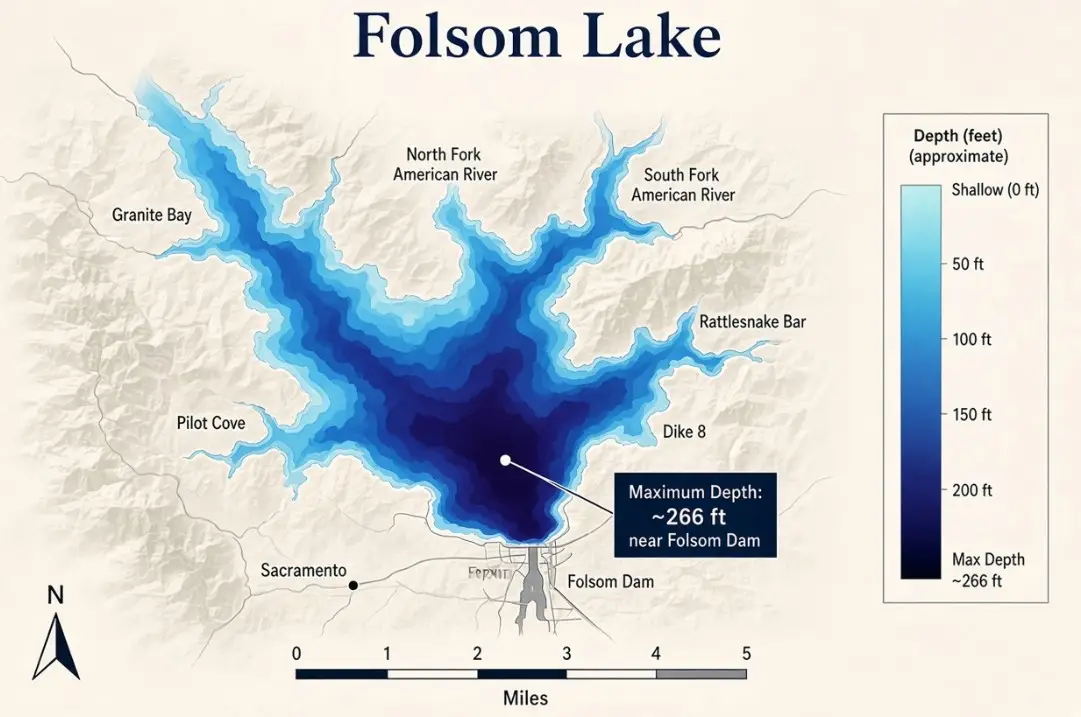
Folsom Lake is a man-made reservoir in the Sierra Nevada foothills of California, near Sacramento. It was formed in 1955 when the Folsom Dam was built to control the American River.
The lake has an 11,500-acre surface area and a maximum depth of 335 feet. Its water temperature is freezing in winter, and ranges from 60 to 80 degrees through the middle of the year.
Folsom Lake Accidents
Many fatal accidents have been reported at Folsom Lake. In 1996, a 29-year-old man drowned after jumping into the water from a boat to swim. However, most of the incidents have occurred more recently.
In 2014, four men died in a devastating high-speed boat crash. Two other men died in separate jet-ski accidents, one in 2019 and the other in 2022. A 30-year-old woman also died in 2022 after falling off a personal watercraft, while another woman died the following year after falling 30 feet into the lake from a rope swing.
A 37-year-old man also drowned during an evening swim near Granite Bay boat ramp, while the most recent accident saw a man’s body discovered in shallow water near Doton’s Point. Authorities said the circumstances were not suspicious and believed it to be an accident.
Fatal Lake Accidents in California
While the above section offers a comprehensive analysis of the lakes themselves, here we provide more detail on some of the fatal accidents on California lakes.
There have been thousands of incidents resulting in deaths and injuries in California’s lakes over the years. It would be impossible to list them all here. But we have included a shortlist of some of the worst and most high-profile accidents in recent decades.
1.
- When: February 1990
- Where: Convict Lake – Mono County, California
- What Happened: Seven people lost their lives when they fell through the ice on a frozen-over California lake. A group of 12 teens and two counselors from Camp O’Neal (a residential camp for troubled youths) were on a holiday outing to the lake when disaster struck.
Three of the teenage boys walked out onto the lake, which had frozen over with one-inch-thick ice. They got about 200 yards out when the ice beneath them broke, and they plunged into the freezing water.
The two counselors ran out to try to rescue the boys, but fell through the ice as well. Emergency services scrambled to organize a rescue operation, with several first responders following onto the ice. During the rescue mission, a forest service employee and a local fire captain also fell through the ice. All seven victims perished in the freezing lake. Their bodies were recovered after a five-day search.
2.
- When: June 1996
- Where: Folsom Lake – Sacramento County, California
- What Happened: Oleg Zheleznikov, 29, was out sailing on Folsom Lake with two other Russian men, a boat captain, and a translator, when he drowned in the water. They were on a sailboat when the victim decided to jump into the water to swim.
The sails were still raised on the boat when Oleg jumped into the lake. That meant the men still on the boat were unable to stop or turn quickly, and the boat drifted away from the swimmer. As he started to tire, Zheleznikov sank beneath the surface. The water at that point of the lake was about 100 feet deep and had zero visibility.
The El Dorado County Sheriff’s dive team conducted a search, but they were never able to recover Zheleznikov. However, a family discovered skeletal remains while walking along the Folsom Lake waterfront in 2015. California was in the middle of a historic drought at the time, which experts believe contributed to the remains finally surfacing. DNA comparisons eventually provided a positive match, and Oleg Zheleznikov’s remains were finally returned to his daughter in 2019.
Source: Remains of 1996 Russian Drowning Victim in Folsom Lake Recovered
3.
- When: March 1997
- Where: Lake Berryessa – Napa County, California
- What Happened: A promising PhD candidate tragically died at the infamous Lake Berryessa spillway, known as the Glory Hole. Emily Schwalen, 41, was found dead after falling into the large hole in the lake.
The spillway is a large pipe that runs vertically down from the lake’s surface. It is an overflow safety feature. When the water level gets too high, it drains out through the spillway. The mouth of the Glory Hole measures 72 feet across, tapering to a 700-foot pipe that drops vertically for 200 feet and carries excess water to another area.
Initial news reports indicated that Emily was sucked toward the spillway as it drained the water level. It was believed that she clung to the edge of the hole for about 20 minutes before being dragged inside by the water current.
However, further reports suggested that the death was a suicide. Emily was known to be an excellent swimmer, and it is not easy to reach the water near the Glory Hole. Access is restricted to prevent such accidents, and there have been no other deaths near the site. It is still unclear whether it was a tragic swimming accident or an intentional suicide. Emily’s body was found downstream, having been carried down the spillway pipe by the water flow.
Source: Tragic 1997 Death in Lake Berryessa Glory Hole Spillway
4.
- When: September 2000
- Where: Lake Piru – Ventura County, California
- What Happened: Eric Cruz, from Van Nuys, drowned just ten feet from the shore at Lake Piru. The 25-year-old was sailing a radio-controlled model boat from the shoreline when it stalled, and he decided to swim over to retrieve it.
The weather was perfect at the time, with sunny skies and low winds. But Cruz was not a strong swimmer, and started to struggle as he got close to the model boat. Witnesses said he panicked and began flailing, accidentally pushing his boogie board away and slipping under the water.
Divers were called to the scene and recovered the victim’s body from the floor of the lake about an hour later.
5.
- When: June and July 2006
- Where: Pope Creek at Lake Berryessa – Napa County, California
- What Happened: Two 24-year-old men died in similar accidents just one month apart at Lake Berryessa. Both victims jumped off an infamous rock – nicknamed Death Rock – which juts out over the lake near Pope Creek Bridge, with a drop of 40-80 feet, depending on the water depth at the time.
Michael Honeycutt was the first victim. On June 4, 2006, he jumped off the rock into the lake. Witnesses reported that he landed on his side as he crashed into the water. He briefly surfaced and signaled that he was okay, but then dropped under the water again and didn’t come back up. His body was found the next day by a search and rescue dive team.
Nearly one month later, on July 2, a 24-year-old Marine Corps veteran named Chasen Shirley died in a very similar accident. He leaped from the rock and fell about 50 feet into the water, landing sideways. Officials believe the impact against the water injured or knocked the wind out of him, and he did not resurface.
There have also been other deaths at the notorious party spot, including one man who was sitting on the outcropping rock and fell backward into the water in 2010.
Source: Two Die Jumping from the Same Rock into Lake Berryessa – 2006
6.
- When: August 2008
- Where: Lake Piru – Ventura County, California
- What Happened: A dad drowned in Lake Piru after jumping into the water to rescue his daughter. Anatoly Smolyansky was on a pontoon boat with his three children when the accident happened.
His 5-year-old daughter fell into the water while wearing a life vest. Anatoly, aged 39, jumped in after her but sank below the water’s surface and never resurfaced. Authorities are unsure why.
The young girl was pulled to safety by her 9-year-old brother. A search-and-rescue team was called in, including a helicopter and a dive team. They searched the lake for six days before finding Anatoly’s body.
Source: Dad Drowns Trying to Save Daughter in Lake Piru – 2008
7.
- When: May 2009
- Where: Lake Piru – Ventura County, California
- What Happened: A 9-year-old girl named Denise Arredondo drowned in Lake Piru after wading into the water during a family picnic. The distraught family was from the local area.
Denise’s father, Jaime, had taken his daughter and two other children out wading in the water about 50 yards from the shore. But Denise suddenly disappeared under the water. It is believed that she stepped off a steep underwater cliff, plummeting suddenly into deeper waters.
Her family ran into the water to help, and the Lake Rangers responded immediately in a boat. A rescue diver was also deployed. The search was made harder because surface visibility was poor. High winds made the surface choppy, reducing visibility to just 3 inches. The diver found Denise in an area of water that was about 8 feet deep. They tried to revive her, but she was pronounced dead at the scene.
The family later filed a lawsuit against United Water Conservation District, which owns and operates the man-made reservoir. The lawsuit alleged that there were no warning signs and that officials had directed the family to swim at Reasoner Cove despite knowing of the dangers.
Source: Young Girl Dies in Lake Piru at Family Picnic in 2009
8.
- When: May 2010
- Where: Lake Piru – Ventura County, California
- What Happened: Roberto Barrios, 36, from Glendale, drowned in the lake while out swimming with friends. He was part of a group of nine people who celebrated graduating from nursing school with an outing to Lake Piru. But the outing ended in disaster.
The party rented a pontoon boat from the Lake Piru Marina and took it out to a spot called Pump House Point, where Roberto and two others decided to jump into the water for a swim. Only Roberto opted not to wear a life preserver.
The wind picked up while they were swimming, causing the boat to drift away from the swimmers and making the water surface extremely choppy. Barrios was seen struggling in the waves before disappearing below the surface.
Emergency services used sonar to assist a scuba rescue team. The divers were searching cold waters at depths of 40-70 feet, with extremely poor visibility. Barrios first went missing just before noon on Saturday, and it took the rescue team until Monday to recover his body.
Source: Man Died While Swimming in Lake Piru at Graduation Party – 2010
9.
- When: May 2014
- Where: Folsom Lake – Sacramento County, California
- What Happened: Four men died after a high-speed boat crash in Folsom Lake. Toby Strauch, 54, his brother James Strauch, 47, and their two friends Jake Jacobs, 53, and Jon Smith, 48, all died from crash injuries sustained in the accident.
The men were in a speedboat traveling at about 100 mph down the main body of Folsom Lake when the boat capsized. Strong winds of 25-30 mph were whipping across the lake at the time, making the water very choppy. It is not known why they capsized, but it may have been the result of trying to turn too sharply. There is no speed limit on the lake’s open water, and the Skater boat they were piloting is capable of handling whitecap waves in high winds. Family members said the men were experienced boaters.
The men were thrown from the boat by the collision and died from severe impact injuries rather than drowning. A combination of the boat’s speed, the strength of the wind, and strong underwater currents made it difficult for search teams to find them. The body of the final missing victim was recovered nine days after the accident.
Source: Four Men Died in High-Speed Boat Crash in Folsom Lake – 2014
10.
- When: May 2014
- Where: Lake Berryessa – Napa County, California
- What Happened: A man drowned after leaping from a rock into Lake Berryessa. Edward Pinelli, 27, from the city of Concord, was camping at the lake with a group of friends when the accident happened.
The group went swimming at about 3:30 pm near the Pope Creek Bridge, and Pinelli jumped into the lake from a large rock at the shoreline. Following the jump, he never resurfaced. The water at that part of the lake was about 30 feet deep.
His friends called for help, and the sheriff’s dive team was sent into the lake, while a patrol helicopter provided support from the air. Edward’s body was recovered at about 7 pm, and his death was recorded as an accidental drowning. Following the incident, authorities issued a warning that it is unsafe for people to jump from rocks or bridges into the water.
Source: Man Died After Jumping into Lake Berryessa on Camping Trip – 2014
11.
- When: July 2017
- Where: Lake Shasta – Shasta County, California
- What Happened: A young boy was vacationing on a houseboat with his family when he drowned in Lake Shasta. The family, from Salinas, was at Marble Creek near Shasta Caverns when their houseboat became beached, and they were unable to get it started.
While the adults were working to restart the boat, Julian Zamora, aged 7, was left unattended for a short time. When the family realized Julian was missing, they searched and found his flip-flops floating in the water near the back of the boat.
They immediately called emergency services, and the mountain rescue team, dive team, boating safety unit, and search-and-rescue tracking team were scrambled to help with the search on land and in the water. Divers tragically found Julian’s body nearby after about 30 minutes. He had drowned in an area of water that was about 17 feet deep.
Source: Young Boy Drowned in Lake Shasta While on Houseboat – 2017
12.
- When: July 2020
- Where: Lake Piru – Ventura County, California
- What Happened: An actress drowned while swimming with her son in Lake Piru. Naya Rivera, 33, who starred in the TV show Glee, rented a boat to head out onto the water with her 4-year-old son Josey. It was just one week after the lake reopened to the public following the COVID lockdown.
They motored over to a northern section of the lake called the Narrows and decided to jump in and swim. But the winds were high (about 21 mph), causing the boat to rock back and forth and drift away from the swimmers. Naya quickly told Josey to get back to the boat. By analyzing the conditions and Josey’s statement, experts believe the swimmers were caught in a rip current and struggled to return to the boat.
Naya was a strong, experienced swimmer familiar with the lake. She used every ounce of her energy to get Josey back to the boat and push him on board, but was then too exhausted to fight the current and reach safety herself. Josey described her pushing him aboard and shouting for help.
When they didn’t return to the dock on time, a search was launched. They found Josey alone on the boat, exhausted and asleep. After speaking with him, authorities launched a full search-and-rescue operation. After five days of searching, Rivera’s body was found floating on the lake. It is believed that she had drowned and the body had become caught up in underwater vegetation, before eventually breaking free and floating to the surface.
An autopsy ruled out intoxication and concluded that the death should be recorded as an accidental drowning.
13.
- When: June 2022
- Where: Lake Tahoe – El Dorado County, California
- What Happened: A man drowned in Lake Tahoe after he fell out of an inflatable tube being towed by a boat. Siosisa Vaitohi, 32, from San Mateo, died in the tragic accident while visiting the lake with his family.
They had rented a pontoon boat near Tahoma on the lake’s west shore. Siosisa was sitting in the inflatable ring as it was pulled along by the boat at a relatively slow speed when he toppled out into the water. Authorities said he was a large man weighing about 395 pounds, and kept slipping below the surface of the water as his family tried to rescue him.
He had been in the water for about 20 minutes when a local passed the scene and stopped to help. Together, they managed to get the victim up onto the boat and performed CPR, but he sadly passed. The cause of death was recorded as accidental drowning. Siosisa was not wearing a life jacket at the time. The boat had an XXXL vest onboard, but it is unknown whether it would have fitted him.
Source: Man Drowned After Falling While Tubing in Lake Tahoe – 2022
14.
- When: July 2022
- Where: Lake Berryessa – Napa County, California
- What Happened: An 18-year-old recent high school graduate fell into the water at Lake Berryessa and drowned. Teenager Zaire Fairley-Jackson was a popular student athlete who had just graduated from Jesse Bethel High School, where he was captain of the basketball team. He was visiting the lake with three of his friends and teammates, but the visit turned deadly.
Reports indicate that Zaire was walking along a log in a day-use area of the man-made lake called Smittle Creek when he slipped and fell into the water. When emergency services arrived, he had already been pulled from the water. Off-duty nurses, who were nearby at the time of the accident, performed CPR. But the young man did not survive.
Source: Teen Died After Slipping Off a Log into Lake Berryessa – 2022
15.
- When: May 2025
- Where: Lake Almanor – Plumas County, California
- What Happened: An angling tournament was abandoned after one of the competitors fell into the water and drowned. Kayak angler Ryon Mora, 38, was taking part in the Kayak Series fishing tournament organized by Bass Angler Magazine (BAM) when the tragic accident happened.
Mora was one of the competitors in the tournament on May 17. He was fishing from his kayak when he apparently fell into the lake. At 6:37 am, the tournament director received an urgent call after someone spotted an unmanned kayak in the lake. They immediately responded to the GPS location and found Ryon Mora in the water.
Mora was wearing a life jacket per competition rules, but was found unresponsive. Crews pulled him into a BAM media boat and performed CPR while they rushed him to a nearby dock to meet paramedics.
The emergency responders worked for over 45 minutes to revive Mora, but they were unsuccessful. The event was canceled immediately following the tragic incident.
Source: Tragic Death of Competitor in Bass Angler Magazine Competition at Lake Almanor – 2025
16.
- When: June 2025
- Where: Lake Tahoe – El Dorado County, California
- What Happened: Eight people died when a boat capsized on Lake Tahoe during a sudden storm. The 28-foot vessel was out on the southwest side of the lake near D.L. Bliss State Park with ten people on board when the tragic accident happened. Two survivors were rescued, but eight others were declared dead after drowning in the lake.
The boat capsized when a harsh storm whipped over the lake. It was blue skies and sunshine when the boat went out, and there were no marine warnings or small craft advisories, with local forecasts only indicating a slight chance of thunderstorms. But two hours later, high-speed winds started, causing wave swells of about 8-10 feet. The boat’s engine cut out about 75 yards from the shore. It became partially submerged before being overturned by a large wave that washed over it.
Life jackets had been distributed to those on board the boat when the weather started to turn, but the victims did not put them on. One of the survivors was wearing their life jacket, while the other was clinging to a loose vest in the water. Six people, including the boat operator, were found at the scene, while two others were recovered from the bottom of the lake the following day. The victims included a former executive at DoorDash.
Source: Storm Capsized Boat and Killed 8 on Lake Tahoe in 2025
17.
- When: June 2026
- Where: Shasta Lake – Shasta County, California
- What Happened: A man died when a boat struck the Shasta Lake shoreline near Town Creek Cove. The impact sent all three occupants on board the boat – including an adult male, an adult female, and one child – into the lake.
The single-vessel crash happened in the Sulanharas Creek arm of the lake. It is unclear why the boat crashed into the shore, but authorities said it was a hard impact. The child on the boat was wearing a life jacket, but the adults were not.
A nearby civilian boat rescued the three people from the water and took them to Bridge Bay Marina for further help. The man and the child were then taken to a local hospital, where the man was pronounced dead. He was identified as 47-year-old Vingenzo Anthony Colletti, from Palo Cedro.
Source: Man Died When Boat Crashed into Shasta Lake Shoreline – 2026
18.
- When: September 2026
- Where: Lake Shasta – Shasta County, California
- What Happened: A man drowned after jumping off a moving boat to rescue his dog from the water. Geordan White, 60, from Redding, was in a boat with his dog Bubba close to the Bailey Cove Boat Launch when the accident happened.
Bubba leaped into the water, and Geordan – who was a well-known musician in the area – did not hesitate to jump in after him. Authorities believe that he experienced a potential medical emergency while he was in the water and called for help. A nearby boater threw a flotation device out to him, and he grabbed onto it momentarily before dropping below the surface.
The other boater called for help and rescued the dog from the water, but Geordan White tragically never resurfaced. Divers recovered his body later that day.
Source: Owner Died Jumping From Boat to Save His Dog in Lake Shasta – 2026
19.
- When: May 2026
- Where: Donner Lake – Nevada County, California
- What Happened: A man drowned in Donner Lake after getting into trouble while swimming. Juan Carlos Garcia-Gutierrez, 36, from Lancaster, California, took a pontoon boat out onto the lake over Memorial Day weekend, before strong winds pulled the boat away.
Garcia-Gutierrez jumped off the boat into the water without a life jacket to swim. But the boat was not moored or anchored, and strong winds caused it to drift away from the swimming spot. Juan tried to get back to the boat but couldn’t reach it and drowned.
Authorities launched a multiagency search operation. They used a remotely operated underwater vehicle to explore the deeper waters and eventually discovered his body at a depth of over 100 feet. The discovery was made at about 9:20 pm, shortly before the search would have been suspended for the night.
Source: Swimmer Died After Boat Drifted Away in Donner Lake – 2026
20.
- When: September 2026
- Where: Clear Lake – Lake County, California
- What Happened: A man was found dead in Clear Lake after disappearing on a kayak trip. Karmagit Singh, a 37-year-old from Yuba City – about a 90-minute drive from the lake – left to go kayaking on September 17. But he never returned home and was reported missing by his family.
When he didn’t come home, family members searched and found his car in Lucerne, next to the lake. They also found an empty box for his inflatable kayak and immediately alerted the police. A multi-agency search included marine patrols on the water, overhead drone monitoring to cover a larger area, and shoreline patrols.
On September 21, a local fisherman reported seeing what appeared to be a body floating in the water. It was recovered and positively identified as Singh. He was not wearing a life jacket, and officials said there were no signs of foul play.
Source: Kayaker Found Dead After Disappearing on Clear Lake – 2026
The Biggest Lakes in California (Top 10)
There are thousands of bodies of water across the state. The top 10 biggest lakes in California are:
1. Salton Sea
- Type: Shallow saline lake
- Location: Riverside and Imperial counties, southern California
- Surface Area: 318 square miles
- Maximum Depth: 51 feet
- Water Volume: 2.4 trillion gallons
- California’s largest lake judged solely by surface area.
2. Lake Tahoe
- Type: Natural freshwater/alpine lake
- Location: Sierra Nevada mountain range, across the California and Nevada border
- Surface Area: 191 square miles
- Maximum Depth: 1,645 feet
- Water Volume: 39 trillion gallons
- The second deepest lake in the United States.
3. Goose Lake
- Type: Alkaline lake
- Location: Modoc County, northern California, and Lake County, Oregon
- Surface Area: 147 square miles
- Maximum Depth: 24 feet
- Water Volume: Unknown
- The lake has been known to dry up completely during drought periods.
4. Mono Lake
- Type: Saline/alkaline lake
- Location: Mono County, central California
- Surface Area: 70 square miles
- Maximum Depth: 160 feet
- Water Volume: 1.4 trillion gallons
- One of the oldest lakes in North America, formed over 760,000 years ago, and twice as salty as ocean water.
5. Clear Lake
- Type: Natural freshwater lake
- Location: Lake County, northern California
- Surface Area: 68 square miles
- Maximum Depth: 60 feet
- Water Volume: 376.5 billion gallons
- The largest freshwater lake wholly within California’s borders.
6. Honey Lake
- Type: Alkaline lake
- Location: Lassen County, northeastern California
- Surface Area: 86 square miles
- Maximum Depth: 4 feet
- Water Volume: 391 billion gallons
- The lake shrinks dramatically through summer evaporation.
7. Shasta Lake
- Type: Man-made reservoir
- Location: Shasta County, northern California
- Surface Area: 47 square miles
- Maximum Depth: 522 feet
- Water Volume: 1.5 trillion gallons
- Created in 1945 and fed by the Pit River, Sacramento River, and McCloud River, providing flood control for the Sacramento Valley.
8. Lake Almanor
- Type: Man-made reservoir
- Location: Plumas County, northeastern California
- Surface Area: 44 square miles
- Maximum Depth: 90 feet
- Water Volume: 426.2 billion gallons
- Created by building a dam at the north fork of the Feather River in 1914.
9. Lake Berryessa
- Type: Man-made reservoir
- Location: Napa County, northern California
- Surface Area: 32.3 square miles
- Maximum Depth: 275 feet
- Water Volume: 522 billion gallons
- Located in the Vaca Mountains, formed by the construction of the Monticello Dam on Putah Creek in 1957.
10. Lake Oroville
- Type: Man-made reservoir
- Location: Butte County, northern California
- Surface Area: 25 square miles
- Maximum Depth: 695 feet
- Water Volume: 1.15 trillion gallons
- The lake was created by impounding the Feather River. The Oroville Dam was completed in 1968 and is the tallest earth-fill dam in the U.S.
Lake Type Glossary
Saline Lake: The water contains a high concentration of salts and minerals. Many saline lakes are saltier than ocean water.
Alpine Lake: A high-altitude body of water, generally 5,000 ft+ above sea level, depending on region. Usually found in mountain regions and fed by snowmelt and glacial runoff.
Alkaline Lake: Also known as a soda lake, this is a body of water with a high pH level. The pH scale measures the acidity of a substance. Alkaline lakes have a pH between 9 and 12 and contain high concentrations of dissolved carbonate salts.
Freshwater Lake: Freshwater lakes have low concentrations of dissolved salts. They are often fed by rain, streams, groundwater, and snowmelt, depending on their location.
Rivers and Canals in California
While we are focusing on dangerous lakes, it is fair to say that rivers and canals have also produced a large share of California’s fatal drownings.
Canals are man-made waterways, mostly built for transport, while rivers are natural streams of fresh water that flows downhill. River dangers are largely similar to those in lakes, including cold-water shock, strong currents and undertows, and dangerous underwater debris.
In September 2026, witnesses reported seeing a boat go airborne in a deadly boat crash on the San Joaquin River. It resulted in two deaths, while another woman was critically injured.
In May 2026, a woman and a young child drowned in the American River after their vehicle veered off Highway 50 and crashed into the water. And in August 2026, two people were found dead in the Trinity River after getting into trouble while swimming.
These are just a few of the recent incidents in rivers across California, showing that they can be just as dangerous as lakes.
Prevention, Safety Best Practices, and Official Guidance on CA Lakes
There are several important, proven safety measures we can take to protect people and reduce fatal accidents on California lakes.
Wear a Life Jacket
You should wear a properly fitted life jacket at all times when you are on or in the water. This is especially important if you are in a boat traveling at higher speeds, taking part in a water sport that might cause you to fall into the water, or are in an unfamiliar area or murky waters.
Even strong adult swimmers should wear flotation devices whenever possible. Children under 13 are already required to wear life jackets on vessels in California and Nevada, and that same practice should extend to everyone. Many day-use areas and marinas offer free loaner jackets.
Know Your Environment and Never Swim Alone
You should know the specific underwater topography of the area you are using, including knowing if the area has deep water of steep underwater cliffs. Check the water temperature and weather forecasts, including wind and wave models where available. Never swim alone, or go out without telling somewhere where you are.
Make Sure You Swim from a Stable Point
Many people head out onto the water in a boat or other craft, and jump in for a swim when they find a good spot. But you should never swim around an unmoored or anchored boat, as it can easily drift away and leave swimmers stranded.
Know the Dangers of Cold Water
You should assume that immersion in cooler water will produce cold-water shock and leave you incapacitated. Flotation is the only reliable countermeasure that can buy time for swimmers to get to safety or stay alive and wait for assistance.
Beware of Alcohol
A lot of lake accidents in California occur because people are inebriated. Drinking can reduce inhibitions and give people a false sense of security, even when they are in danger. They might take uncharacteristic risks as a result.
Competent Boat Operators
It is best that any boat out on the water is controlled by an experienced operator, especially if you are heading out into deeper waters or traveling at higher speeds. Less experienced boaters should stick to safer waters and lower speeds, and always be mindful of the weather conditions.
California Lake Accidents: Legal and Liability Considerations
Not every drowning produces legal liability. Some incidents are purely acts of God or entirely accidental, with no one to blame. The assumption of risk when you get out on the water of a California lake remains a significant defense.
However, California law recognizes duties of care that can result in successful wrongful death or personal injury claims after some accidents, depending on the circumstances.
Potentially liable parties include:
- Organizations or authorities responsible for managing the location.
- Commercial or private boat operators.
- Rental companies.
- Safety equipment manufacturers.
Types of Negligence
A council, forest service, or private authority that is responsible for a lake and its surroundings could face premises liability exposure if they do not provide reasonable warnings or safeguards against known dangers.
In addition, boat operators (including day-use rental professionals and private boat owners) could be liable for negligence on the water.
Rental companies could be liable for an accident if they fail to provide required safety equipment, or any rented equipment or machinery breaks, leading to an accident. They must ensure that all of their rented wares are properly inspected and maintained.
In some cases, victims could also have a product liability case against the manufacturer of boating, water sports, or safety gear if that equipment has dangerous inherent defects.
Evidence in these cases typically includes witness statements, coroner and autopsy reports, weather and water temperature data, prior incident history at the site, and maintenance or training records.
Governmental immunities and comparative fault rules apply and require careful analysis to establish each party’s level of fault.
Families who have lost someone in a lake accident in California should consult an experienced law firm like Bisnar chase immediately. The statute of limitations is an important consideration, and critical evidence can disappear out in the elements.
This discussion is informal and does not constitute legal advice. The viability of a legal case will depend on what exactly happened in the individual situation. But the best way to find out if you have a case is to contact a law firm for a free consultation.
Contact Bisnar Chase for a free consultation to find out if you have a case. Call (800) 561-4887 or send us a message through our website. Our team is here to help.
Conclusion: Surviving California's Most Dangerous Lakes
Lakes in California can be mysterious. They have hidden depths and considerable dangers, even for experienced swimmers. But California’s most dangerous lakes are well known.
Lake Berryessa, Lake Tahoe, Lake Shasta, Lake Piru, and Folsom Lake have claimed many lives. But they are not alone.
The beauty of these locations is real. But so is the risk. Visitors who treat every entry into the water as a potential cold-water emergency, who wear flotation devices, and who respect the limits of their knowledge and the power of the environment dramatically improve their odds.
For those already living with the consequences of a preventable death, the same facts that explain the danger can become the foundation of accountability.
Stay informed, wear the life jacket, and treat California’s lakes with the respect their history demands.

Brian Chase
Articles, blogs, and content have been reviewed by legal in-house staff. Brian Chase is the managing partner of Bisnar Chase Personal Injury Attorneys, LLP. He is the lead trial lawyer and oversees cases handling dangerous and defective products that injure consumers. Brian is a top-rated injury attorney with numerous legal honors and awards for his work relating to auto defects and dangerous products. His firm has recovered over $1B for its clients. Brian is a frequent speaker for CAOC, Dordick Trial College, and OCTLA, covering personal injury trial techniques.