

What Decades of Truck Crash Litigation Reveal About Protecting Your Claim
After 48 years of representing injured people, Bisnar Chase has learned that truck accident cases are rarely about a single careless driver. The trucking company’s hiring decisions, safety testing, and contractor arrangements often matter as much as what happened on the road. Newport Beach truck accident victims who understand these layers early are better positioned to identify every potentially responsible party. Since founder John Bisnar opened the firm in 1978, our attorneys have represented auto accident victims across Orange County and California.
If a big rig, delivery truck, or other commercial vehicle hurt you or someone you love, you do not have to face the corporate defenses alone. Bisnar Chase offers free case evaluations and a “no recovery, no fee” promise. Call 800-561-4887 or contact us now to talk through your options.
Lesson One: The Trucking Company Is Often a Key Defendant
California and federal law can, in some circumstances, make motor carriers responsible for drivers they do not formally employ. Trucking companies sometimes argue that an owner-operator was an “independent contractor” and that the company carries no responsibility. Depending on the facts, this defense does not always succeed.
How Vehicle Code § 15242 Reaches Owner-Operators
Under Cal. Veh. Code § 15242, subdivision (b), a motor carrier that hires a single-truck owner-operator under its direction and control is responsible for that driver’s compliance with California’s commercial driver rules while that control lasts. Subdivision (c) defines “direction and control” in two ways. Either the driver operates under the carrier’s federal USDOT interstate operating authority, or the driver works under an intrastate subcontract and has worked for the carrier at least 60 of the past 90 days and at least 36 hours in each week of service.
There is an important limit here. Subdivision (d) states that the section does not change who counts as an employee or independent contractor. The statute creates regulatory compliance responsibility; it does not by itself make the carrier liable for the driver’s negligence. Whether it supports an injury claim depends on the facts and how courts apply it.
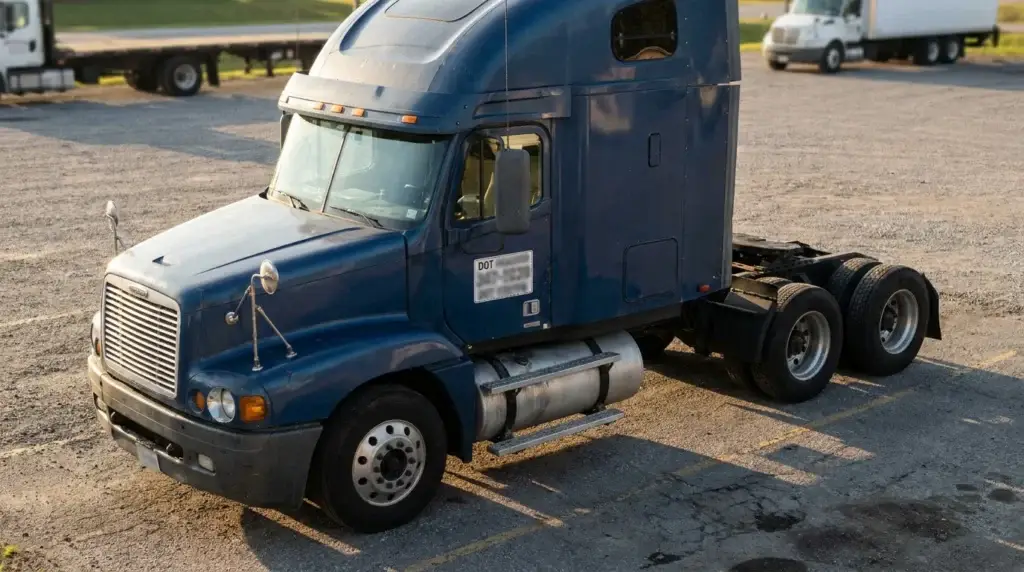
💡 Pro Tip: Write down the company name, USDOT number, and any logos on the truck’s door or trailer. These details can help identify which carrier’s operating authority the driver was under.
Treble Damages for Impaired Drivers and Skipped Testing
California provides a powerful remedy when an impaired commercial driver causes injury and the employer ignored federal testing rules. Under Cal. Civ. Code § 3333.7(a), an injured person may recover treble (triple) damages from the employer if the driver was under the influence of alcohol or a controlled substance. This applies only if the employer also willfully failed to follow the federal drug and alcohol testing requirements referenced in Vehicle Code § 34520(a).
The definition of “employer” in this statute is broad. Under Cal. Civ. Code § 3333.7(c), it includes companies that hire owner-operators under contract to haul freight, not just companies with drivers on payroll. Proving both impairment and willful failure to test can be demanding, and the testing records generally sit in the company’s own files.
Lesson Two: Punitive Damages Turn on What the Company Knew
Punitive damages are possible in truck crash cases, but California sets a high bar. Under California’s punitive damages statute, Cal. Civ. Code § 3294(a), a plaintiff in a non-contract case who proves oppression, fraud, or malice by clear and convincing evidence may recover punitive damages on top of actual damages. Section 3294(c)(1) defines “malice” to include despicable conduct carried out with willful and conscious disregard for the rights or safety of others. Ordinary negligence, even serious negligence, is generally not enough.
Holding an employer liable for punitive damages requires more than showing its driver acted badly. Under Cal. Civ. Code § 3294(b), an employer may owe punitive damages for an employee’s conduct only if one of the following applies:
- The employer knew in advance the employee was unfit and hired or kept them with conscious disregard for others’ safety
- The employer authorized or ratified the wrongful conduct
- The employer itself was guilty of oppression, fraud, or malice
For a corporation, the advance knowledge, conscious disregard, authorization, ratification, or malice must be on the part of an officer, director, or managing agent. This is why evidence that a trucking company’s leadership knowingly kept an unsafe driver on the road can carry so much weight. Driver qualification files, prior violation records, and internal communications often become central. Our guide to evidence that strengthens truck claims explains what to look for.
How California Handles Financial Evidence at Trial
California law also governs when a jury may hear about a defendant’s wealth. Under Cal. Civ. Code § 3295(d), on a defendant’s application, the court must exclude evidence of its profits or financial condition until the jury returns a verdict awarding actual damages and finds the defendant liable for malice, oppression, or fraud. Section 3295(e) bars a complaint from stating a dollar amount for punitive damages. Punitive claims are therefore typically tried in stages.
💡 Pro Tip: Ask your attorney early whether a preservation letter has been sent to the trucking company. Electronic logs, dashcam footage, and dispatch records may be overwritten if no one requests them.
Lesson Three: Federal Data Shows Truck Risk Persists
National crash data suggests large truck dangers remain significant. Federal sources such as NHTSA’s Traffic Safety Facts compile annual large truck fatality and injury counts, and FMCSA publishes data on contributing factors such as driver fatigue and mechanical failure. Violations of federal FMCSA rules or California law may serve as evidence of negligence, depending on the facts.
Property Losses and the Diminished Value Claim
Truck crash victims may be able to seek compensation for the loss of vehicle value in addition to repair costs. A car that has been in a serious collision may be worth less on resale even after quality repairs. In California, a third-party claim against the at-fault party may include this loss in market value, generally limited so that total property damages do not exceed the vehicle’s pre-accident value. An independent appraisal and complete repair records can help.
Property damage is only one part of the picture. Medical expenses, lost wages, and pain and suffering usually make up the larger share of a serious injury claim. California follows a pure comparative negligence rule, so an injured person may still recover even if partly at fault, with damages reduced by their percentage of fault.
💡 Pro Tip: Avoid giving a recorded statement to the trucking company’s insurer before speaking with an attorney. Early statements are sometimes used to argue comparative fault.
What the Firm’s Recognition Means for Truck Accident Victims
Recognition from outside legal organizations offers an independent signal of a firm’s standing among its peers. In 2026, the National Association of Distinguished Counsel named Bisnar Chase one of the Nation’s Top 1% personal injury lawyers. Best Lawyers also named Bisnar Chase one of the Best Law Firms in America for 2026.
These honors reflect a track record built case by case over nearly five decades. Awards do not predict the outcome of any individual case. They are one factor among several worth weighing.
Why You Should Choose Bisnar Chase
Bisnar Chase brings 48 years of plaintiff-only personal injury experience to every truck accident case. The firm represents injured people and families, never trucking companies or insurers. Key points prospective clients often consider include:
- Representation of auto accident victims since 1978, with deep familiarity with Orange County courts
- More than $1 billion recovered for over 14,000 clients since 1978, with a reported success rate of about 99% (past results do not guarantee future outcomes)
- A past $24 million verdict for a client paralyzed in a traffic accident caused by an auto defect
- Trial attorneys who are equally comfortable negotiating and litigating in court
Managing partner Brian Chase has handled some of the largest auto-defect cases and has received legal honors for his work on dangerous products. That background matters when a truck crash involves faulty brakes, tires, or underride protection. You can learn more about our Newport Beach car accident lawyers and how we approach collision claims.
Frequently Asked Questions
Common Questions About Truck Accidents in Newport Beach, California
1. How long do I have to file a truck accident lawsuit in California?
California’s statute of limitations for personal injury is generally two years from the date of injury under Cal. Code Civ. Proc. § 335.1. Property damage claims generally have three years under Cal. Code Civ. Proc. § 338. If a government entity is involved, a written claim must generally be presented within six months under Cal. Gov. Code § 911.2. Exceptions such as tolling are interpreted narrowly, so consult an attorney promptly.
2. Can I sue the trucking company if the driver was an independent contractor?
Possibly, depending on the facts. Cal. Veh. Code § 15242 makes carriers responsible for regulatory compliance by owner-operators under their direction and control, and Cal. Civ. Code § 3333.7(c) treats contracting carriers as employers for treble damages purposes. Other theories, such as negligent hiring, may also apply.
3. When are punitive damages available after a truck crash?
Punitive damages may be available when clear and convincing evidence shows oppression, fraud, or malice under Cal. Civ. Code § 3294(a). Against a corporate employer, Section 3294(b) requires that an officer, director, or managing agent had advance knowledge, authorized or ratified the conduct, or personally acted with oppression, fraud, or malice. These claims are fact-intensive and not available in every case.
4. What if I was partly at fault for the accident?
California’s pure comparative negligence rule may still allow you to recover. Your damages would generally be reduced by your percentage of fault. Careful evidence review matters.
5. Does a free consultation obligate me to hire the firm?
No, a free case evaluation carries no obligation. It gives you a chance to ask questions and understand your options.
Protecting Your Recovery After a Commercial Vehicle Crash
Nearly five decades of truck accident cases have taught Bisnar Chase that the strongest claims look beyond the driver to the company, its records, and its decisions. California law offers tools such as carrier compliance responsibility under Cal. Veh. Code § 15242, treble damages under Cal. Civ. Code § 3333.7, and punitive damages under Cal. Civ. Code § 3294. Each depends on specific facts and timely evidence.
Reach out to our Newport Beach personal injury attorneys. Bisnar Chase is ready to review your truck accident claim at no cost. Call 800-561-4887 or schedule your free consultation. Call us today for a free consultation.
Disclaimer: This content is for informational purposes only and is not legal advice. Every case is unique, and results may vary. Consult an attorney about your specific circumstances.