


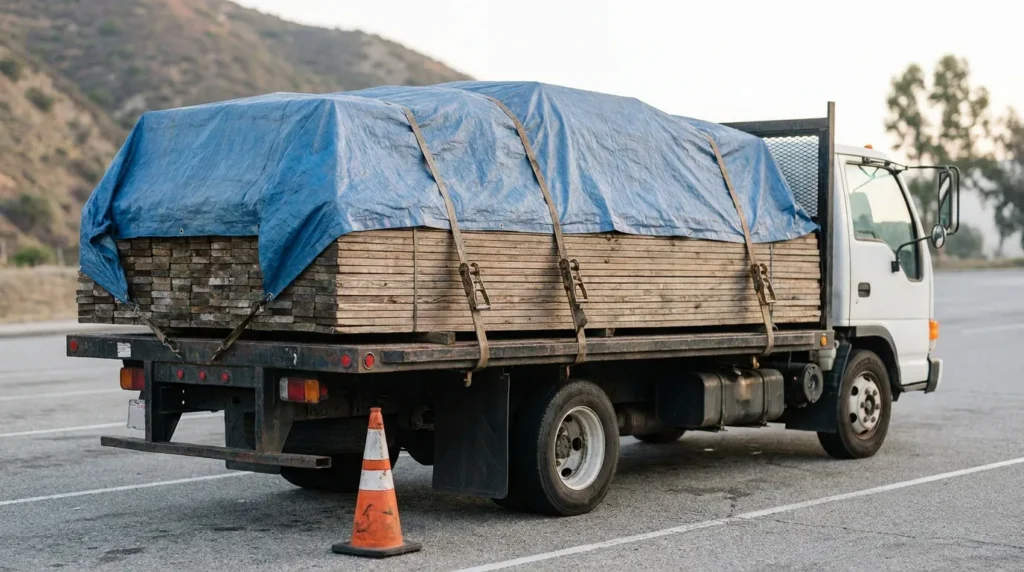
Spilled Truck Loads Break California Law
Key Takeaways: Yes, California law generally makes it illegal for a truck to spill its load on the road. Vehicle Code 23114 requires vehicles to be built or loaded so their contents can’t drop, sift, leak, blow, or otherwise escape, and aggregate loads like gravel and sand face stricter covering rules. Commercial trucks must also meet the federal cargo securement standards in 49 CFR Part 393, which California has adopted. The driver, trucking company, shipper or loader, and sometimes an equipment manufacturer may share liability. Under negligence per se, a securement violation may create a presumption of negligence that helps an injured person’s claim. Injured people generally have two years to file a personal injury lawsuit, and California’s pure comparative negligence rule reduces recovery for partial fault but doesn’t bar it.
Yes, California law generally prohibits a truck from spilling its load on the road. California Vehicle Code 23114 generally bars anyone from driving a vehicle on a highway unless it is built, covered, or loaded so its contents cannot drop, sift, leak, blow, spill, or otherwise escape. The statute includes limited exceptions for clear water and feathers from live birds, along with certain hay and straw transport covered under federal regulations; it does not include an exception for sand used to improve traction, unlike some other states’ similar laws. When gravel, debris, or freight falls onto the freeway and hurts someone, the spill may be strong evidence of cargo securement violations. That evidence can support a California truck accident claim against the driver, the trucking company, or the party that loaded the cargo.
If falling cargo injured you or a family member, you may have the right to seek compensation. The legal team at Bisnar Chase can review what happened and explain your options. Call 800-561-4887 or contact us now to talk through your situation.
What California’s Spilled Load Law Requires
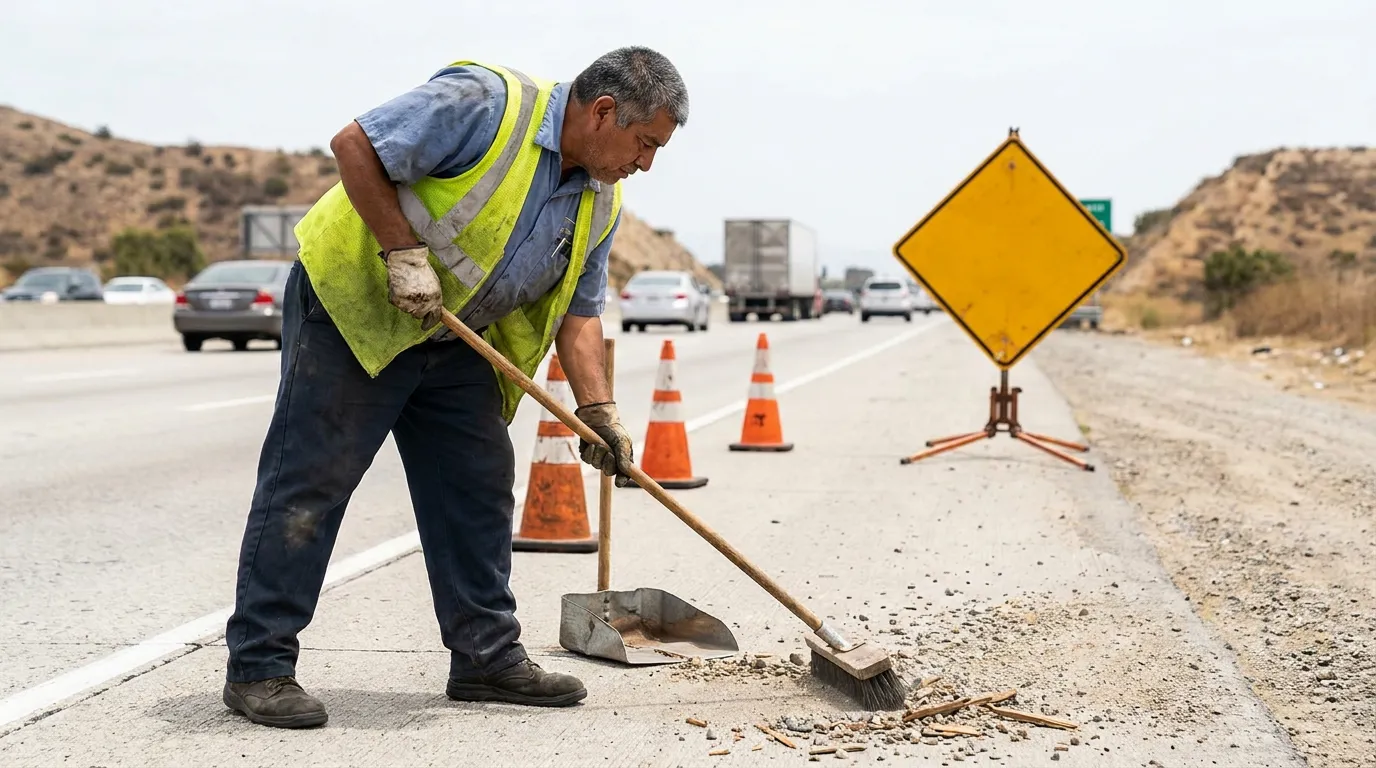
California’s main spilled load law sits in the Vehicle Code’s rules on loads and spillage. Vehicle Code § 23114 is part of the California load and spillage rules found in Division 11, Chapter 12, Article 1. Its basic rule is simple: a vehicle’s contents generally must stay on the vehicle. A load that escapes onto a highway generally breaks that rule, whether or not anyone gets hurt.
Extra Rules for Gravel, Sand, and Loose Material
The law sets stricter requirements for aggregate loads like sand, gravel, and rock. Under Vehicle Code § 23114(b), trucks hauling aggregate generally must be covered, or loaded with enough freeboard and other precautions, so material does not blow or spill off. Anyone who drives the 405, the 73, or Pacific Coast Highway near Newport Beach has probably seen the results: chipped windshields, debris in the lane, and drivers swerving at freeway speed.
Before relying on any specific subsection or penalty amount, check the current text on the official California Legislative Information site. Statutes are amended from time to time, and traffic citation penalties are separate from what an injured person can recover in a civil lawsuit.
Hazardous Cargo Faces Even Tighter Rules
California requires extra protection for some dangerous cargo. Under Vehicle Code § 31614, vehicles transporting explosives generally must have a closed body, or the cargo must be covered with a fire- and water-resistant tarp. Explosives must also stay within the vehicle body or its horizontal outline, and any tailgate must be closed and secured.
How Truck Cargo Securement Violations Happen
Truck cargo securement violations usually come from preventable choices, not bad luck. California Vehicle Code § 34500.3(a) requires the state to adopt cargo securement rules matching the federal regulations in 49 CFR Part 393. As a result, most commercial trucks in Newport Beach and across Orange County must meet the same federal standards.
Spills that injure Orange County drivers tend to follow familiar patterns. In many cases, the cause is one or more of these:
- Too few tie-downs, or worn straps and chains that cannot hold the weight
- Uncovered dump trucks carrying gravel, dirt, or demolition debris
- Cargo stacked so it shifts when the truck brakes or turns
- Container trailers loaded overseas or out of state with little attention to California rules
- Open tailgates or unlatched doors on box trucks and trailers
Unsafe loading can be a violation even if nothing falls off. Vehicle Code § 21700 bars driving a vehicle loaded in a way that blocks the driver’s view to the front or sides or interferes with the driver’s control.
💡 Pro Tip: If you can do so safely, photograph the spilled material, the truck, and any company name or USDOT number on the cab. Loose debris often gets cleared within hours, and those photos may be the only record of what fell.
Who May Be Liable When a Load Comes Loose
More than one party may share responsibility for an unsecured truck load. Truck accident cases often involve both state law and federal FMCSA regulations, which can open several paths to recovery. Finding every responsible party matters, because one policy alone may not cover serious injuries.
| Potentially Liable Party | Why They May Be Responsible |
|---|---|
| Truck driver | Federal rules generally require drivers to inspect and secure cargo before and during a trip |
| Trucking company | May be liable for its drivers’ negligence on the job, poor training, or bad maintenance of straps and equipment |
| Shipper or cargo loader | Vehicle Code § 35580 points to proper loading by the party responsible for loading the goods |
| Equipment or vehicle manufacturer | A defective latch, tarp system, or tie-down point may support a product liability claim |
Why Shippers and Loaders Matter
California’s Legislature has specifically recognized that shippers can create unsafe loads. In Vehicle Code § 35580, the Legislature found that shippers in other states or countries often load container trailers with little attention to California’s rules, particularly weight limits. It said the preferred fix is proper loading from the start by the party responsible for loading the goods. That finding does not by itself create liability, but it may support a negligence claim against a loading company, not just the driver.
The Narrow Farm Exception
State law carves out a narrow exception, but it does not remove the duty to load safely. Vehicle Code § 34500.3(b) exempts a farmer hauling his or her own hay or straw as part of a farming operation from parts of the securement scheme. Even then, the farmer must still load and secure the hay or straw safely.
How a Spill Becomes Proof of Negligence
California lets injured people use a statutory violation to help prove negligence. This doctrine, negligence per se, is codified in Evidence Code § 669 and laid out in the CACI No. 418 jury instruction, along with related instructions CACI No. 419, 420, and 421, which explain how juries decide whether breaking a statute creates a presumption of negligence.
To use this doctrine, an injured person generally has to prove four things. First, the defendant violated a statute. Second, the violation was a substantial factor in causing harm. Third, the harm came from the kind of event the statute was meant to prevent. Fourth, the injured person was among those the statute was meant to protect. Spilled cargo hitting a car, or causing a crash while a driver avoids debris, is generally the harm load securement laws exist to stop. Even so, defendants can try to rebut the presumption.
Evidence That Can Make or Break Your Claim
Strong documentation often decides how a cargo spill case turns out. Useful records may include police reports, CHP or Caltrans cleanup records, the carrier’s inspection logs, bills of lading, dashcam footage, and witness statements. Our guide to truck accident evidence explains which records tend to matter most and how they can affect compensation.
Trucking companies keep many of these records, but not forever. An attorney can send a preservation letter early so key evidence is not lost. Axle weight records can also help. Vehicle Code § 35550 generally limits a single axle to 20,000 pounds, and § 35551.5 generally limits front steering axles on certain trucks to 12,500 pounds, with some exemptions. Check the current statutory text before relying on these limits.
Deadlines and Shared Fault in a California Truck Accident Claim
California generally gives injured people two years from the date of injury to file a personal injury lawsuit. That deadline comes from Code of Civil Procedure § 335.1. Property damage claims generally have a three-year deadline. If a government agency shares blame, for example because a public road crew left debris, you generally must file an administrative claim within six months before you can sue.
You may still recover damages even if you were partly at fault. California follows a pure comparative negligence rule, so your recovery is generally reduced by your percentage of fault rather than barred. Trucking insurers often argue the injured driver followed too closely or should have avoided the debris. A truck cargo securement violations lawyer can help you respond with evidence.
💡 Pro Tip: Avoid giving a recorded statement to the trucking company’s insurer before you get legal advice. Offhand remarks about your speed or distance can later be used to shift fault onto you.
Frequently Asked Questions
1. Is a truck driver automatically liable if cargo falls off?
No single fact makes liability automatic. Even so, a spill may be strong evidence of a statutory violation under California Vehicle Code 23114 and the federal securement rules. Through negligence per se, that violation may create a presumption of negligence, which the defense can try to rebut.
2. What if the truck that spilled its load drove away?
Witnesses, traffic cameras, and nearby business surveillance footage may help identify the truck. If it cannot be found, uninsured motorist coverage on your own auto policy may apply, depending on its terms. Many policies require physical contact with the unidentified vehicle, so debris-only cases can be disputed.
3. Do federal FMCSA rules apply to trucks on Orange County roads?
Yes, in many cases. Vehicle Code § 34500.3(a) ties California’s cargo securement rules to the federal standards in 49 CFR Part 393, so most commercial carriers driving through Orange County are generally held to them, subject to limited exceptions.
4. Can I sue the company that loaded the truck?
Possibly. Under Vehicle Code § 35580, the Legislature recognized that the party responsible for loading plays a key role in safe transport. Liability depends on contracts, who controlled the loading, and the facts of the spill.
5. What damages may be available after a cargo spill crash?
Depending on the facts, injured people may seek compensation for medical expenses, lost income, property damage, and pain and suffering. Catastrophic injuries may also support claims for future care and lost earning capacity. No outcome is guaranteed.
Protecting Your Rights After a Spilled Load Crash
A truck that spills its load on a California road generally breaks state law, and that violation can play a central role in an injury claim. California Vehicle Code 23114, the adopted federal securement standards, and negligence per se may all support holding drivers, carriers, and loaders accountable. Talk with an attorney about your specific circumstances before you make decisions about your claim.
You do not have to sort through trucking regulations and insurance tactics on your own. Bisnar Chase has helped injured people across Newport Beach, Orange County, and Los Angeles for decades. Call 800-561-4887 or schedule your free consultation. Reach out to our Newport Beach personal injury attorneys.
Disclaimer: This content is for informational purposes only and is not legal advice. Every case is unique, and results may vary. Consult an attorney about your specific circumstances.