



Understanding Premises Liability When You Fall on Someone Else’s Property
Key Takeaways: Proving a property owner’s negligence in an Orange County slip and fall rests on four elements: duty, breach, causation, and damages. Under Cal. Civ. Code § 1714(a), owners owe visitors a duty of ordinary care to correct or warn against known hazards and reasonably inspect for unknown ones. You must connect a specific dangerous condition to the owner’s failure to act, supported by evidence such as photos, incident reports, witness statements, surveillance footage, and medical records, gathered promptly before the evidence fades. California’s pure comparative negligence rule means that sharing fault may reduce, but not bar, your recovery.
Most claims follow a two-year statute of limitations under Cal. Code Civ. Proc. § 335.1 requires that government property claims be made in writing, generally within six months. Because evidence and deadlines are unforgiving, acting early and consulting an experienced attorney can be decisive.
To prove property owner negligence in an Orange County slip and fall, you must establish four elements: duty, breach, causation, and damages. You must show that the owner owed you reasonable care, failed to meet that duty by allowing a dangerous condition, and that this failure caused your injury and losses. In California, this framework flows from the state’s general negligence law, and evidence gathered in the hours and days after your fall often determines whether a claim succeeds.
If you were hurt on unsafe property in Newport Beach or anywhere in Orange County, the team at Bisnar Chase is ready to review what happened. Call 800-561-4887 for a free consultation, or you can contact us now to discuss your options. Acting early helps preserve the evidence your case depends on.
The Legal Duty California Property Owners Owe
California property owners owe visitors a duty of ordinary care in managing their property. This duty comes from the state’s foundational negligence statute, which provides that everyone is responsible for injuries caused to another by want of ordinary care in managing their property or person. You can read the exact language of California’s negligence statute in Cal. Civ. Code § 1714(a). In practical terms, owners must correct or warn against known dangers and make reasonable inspections to discover defects not yet known.
California courts historically sorted visitors into rigid categories that dictated liability. The 1968 California Supreme Court decision in Rowland v. Christian abolished the common law invitee, licensee, and trespasser distinctions as the sole determinant of landowner liability. Today a visitor’s status is one factor courts may weigh, but the central question is whether the owner acted reasonably in managing the property given the likelihood of injury to others.
💡 Pro Tip: Duty of care in California is a general standard, not a checklist. Courts treat § 1714 as the baseline rule, and any exception a defendant claims must be justified. That works in your favor as an injured visitor.
How to Prove a Dangerous Condition Existed
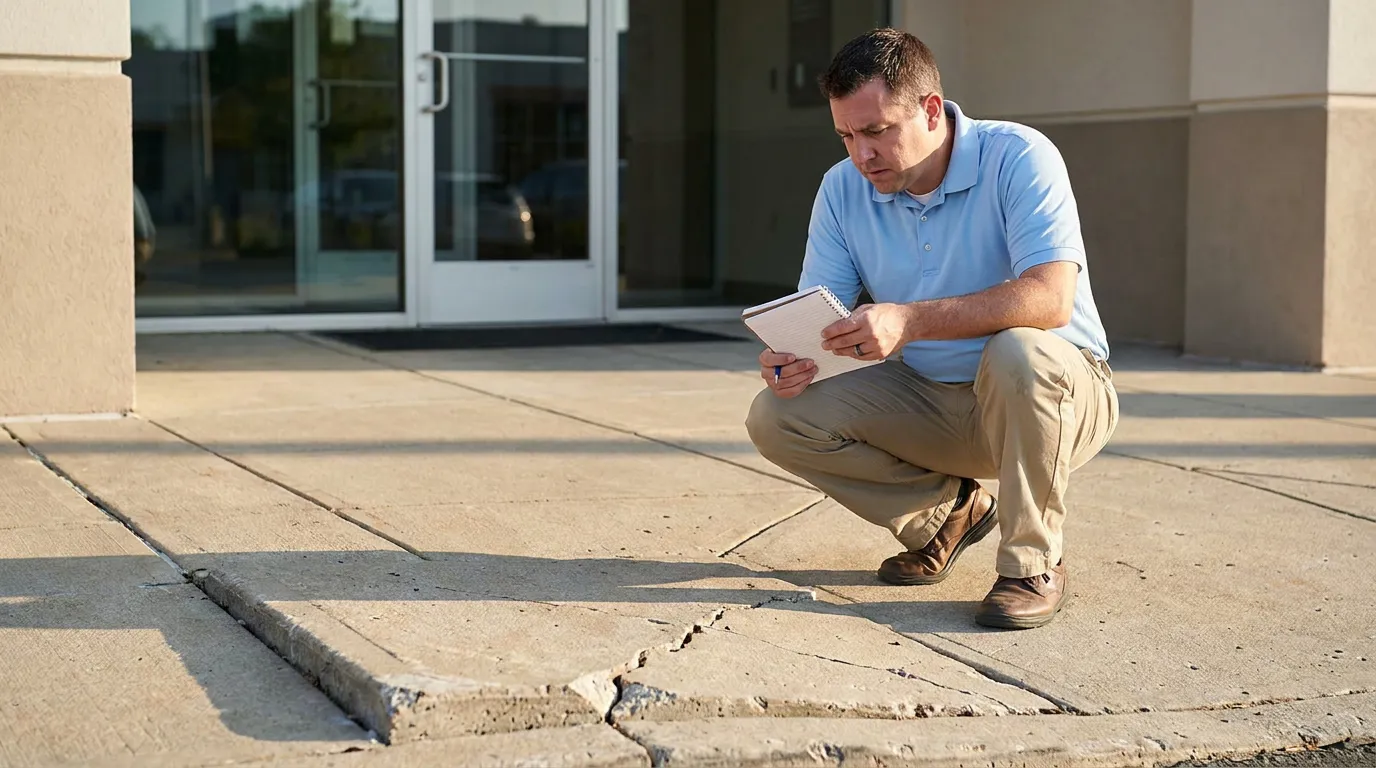
To prove property owner negligence, you must connect a specific hazardous condition to the owner’s failure to act reasonably. A wet grocery aisle, a broken stair tread, poor lighting in a parking structure, or an unmarked floor-level change can all qualify. The key is showing that the owner knew or reasonably should have known about the hazard and had the opportunity to fix it or warn you. This is often the most contested part of any slip and fall claim.
The quality of your slip and fall evidence determines whether a dangerous condition existed. Retail store injuries, stairway accidents, and swimming pool incidents turn on facts that fade quickly. Strong claims often rely on:
- Photographs and video of the exact hazard before it is cleaned or repaired
- Incident reports filed with the store or property manager
- Names and contact information for any witnesses
- Surveillance footage requests sent promptly before the footage is overwritten
- Medical records documenting your injuries and their connection to the fall
💡 Pro Tip: Ask the property manager to preserve any security video in writing the same day. Many systems automatically overwrite footage within days, and once it disappears, a key piece of your case may disappear with it.
Working With a Slip and Fall Lawyer Orange County Residents Trust
A slip and fall lawyer Orange County injury victims rely on can help translate scattered facts into a persuasive negligence claim. Investigating a hazard, identifying the responsible party, and calculating damages all require knowledge of California premises law. An attorney can send evidence-preservation letters, retain professionals to inspect the property, and handle communications with insurers who may try to shift blame onto you. Our firm has a proven track record handling hazardous property conditions across Southern California.
Early involvement can make the difference in whether critical proof survives. Premises liability claims are fact-intensive, and outcomes depend on details easily overlooked without guidance. That is why speaking with an Orange County injury attorney soon after the incident is helpful rather than waiting.
Comparative Fault and How It Affects Your Recovery
California follows a pure comparative negligence rule, meaning being partly at fault does not automatically bar your recovery. This rule was established in Li v. Yellow Cab Co. (1975), and § 1714 recognizes that an owner’s liability is limited to the extent the injured party has, by want of ordinary care, brought the injury upon themselves. If a court finds you were partially responsible, it will reduce your damages in proportion to your share of fault. Comparative negligence is a partial legal defense that reduces the amount a plaintiff can recover based on the degree their own negligence contributed to the injury.
Property owners and their insurers frequently raise comparative fault to reduce their payments. They may argue that you were distracted, wore improper footwear, or ignored a posted warning. The California Supreme Court in Cabral v. Ralphs Grocery Co. (2011) 51 Cal.4th 764 reaffirmed that the general duty of ordinary care under § 1714 is the rule from which exceptions must be justified. The burden often falls on the defense to prove why the ordinary duty should not apply and how much fault, if any, is yours.
💡 Pro Tip: Do not admit fault at the scene or to an insurance adjuster. A simple “I wasn’t looking” can reduce your recovery later, even when the property owner created the hazard.
Deadlines That Can Make or Break Your Claim
A slip and fall is a personal injury claim generally governed by California’s two-year statute of limitations. Under Cal. Code Civ. Proc. § 335.1, you generally have two years from the date of injury to file a lawsuit for injury caused by another’s wrongful act or neglect. A statute of limitations is the fixed window to sue after an incident, and missing it typically bars recovery even in a strong case. You can review the two-year filing deadline directly in the statute.
Certain narrow exceptions may affect when the clock starts or stops. California recognizes a discovery rule under which the deadline can begin when the harm was discovered or reasonably should have been discovered, which may be important for injuries that are not immediately apparent. This rule does not apply automatically and depends heavily on the facts. If your fall occurred on public property, a much shorter government claim deadline applies, generally six months to present a written claim to the responsible public entity before you can sue.
| Claim Type | General Deadline | Governing Rule |
|---|---|---|
| Personal injury (private property) | 2 years from injury | Cal. Code Civ. Proc. § 335.1 |
| Government / public property | Generally 6 months to file a claim first | Government claim procedures |
| Delayed-discovery injuries | May start at discovery | Discovery rule (applied narrowly) |
Because these deadlines are unforgiving, act quickly. Civil lawsuit deadlines are distinct from administrative government claim deadlines and should never be assumed to be the same. If unsure which applies, consult a lawyer to review the timeline for your situation. Prompt legal guidance helps ensure a preventable deadline does not end your case before it begins.
Frequently Asked Questions
1. What do I have to prove in an Orange County slip and fall case?
You must prove duty, breach, causation, and damages. That means showing the owner owed a duty of ordinary care, allowed a dangerous condition, and that the condition caused your injury and losses. Each element depends on the specific facts of your fall.
2. Can I still recover if I was partly at fault?
Yes, in many cases. California’s pure comparative negligence rule allows recovery even when you share blame, though your damages may be reduced by your percentage of fault. How fault is allocated depends on the evidence both sides present.
3. How long do I have to file a slip and fall lawsuit in California?
You generally have two years from the date of injury under Cal. Code Civ. Proc. § 335.1. Shorter deadlines apply to claims against government entities, generally requiring a written claim within six months. Limited exceptions, such as the discovery rule, may adjust the start date, but courts apply them narrowly.
4. What evidence matters most in a premises liability claim?
Photographs, incident reports, witness details, surveillance footage, and medical records matter most. Because hazards get cleaned and video is overwritten quickly, gathering slip and fall evidence early is often decisive. An attorney can help preserve evidence before it disappears.
5. Do I need a slip and fall lawyer in Orange County?
While not legally required, guidance from a slip and fall lawyer Orange County residents trust can be valuable. Premises liability cases are fact-intensive, and outcomes depend on your circumstances. A consultation can clarify whether you have a viable claim.
Protecting Your Rights After a Fall
Proving negligence after a slip and fall in Orange County depends on the duty of care California owners owe, the strength of your dangerous condition proof, and how quickly you preserve evidence. The law under Cal. Civ. Code § 1714(a) sets a reasonable-care standard; comparative fault may reduce but not eliminate recovery; and the two-year deadline generally leaves no room for delay. Every case turns on its own facts, so timely, tailored advice is important.
If a hazardous property condition left you injured, the attorneys at Bisnar Chase are ready to help you understand your options. Call 800-561-4887 today for a free consultation, or reach out through our contact page to get started. Contact Bisnar Chase today.