


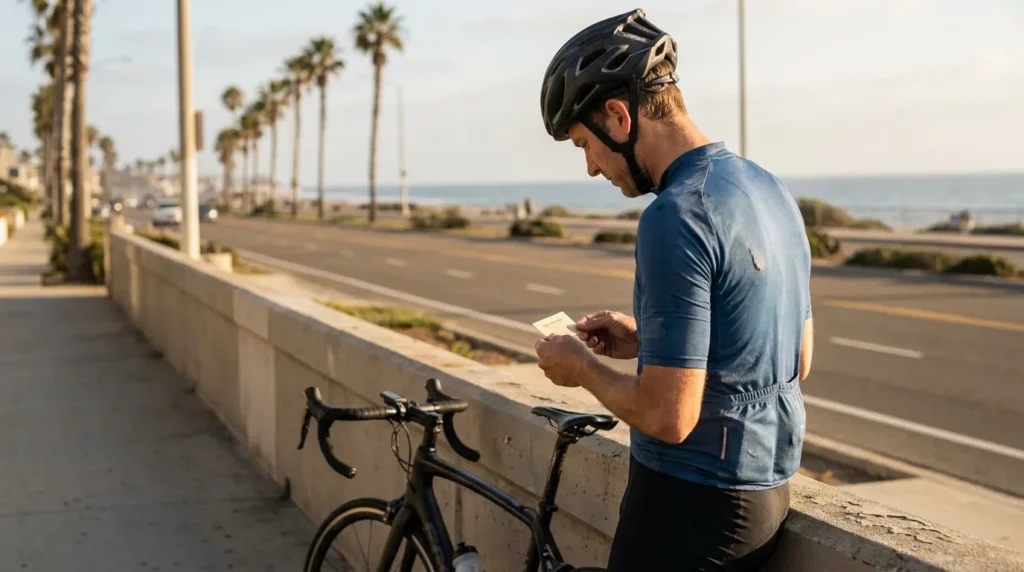
Why Newport Beach Cyclists Choose Bisnar Chase After a Bicycle Accident
If you were hit while riding along Newport Beach’s coastal roads or bike lanes, the decision you make in the first few days often shapes the entire outcome of your claim. Cyclists searching for a Newport Beach bicycle accident lawyer want to know who has handled cases like theirs, who understands the California Vehicle Code sections that decide fault, and who will stand up to insurers already building a defense. Bisnar Chase has represented injured plaintiffs since 1978 and has served the Newport Beach community, including the 92660 area, for more than 45 years.
Getting answers early costs you nothing and can protect evidence that disappears within days. Reach Bisnar Chase 24/7 by phone, email, or live chat, call 800-561-4887, or request your free case review now.
The Vehicle Code Sections That Usually Decide Fault
Most Newport Beach bicycle cases turn on a handful of statutes. California law gives cyclists the same rights and duties as drivers, with relevant rules found in the rules governing bicycle operation within Division 11 of the Vehicle Code. Insurers often argue the rider was somewhere they should not have been. The statutes frequently say otherwise.
- Cal. Veh. Code § 21202(a)(1)-(4) and (b): A cyclist riding slower than traffic must generally ride as close as practicable to the right-hand curb, subject to exceptions for overtaking, preparing for a left turn, approaching a right turn, and avoiding hazards, including surface hazards or a "substandard width lane" too narrow for a bike and car to travel safely side by side. On narrow Newport Beach streets, this exception often makes taking the lane lawful.
- Cal. Veh. Code § 21760 (Three Feet for Safety Act): A driver overtaking a bicycle must pass at a distance of no less than three feet. As amended effective January 1, 2023, the driver must also move into an available adjacent lane when one exists and it is safe to do so. If three feet is not possible, the driver must slow to a reasonable speed and pass only when safe. A violation causing bodily injury carries a $220 fine.
- Cal. Veh. Code § 21717: In right-hook scenarios, a driver who must cross a bicycle lane to turn right or enter a driveway is required to merge into the bicycle lane first.
Dooring claims place the duty squarely on the person opening the door. Under California’s dooring statute, no person may open a vehicle door on the side available to moving traffic unless it is reasonably safe to do so and can be done without interfering with traffic. For riders passing parked cars along Balboa Boulevard or near the peninsula, this provision frequently identifies the at-fault party.
💡 Pro Tip: Photograph the roadway itself, including lane width, bike lane striping, and any obstruction that forced you left. Those details make a § 21202 exception argument concrete months later.
Why Head Injuries Change the Value and the Timeline of a Claim
A brain injury is the single most common reason a bicycle crash becomes a serious case. Sudden deceleration can slide the brain against the skull, bruising tissue, tearing nerve fibers, and causing bleeding. A rider who strikes their head should be evaluated even after a crash that seemed minor.
The word "mild" in a medical chart does not mean the harm is minor. As Mayo Clinic notes, "A mild injury to the brain is still a serious injury that requires prompt attention and an accurate diagnosis." Some symptoms appear immediately while others surface days or weeks later. When they linger they are described as persistent post-concussive symptoms, which may support claims for ongoing lost wages and long-term care.
The stakes in brain injury cases demand experienced handling. A Los Angeles jury awarded $9.1 million to a bicyclist who suffered a brain injury, reflecting how seriously courts can treat these injuries when properly developed. Past results do not predict what any other case will do; every outcome depends on its own facts and available coverage.
💡 Pro Tip: Ask your treating physician to note cognitive symptoms in writing at each visit. Memory lapses and light sensitivity are often the hardest damages to prove later and the easiest to overlook early.
Building the Record Before the Insurer Builds Theirs
Evidence in a bicycle case degrades faster than most riders expect. The San Francisco Bicycle Coalition’s bicycle crash checklist advises photographing injuries each day and any damage to the bicycle or personal property, and keeping physical evidence such as the damaged bike or clothing intact.
Keep One Notebook, and Confirm Everything in Writing
A single written record of the incident, your injuries, your losses, and every conversation with insurers or police is one of the most useful things a client can bring. A detailed diary should contain a description of the incident, a daily log of injuries and pain, economic losses, and notes from all conversations. After every conversation with an insurance company, send a confirming letter that restates the points discussed to create a paper trail. Our attorneys typically take over that correspondence so clients are not negotiating alone.
If the Driver Leaves the Scene
Hit-and-run and uninsured motorist claims live or die on identifying details captured in the first minute. Ask the driver to stay until police arrive; if they refuse or will not provide identification, get the driver and vehicle description, license plate number, and state of issue. Preserve everything: police reports, CCTV, dashcam footage, and witness statements. Be cautious speaking with adjusters before consulting a lawyer, because early recorded statements are frequently used to argue comparative fault.
💡 Pro Tip: Under California’s pure comparative negligence rule, being partially at fault does not bar recovery. It reduces it by your percentage of fault, so do not assume a shared-blame crash is not worth a call.
What the Firm’s 2026 Recognitions Actually Signal
Awards matter to an injured cyclist only insofar as they reflect how a firm is regarded by the people who evaluate lawyers professionally. In 2026, all of Bisnar Chase’s attorneys received a Super Lawyers rating, a peer-reviewed honor. The firm was also named Law Firm of the Year by the American Institute of Legal Professionals for the eighth consecutive year, was selected as one of the Top 50 Lawyers in America for 2026, and three of its attorneys were recognized among the top 10 personal injury lawyers in the United States.
Peer recognition indicates consistency over time, which is what a rider facing a contested liability fight should be looking for. The firm was also named to the Orange County Business Journal’s 2026 Best Places to Work list, which tends to correlate with the staff stability that keeps a case file from being handed off repeatedly.
Why You Should Choose Bisnar Chase
Longevity, local knowledge, and a plaintiff-only focus are the practical reasons Newport Beach riders come to us. The firm has handled Newport Beach bicycle accident claims since 1978 and reports more than $800 million recovered and over 12,000 clients served throughout California, along with a stated 99% success rate on cases it has accepted and resolved. Those are past results and not a guarantee of what any individual claim will achieve.
We know the roads and the adversaries here. Our attorneys know the local courts, defense teams, and insurance carriers that handle these files. Consultations are free, we work on a No Win, No Fee basis and advance case costs, which are reimbursed out of any recovery, and we travel to clients who cannot come to us or meet by Zoom when injuries make travel difficult.
Frequently Asked Questions
Common Questions About Bicycle Accidents in Newport Beach, California
1. How long do I have to file a bicycle injury claim in California?
The civil statute of limitations for personal injury in California is generally two years from the date of injury, subject to exceptions. Claims against a public entity, such as one involving a dangerous roadway condition, first require an administrative claim that generally must be presented within six months of the injury. Have the dates reviewed by an attorney promptly.
2. The driver says I was riding too far into the lane. Does that end my claim?
Not necessarily. Section 21202 contains express exceptions permitting a cyclist to move away from the right edge, including where a lane is too narrow for a bicycle and a vehicle to travel safely side by side. Whether an exception applies is fact-dependent. Even if some fault is assigned to the rider, California’s pure comparative negligence rule reduces rather than eliminates recovery.
3. What if I did not go to the hospital right away?
A delay complicates a claim but does not necessarily defeat it, particularly with head injuries where symptoms may emerge days later. Get evaluated as soon as possible and be candid with providers about when symptoms began. Consistent medical documentation from that point forward carries the most weight.
4. Can I recover if the driver was never identified?
Often yes, through uninsured motorist coverage on your own auto policy, which in California commonly extends to you while cycling. For a hit-and-run, uninsured motorist bodily injury coverage generally requires physical contact with the unidentified vehicle, and prompt reporting to police and your insurer is typically required. Coverage terms vary, so the policy should be reviewed quickly.
5. Should I give the insurance company a recorded statement?
We generally advise speaking with a lawyer first. You are usually not required to give a recorded statement to another driver’s insurer, though your own policy may impose cooperation duties. Adjusters often ask questions designed to elicit admissions about speed, positioning, or symptoms that can later be used to reduce recovery.
Choosing a lawyer after a bicycle crash comes down to whether the firm can prove the statutory violation, document the injury, and withstand the insurer’s version of events. The statutes protecting cyclists are detailed and full of exceptions, brain injuries are routinely minimized, and the evidentiary record is built in the days right after the crash.
Talk to a lawyer who has been handling these cases in Newport Beach for decades. Learn more about our Orange County injury firm, call 800-561-4887, or get in touch with our team. Call us today for a free consultation.