


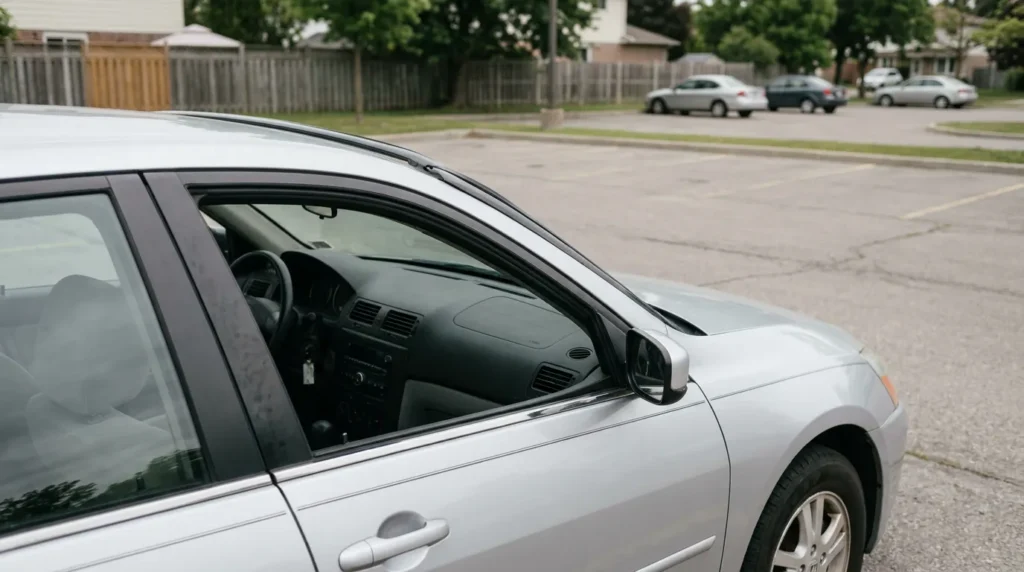
When a Crash Isn’t What Actually Broke Your Body
Key Takeaways: The crashworthiness doctrine in California may allow injured occupants to hold vehicle manufacturers liable for enhanced injuries caused by defective vehicles, even when another driver caused the collision. It focuses on the “second collision” when a body strikes an interior that should have protected it, such as seat-back collapse, roof crush, airbag failure, or fuel-fed fire.
California case law and CACI Series 1200 instructions govern design defect claims, applying consumer expectation and risk-benefit tests. Strict liability means carelessness need not be proven, and under the risk-benefit test the burden may shift to the manufacturer. Liability can extend along the distribution chain, and comparative fault reduces rather than eliminates recovery. Most claims must be filed within two years, and preserving the vehicle is critical.
The crashworthiness doctrine may allow a vehicle manufacturer to be held responsible for injuries that a defective vehicle worsened, even when someone else caused the collision. In California, an occupant who survives the initial impact but suffers catastrophic harm because a seat back collapsed, a roof crushed inward, an airbag failed, or a fuel system ignited may bring an enhanced injury claim. The legal theory recognizes a “second collision”, the moment your body strikes the interior of a vehicle that should have protected you. The manufacturer generally does not answer for causing the wreck but may answer for the injuries its design or manufacturing choices added.
If you or a family member suffered injuries more severe than the crash should have caused, the vehicle deserves an examination before it is repaired, sold, or scrapped. The attorneys at Bisnar Chase have handled complex California product liability litigation against vehicle manufacturers for decades. Call 800-561-4887 or contact us now for a free consultation.
Why the Crashworthiness Doctrine California Follows Comes From State Courts
There is no general federal products liability statute, which means crashworthiness is defined largely by state case law. As Cornell’s Legal Information Institute explains in its overview of product liability claims, such claims may rest on negligence, strict liability, or breach of warranty depending on the jurisdiction. Federal motor vehicle safety standards exist, but compliance is evidence a jury may consider rather than an automatic defense. California’s formulation applies to cases filed in Orange County.
A design that survived challenge elsewhere may still be actionable here, and California’s two-track approach to design defect may give injured occupants more than one path to the jury.
The Second Collision Concept in Plain Terms
Crash reconstruction engineers describe serious wrecks as a sequence of collisions. The first is vehicle-against-vehicle, tree, or barrier. The second is the occupant’s body against the steering column, roof rail, door frame, or seat structure. The third is internal organs against the skeleton.
Crashworthiness law targets the second collision. Restraint systems, crumple zones, roof strength, seat integrity, and fuel system containment all exist to manage it. When one of those systems performs worse than a reasonable alternative design would have, liability may attach to the manufacturer. The question is whether the design was defective under the applicable test.
What You Must Prove in an Enhanced Injury Case
You generally do not have to prove the automaker was careless when the claim is pleaded in strict liability. Products liability in California may be pursued as strict liability, meaning a defendant may be liable when a product is defective regardless of intent or care exercised. That distinction is why strict liability for defective products in California is so central to auto defect work. Negligence and warranty theories remain available and are often pleaded alongside.
The prima facie elements generally are:
- The defendant is a commercial seller of the product
- The vehicle or component was defective when it left the defendant’s hands
- The defect was a substantial factor in causing the injury
- The plaintiff suffered harm, here the enhanced portion of the injury
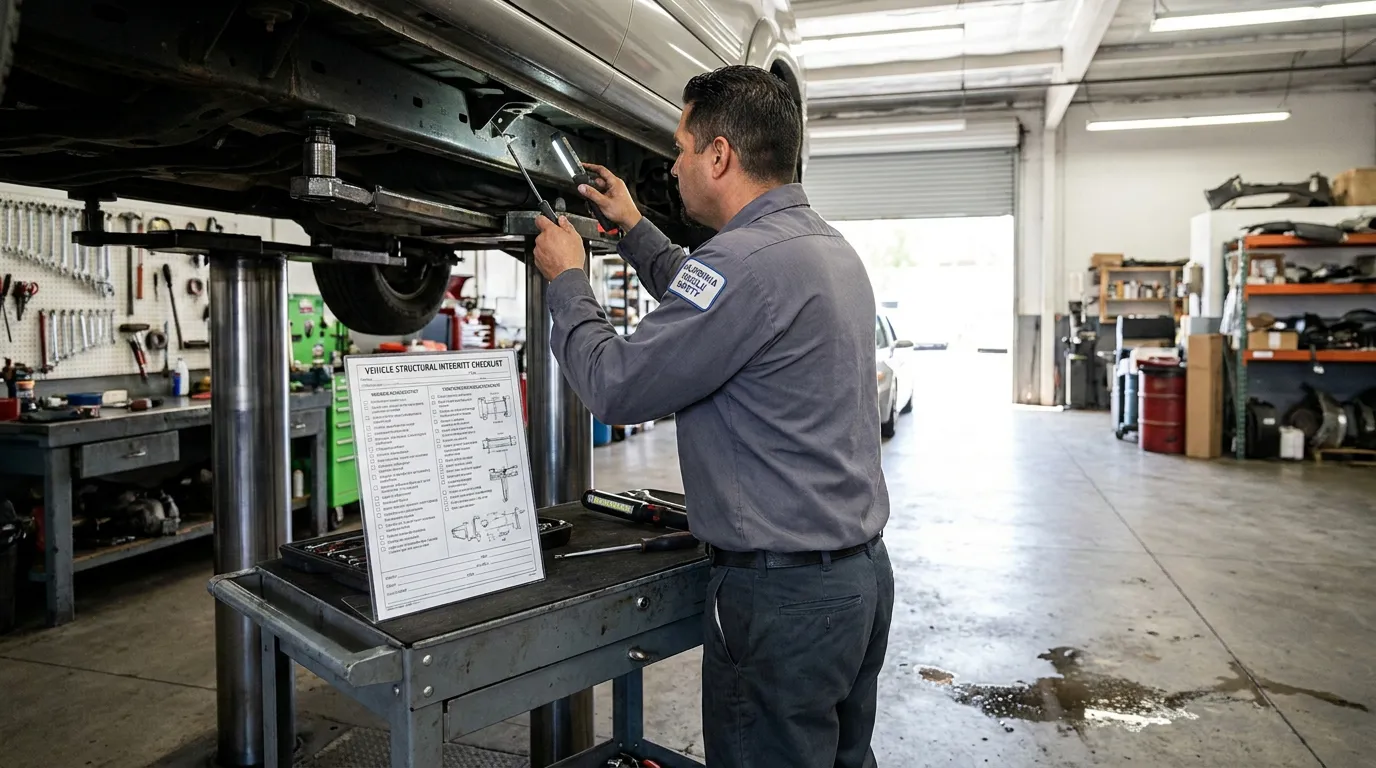
Causation is often the contested battleground. Defense witnesses may argue the injury would have occurred anyway. Plaintiffs often respond with sled testing, finite element modeling, exemplar vehicle teardowns, and comparison to alternative designs the manufacturer considered.
Design, Manufacturing, and Warning Defects
Three defect categories can support liability, and crashworthiness cases most often involve the first. A design defect means the product line, as engineered, is unreasonably dangerous. A manufacturing defect means one unit departed from its intended design. A warning defect means inadequate instructions or failure to warn of a known risk.
Seat-back collapse, roof crush in rollovers, side-impact intrusion, and fuel tank placement are classic design issues. Defective welds, contaminated airbag inflators, and tire belt separations often present as manufacturing claims.
How California Juries Decide Vehicle Design Defect Claims
California auto defect claims are generally tried under the Judicial Council’s CACI Series 1200 products liability instructions, which set out strict liability, negligence, and warranty theories. Design defect may go to the jury under two alternative tests. The consumer expectation test applies only where circumstances permit an inference about minimum safety based on everyday experience; complex engineering trade-offs are evaluated under the risk-benefit test. CACI No. VF-1201 is the current active verdict form covering design defect claims under both the consumer expectation and risk-benefit tests.
| Test | Core Question | Who Carries the Burden |
|---|---|---|
| Consumer expectation | Did the vehicle perform as safely as an ordinary consumer would expect in a foreseeable crash? | Plaintiff |
| Risk-benefit | Do the benefits of the design outweigh its inherent risks? | May shift to the manufacturer once the plaintiff shows the design was a substantial factor in causing harm |
That potential burden shift under CACI No. 1204 is significant. Once an injured occupant establishes the design was a substantial factor in causing harm, the manufacturer generally bears the burden of proving the design’s benefits outweigh its risks, often by disclosing internal testing, cost analyses, and rejected alternatives.
💡 Pro Tip: Preserve the vehicle. Insurers frequently total and auction wrecked cars within weeks, and the destruction of the only physical evidence can end an otherwise viable claim.
Who Can Be Held Responsible Besides the Automaker
Liability in a defective car lawsuit can extend along the chain of distribution. Component manufacturers, assemblers, wholesalers, distributors, and retail sellers may all face exposure, subject to defenses such as the component parts doctrine. CACI No. 1200’s Sources and Authority, quoting Arriaga v. CitiCapital Commercial Corp. (2008) 167 Cal.App.4th 1527, 1534, describes strict liability reaching parties “integral” to the producing and marketing enterprise.
An airbag case may name the inflator supplier, the tier-one restraint integrator, the automaker that specified and installed the system, and sometimes the selling dealership. Naming multiple defendants can matter where a foreign component maker is difficult to reach or one defendant is insolvent.
Comparative Fault Rarely Ends the Case
Your own driving mistake does not necessarily bar an enhanced injury recovery. California follows pure comparative fault, which reduces damages in proportion to a plaintiff’s share of responsibility rather than barring recovery. CACI Nos. 1207A and 1207B address comparative fault of the plaintiff and third persons in strict liability actions. A driver who ran a red light may still pursue the manufacturer for the separate harm allegedly caused by a collapsing seat.
Manufacturers commonly counter with misuse or modification, an affirmative defense addressed in the CACI products liability series. Aftermarket lift kits, non-OEM replacement parts, disabled safety systems, and improper repairs are usual arguments. Because manufacturers must account for reasonably foreseeable uses and misuses, whether an alteration was foreseeable is ordinarily a fact question for the jury.
Deadlines and Related California Protections
Crashworthiness claims are typically personal injury product liability actions, and California’s deadline to sue for personal injury is generally two years from the date of injury under Code of Civil Procedure section 335.1. Exceptions exist, including delayed discovery and tolling for minors, but courts interpret them narrowly, and they do not apply automatically. Wrongful death claims run from the date of death, and claims involving a public entity generally require a separate administrative claim, typically within six months. The applicable deadline depends on the facts and should be confirmed with counsel promptly.
California statutory law separately addresses safety-critical vehicle defects in the warranty context. Under Cal. Civ. Code § 1793.22(b)(1), a rebuttable presumption of a reasonable number of repair attempts may arise where a nonconformity “likely to cause death or serious bodily injury” has been subject to repair two or more times within 18 months or 18,000 miles.
💡 Pro Tip: Keep every repair order, recall notice, and service record. A documented history of complaints about the same component can corroborate notice and support a manufacturer’s liability theory.
Frequently Asked Questions
1. Can I sue the manufacturer if another driver caused the crash?
Potentially. Crashworthiness generally treats the manufacturer’s responsibility for enhanced injuries as separate from who caused the initial impact. Both the at-fault driver and the manufacturer may be defendants in the same action.
2. How do I know whether my injuries were “enhanced”?
You usually cannot know without engineering and biomechanical analysis. Warning signs include severe injury in a moderate-speed crash, an airbag that did not deploy, a seat that folded rearward, significant roof deformation, or a post-crash fire. These suggest investigation, not liability.
3. Does a recall have to exist before I can file?
No. A recall can be useful evidence of a known problem, though its admissibility can be contested. Many successful cases have involved defects the manufacturer never formally recalled.
4. Are these cases worth pursuing if my car was older?
Possibly. The relevant question is whether the vehicle was defective when it left the manufacturer’s control, not its age at the crash, though older vehicles may raise added proof and maintenance issues.
5. What makes these claims different from an ordinary car accident case?
Scope and complexity. A working Newport Beach auto defect law firm will often retain design engineers, metallurgists, and biomechanical professionals, and litigation against a manufacturer’s national defense counsel tends to run long.
The Short Version for Injured Occupants
Crashworthiness may give California occupants a potential claim against a manufacturer whose vehicle failed to protect them in a foreseeable crash. Strict liability generally removes the need to prove carelessness, the risk-benefit test may shift part of the burden onto the manufacturer, comparative fault generally reduces rather than bars recovery, and liability may reach parties throughout the distribution chain. Outcomes depend on specific facts, physical evidence, applicable deadlines, and engineering proof, so early case evaluation matters.
If the vehicle, not just the crash, injured someone you love, act before the evidence disappears. Reach out to our Newport Beach personal injury attorneys at Bisnar Chase by calling 800-561-4887 or request your free case review today.
Disclaimer: This content is for informational purposes only and is not legal advice. Every case is unique, and results may vary. Consult an attorney about your specific circumstances.