


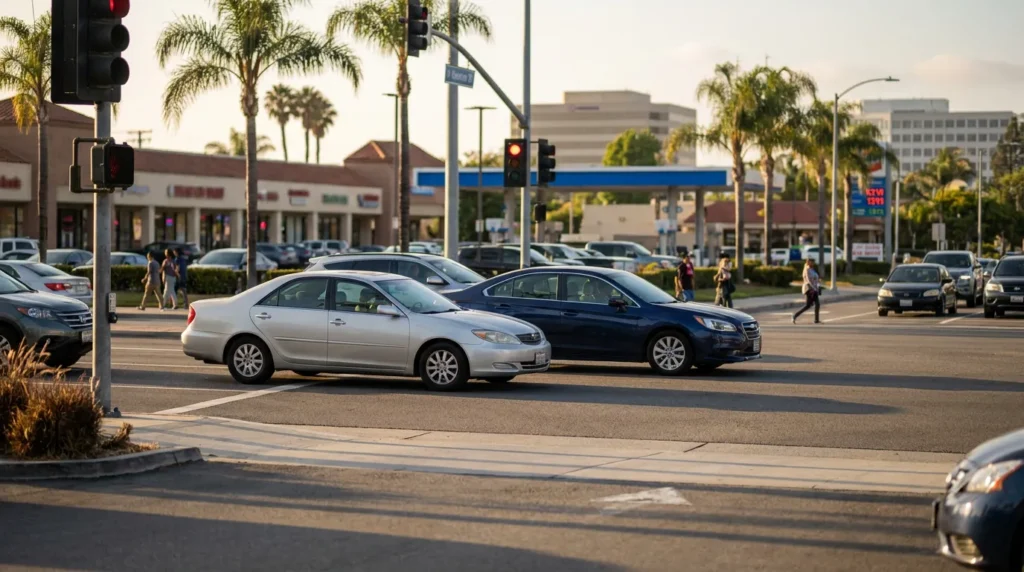
Orange County’s Injury Crash Crisis and What Victims Need to Know
Key Takeaways: More than 12,000 injury crashes hit Orange County roads annually. A car accident lawyer proves fault, preserves evidence, and protects your right to compensation before deadlines expire. California Civil Code § 1714 establishes every driver’s duty of ordinary care, while pure comparative negligence allows recovery even when partly at fault. Minimum insurance limits rose in 2025 to $30,000 per person and $60,000 per accident. Victims have two years to file personal injury lawsuits and three years for property damage claims. An attorney investigates crashes, manages insurer communication, identifies available policies, and documents injuries to maximize recovery.
More than 12,000 injury crashes strike Orange County roads, and a car accident lawyer helps by proving fault, preserving evidence, and protecting your right to compensation before critical deadlines expire. If you were hurt in a collision on the 405, the 5, or a surface street in Santa Ana or Newport Beach, the days after a crash can feel overwhelming. Medical bills arrive, insurance adjusters call, and the legal clock starts running immediately.
Whether you were a driver, passenger, pedestrian, or bicyclist injured through no fault of your own, the law provides a clear framework for recovery. Experienced legal guidance makes a measurable difference. If you or a loved one was injured, the team at Bisnar Chase is ready to review your situation. Call our office at 800-561-4887 or reach out through our contact page to learn how a car accident lawyer Orange County residents trust can help.
💡 Pro Tip: Photograph the scene, vehicles, visible injuries, and road conditions before anything is moved or repaired. Early documentation is often the strongest evidence in disputed claims.
The Legal Foundation for Holding a Negligent Driver Accountable
California negligence law is the backbone of nearly every injury crash claim. Under California Civil Code § 1714(a), everyone is responsible for injuries caused by a lack of ordinary care in managing their property or person. This statute establishes the “duty of ordinary care” that every driver owes to others on the road.
That duty is the standard used to prove negligence. When a motorist speeds, runs a red light, or drives distracted, they breach that duty. To recover damages, an injured person must show the other party breached the duty of care, that the breach caused the crash, and that measurable harm resulted.
Section 1714 is closely tied to California’s comparative fault principle. California’s pure comparative negligence rule, established in Li v. Yellow Cab Co. (1975), allows you to recover damages even if partly at fault, with recovery reduced in proportion to your share of blame. This matters when insurers try to shift responsibility onto the victim.
What the Law Requires Drivers to Do After a Collision
California imposes specific duties on every driver involved in a crash. For a collision resulting in property damage, California Vehicle Code § 20002(a) requires the driver to immediately stop at the nearest safe location. The statute clarifies that moving your vehicle to a safe spot does not affect the question of fault.
Drivers must also exchange identifying information at the scene. Under Vehicle Code § 20002, a driver must locate and notify the property owner or other involved parties and present their driver’s license and vehicle registration, including the current residence address. Failing to comply is a misdemeanor, commonly known as hit-and-run for property damage.
Here is a quick reference for post-crash duties under § 20002:
- Stop safely: Pull over immediately at the nearest safe location.
- Exchange information: Provide your license, registration, and current address.
- Notify the owner: Locate the property owner if a parked car or property is damaged.
- Document everything: Note the time, location, and any witnesses.
💡 Pro Tip: Not every police report contains an officer’s finding of fault. Under Vehicle Code § 20015, an officer generally may not include a fault determination against a reporting person in a property-damage counter report unless based on physical evidence examined at the scene or an express, knowing admission.
Insurance Coverage Available to Injured Crash Victims
California requires every auto liability policy to carry minimum coverage limits, and those minimums recently increased. Under California Vehicle Code § 16451, for policies issued or renewed on or after January 1, 2025, minimums rose to $30,000 per person, $60,000 per accident for bodily injury, and $15,000 for property damage.
Here is the coverage progression:
| Coverage Type | Before 2025 | On or After Jan. 1, 2025 |
|---|---|---|
| Bodily injury (one person) | $15,000 | $30,000 |
| Bodily injury (all persons) | $30,000 | $60,000 |
| Property damage | $5,000 | $15,000 |
The law schedules further increases in the future. For policies issued or renewed on or after January 1, 2035, minimum liability coverage is set to increase again. Over time, this gives injury victims access to larger required coverage limits. Still, minimum coverage is often insufficient in serious injury crashes, which is why identifying every available policy matters.
Commercial and truck collisions frequently involve higher policy limits. These claims can involve complex commercial insurance and, in trucking cases, both California state law and federal FMCSA regulations. Untangling layered coverage is a common reason victims seek injury crash representation in Orange County from a firm with commercial-vehicle experience.
Deadlines That Can Make or Break Your Claim
California sets a statute of limitations that can permanently bar your claim if missed. According to the official California Courts self-help resource, you generally must sue within a certain amount of time, and you will usually lose your case if you try to sue after the deadline passes. For personal injury, California generally allows two years from the date of injury to file suit.
Different claim types carry different deadlines. Property damage to a vehicle generally carries a three-year window from the date the damage occurred. These deadlines are fact-specific and can be tricky to calculate. If you have any doubt about whether you meet a deadline, speak with an attorney promptly.
Certain exceptions may adjust these timelines, but courts interpret them narrowly. Tolling and discovery rules apply in limited circumstances, but not automatically. Government administrative claim deadlines are often much shorter; claims against a public entity generally must be presented within six months. Reviewing your specific facts early helps avoid a missed deadline.
💡 Pro Tip: A claim is not automatically lost if an injured person or a responsible party dies. Under California Code of Civil Procedure § 377.20(a), a cause of action generally survives death and may be pursued, subject to the applicable limitations period.
How a Car Accident Lawyer Orange County Victims Rely On Adds Value
Legal representation turns a confusing process into a structured path toward recovery. An attorney investigates the crash, gathers independent evidence of liability, interprets police reports, and identifies every applicable insurance policy. This is particularly valuable when fault is disputed or a driver flees the scene.
A lawyer also manages communication with insurers and preserves critical evidence. Adjusters often move quickly to minimize payouts, and they can use early statements against you. Before speaking with an insurer, many victims benefit from reviewing what to know before filing a claim so they understand their rights.
Firms with a proven track record in catastrophic cases understand what serious injuries are worth. Brain injuries, spinal damage, and wrongful death claims require careful documentation of long-term medical needs and lost earning capacity.
💡 Pro Tip: Keep a folder with every medical record, receipt, and mileage log related to your treatment. Organized records strengthen the value of your car accident claim.
Frequently Asked Questions
1. How long do I have to file a car accident lawsuit in California?
In general, you have two years from the date of injury to file a personal injury lawsuit. Property damage claims generally have a 3-year statute of limitations. Because these deadlines are fact-specific, and shorter deadlines apply to claims against government entities, confirm your timeline with an attorney.
2. Can I recover damages if I was partly at fault?
Yes, California follows pure comparative negligence. This rule was established by the California Supreme Court in Li v. Yellow Cab Co. (1975) and works alongside the duty of care recognized in Civil Code § 1714(a). You may recover even if partly to blame, though your recovery is reduced by your percentage of fault.
3. What happens if the other driver left the scene?
Fleeing a property-damage crash is a misdemeanor under Vehicle Code § 20002. A lawyer can help identify the fleeing driver and explore uninsured motorist coverage that may apply to your situation.
4. How much insurance coverage is available after a crash?
Minimum limits rose in 2025 to $30,000 per person and $60,000 per accident for bodily injury. Serious crashes may require additional policies, and a lawyer can help locate all available coverage.
5. Do I need a lawyer for a minor injury crash?
Not every case requires litigation, but a consultation helps clarify your options. Many firms offer a free initial review so you can make an informed decision about your car accident claim.
Moving Forward After an Orange County Crash
Orange County’s high volume of injury crashes underscores the importance of quickly understanding your legal rights. California law provides a strong framework through Civil Code § 1714, the Vehicle Code, and clear filing deadlines, but applying that framework to your unique facts takes experience. Acting promptly protects both your evidence and your right to recover.
No outcome is guaranteed, and every case turns on its specific facts. The right guidance helps you avoid missed deadlines, respond to insurers with confidence, and pursue fair compensation for your injuries. Consulting an attorney early is one of the most protective steps a crash victim can take.
If you were injured, the attorneys at Bisnar Chase are here to help. Call us today for a free consultation at 800-561-4887, or connect with our team online to discuss your options.