


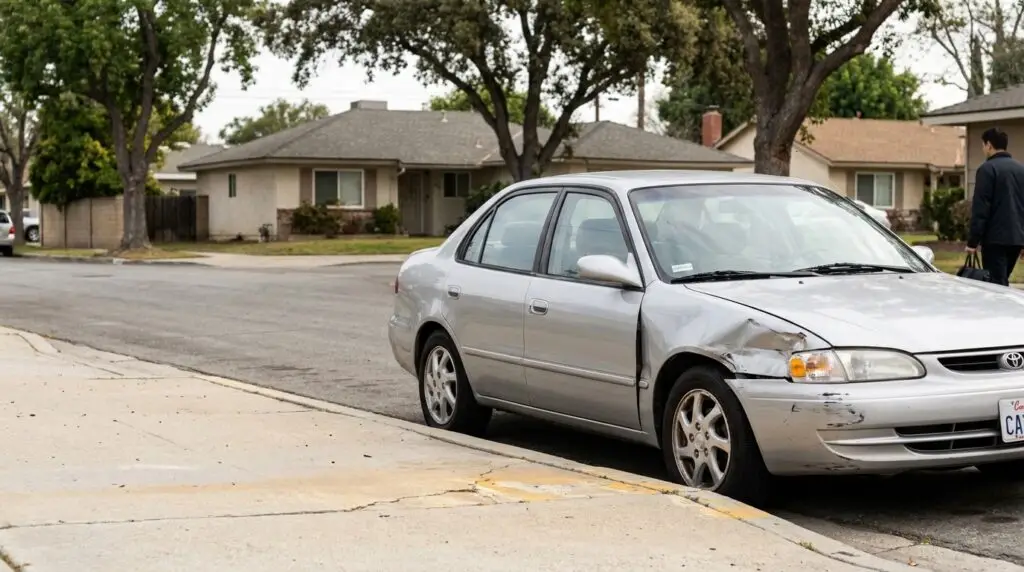
If you were hurt in a car accident in Orange County, the steps you take now can determine whether you receive fair compensation or far less than you deserve. California is an at-fault state, meaning the person who caused the crash is financially responsible for your losses.
You file a claim against the at-fault driver’s insurance to recover medical bills, lost wages, and other damages. But insurance adjusters have one goal: to pay you as little as possible. Understanding your rights, deadlines, and common mistakes puts you in a stronger position. This guide covers the critical legal steps to avoid pitfalls that often derail personal injury claims.
Bisnar Chase has represented injured Californians from our Newport Beach office for decades. For answers specific to your situation, call 800-561-4887 or contact us online for a free consultation.
How California’s At-Fault Insurance System Affects Your Car Accident Claim
California requires the negligent driver to bear financial responsibility for a collision through their liability insurance:
As the injured party, you file a third-party claim against the at-fault driver’s policy. The insurer investigates and decides what to offer. If your damages exceed the policy limits, you may need your own Underinsured Motorist (UIM) coverage or pursue a lawsuit against the driver directly.
Complications arise quickly:
Disputes over fault, injury severity, and claim value are routine. Insurance companies often make low initial offers designed to close the case cheaply before you understand the full scope of your losses. Confirm that any offer accounts for all potential damages, including future medical care.
💡 Pro Tip: Never accept a settlement before finishing treatment or receiving a clear prognosis from your doctor. Once you sign a release, you cannot ask for more money if your condition worsens.
California Statute of Limitations: Deadlines That Can End Your Case
Missing a filing deadline is one of the most devastating mistakes an accident victim can make. California imposes strict time limits on when you can bring a lawsuit. These deadlines apply regardless of the strength of the evidence or the severity of the injury.
| Claim Type | Filing Deadline | Key Detail |
|---|---|---|
| Personal injury | 2 years from the date of injury | Applies to physical and emotional harm |
| Property damage | 3 years from the date of damage | Covers vehicle repair or replacement |
| Claims against a government entity | 6 months to file an administrative claim | A government claim must be submitted before a lawsuit can be filed |
The two-year window for personal injury claims catches most people off guard. Medical treatment, negotiations, and investigation consume months quickly. For property damage, you have three years from the date of the damage. Review these California statute of limitations rules through the state court portal.
Exceptions That May Extend or Shorten Your Deadline
Certain circumstances can change the clock’s start or pause it altogether. Under the discovery rule, if an injury wasn’t immediately apparent, the statute of limitations may begin when the problem was discovered or reasonably should have been. Courts interpret this exception narrowly.
Tolling provisions can pause the deadline in limited situations. If the injured person is a minor, the statute is generally tolled until they turn 18, giving them until their 20th birthday to file. These rules are fact-specific and not applied automatically.
If your accident involved a government vehicle or agency, the rules change significantly. You must file an administrative claim within six months under California Government Code §911.2, well before you can bring a lawsuit. Missing this deadline can bar your case entirely, regardless of the standard two-year statute.
💡 Pro Tip: Preserving evidence early matters. Surveillance footage gets erased, witnesses forget details, and vehicle damage gets repaired. Starting sooner strengthens your case.
Why a Car Accident Attorney in Orange County Matters During the Insurance Process
Dealing with an insurance company without legal representation after a serious accident is risky. Adjusters are trained to minimize the company’s payments. They may request a recorded statement, but you’re not legally obligated to provide one to the other driver’s insurer. Adjusters ask questions designed to weaken your claim or shift fault. Politely declining is within your rights.
Insurance companies rely on delays in medical treatment to undermine claims. If you wait days or weeks to see a doctor, the insurer may argue your injuries are unrelated or less serious. Seeking immediate medical attention, even if you feel fine, creates a documented link between the collision and your condition. Adrenaline commonly masks pain and symptoms.
An experienced Orange County car accident lawyer can handle insurer communications, evaluate settlement offers, and build the strongest case on your behalf.
💡 Pro Tip: Keep a file with every accident-related document: police report, medical records, repair estimates, photos, and insurance correspondence. Organized documentation makes your claim harder to dispute.
Understanding Negligence and Comparative Fault in California Car Accidents
California Civil Code §1714(a) establishes the legal foundation for most car accident injury claims. The statute provides that everyone is responsible for injury caused by a lack of ordinary care. This is the principle your car accident case will be built upon: proving the other driver failed to exercise ordinary care and that failure caused your injuries.
How Pure Comparative Negligence Works
California follows the pure comparative negligence rule, which means you can recover damages even if partially at fault. Your recovery is reduced by your percentage of fault. If a court assigns 60% fault to the defendant and 40% to you, you recover only 60% of your total damages. Unlike some states that bar recovery once a plaintiff reaches 50% fault, California’s comparative negligence system has no such threshold.
This rule matters because insurance companies try to shift blame onto the injured person to reduce what they owe. They may argue you were speeding, distracted, or failed to brake. Having evidence, including police reports, witness statements, dashcam footage, and accident reconstruction, is critical to protecting your recovery.
Alcohol-Related Accidents and Liability
California Civil Code §1714(b) and (c) address liability in alcohol-related crashes. Providers of alcohol to intoxicated adults generally are not liable for resulting injuries. Instead, the intoxicated individual who causes injury bears responsibility. If a drunk driver hit you, your claim will typically be directed at that driver and their insurance, not the establishment that served them.
💡 Pro Tip: If the other driver was intoxicated, a police report documenting impairment or DUI arrest serves as powerful evidence of negligence. Request a copy of the full accident report as soon as available.
Steps to Protect Your Claim After an Orange County Car Accident
What you do in the hours and days after a collision often determines your personal injury claim outcome. Here are the most important steps:
- Call 911 and get a police report. An official report documents the scene, involved parties, and any citations issued. It becomes key evidence.
- Seek medical attention immediately. Even if injuries seem minor, a prompt evaluation creates a record tying your condition to the accident. Treatment gaps give insurers ammunition.
- Document everything at the scene. Take photos of vehicle damage, road conditions, traffic signals, skid marks, and visible injuries. Collect witness contact information.
- Notify your own insurance company. Report the accident as required by your policy, but keep your description factual and brief. Don’t speculate about fault.
- Don’t sign anything from the other driver’s insurer without first understanding your full rights. Early settlement offers rarely account for the true cost of injuries.
💡 Pro Tip: Write down your account of how the accident happened as soon as you’re able. Memory fades quickly, and contemporaneous notes can be invaluable if details are disputed.
Frequently Asked Questions
1. How long do I have to file a car accident injury claim in California?
Personal Injury Filing Deadline
The statute of limitations for personal injury claims in California is generally two years from the date of injury. Property damage claims have a three-year deadline. Exceptions such as the discovery rule or tolling for minors may apply in limited circumstances. Claims against government agencies must be filed as an administrative claim within 6 months under California Government Code § 911.2. Because these deadlines are strictly enforced, you should consult an attorney early.
2. Can I still recover compensation if I was partly at fault for the accident?
Recovery Under Comparative Fault
Yes. California’s pure comparative negligence rule allows you to recover damages even if you share fault. Your total recovery is reduced by your percentage of responsibility. Even a plaintiff who is mostly at fault may still recover a proportional share under this framework.
3. Should I give a recorded statement to the other driver’s insurance company?
Recorded Statements and Your Rights
You are not legally required to provide a recorded statement to the other driver’s insurer. These statements are often used to find inconsistencies or admissions that reduce claim value. You may politely decline and direct the adjuster to speak with your attorney.
4. What if the at-fault driver’s insurance does not cover all of my damages?
When Policy Limits Fall Short
If your damages exceed the at-fault driver’s policy limits, you may file a claim under your own UIM coverage or pursue a lawsuit against the driver. An attorney can evaluate all available sources of recovery and help determine the best path forward.
5. Why is it important to see a doctor right away after a car accident?
Medical Documentation and Claim Strength
Prompt medical treatment creates a documented connection between the accident and your injuries. Delaying care gives insurance companies an opening to argue injuries were pre-existing or unrelated. Even if you feel fine initially, adrenaline can mask symptoms of serious conditions, including soft tissue injuries and concussions.
Protecting Your Rights Starts With Knowing Them
Filing a car accident claim in California involves strict deadlines, complex fault rules, and an insurance process designed to minimize what you receive. Understanding how California Civil Code §1714(a) establishes negligence, how comparative fault affects your recovery, and why the statute of limitations cannot be ignored gives you a real advantage. The most important thing you can do is act early, preserve evidence, and get informed legal guidance before making decisions that affect your future.
If you or a loved one was injured in a car accident in Orange County, Bisnar Chase is here to help. Call 800-561-4887 or reach out to our team today.
Related: How to identify and find the best personal injury attorney for your CA case.