


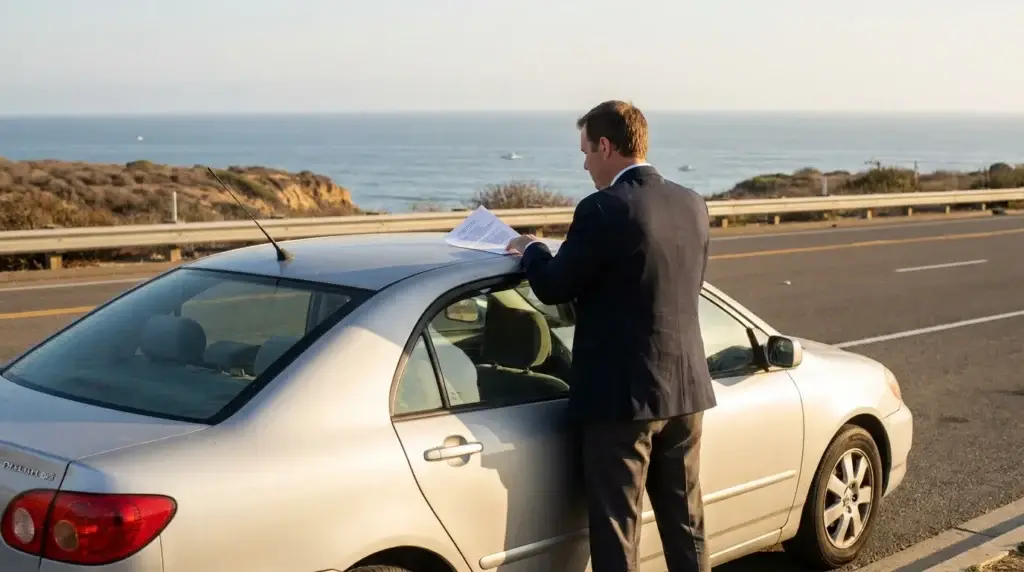
What to Know After a Crash on Pacific Coast Highway
Key Takeaways: Yes, a Newport Beach car accident lawyer can help after a coastal highway crash by guiding you from the scene through claim resolution. California law requires you to stop, exchange information, and report crashes involving death, while Civil Code § 1714 establishes the duty of care supporting negligence claims. Comparative fault means partial blame does not bar recovery, though your award may be reduced proportionally. Strict deadlines apply: two years for personal injury, three years for property damage, and six months for government claims. An attorney identifies available insurance coverage and protects your right to fair compensation.
Yes, a car accident lawyer in Newport Beach can help you after a coastal highway crash, from the scene to claim resolution. Pacific Coast Highway collisions often involve complex liability questions, strict reporting duties, and firm filing deadlines. An attorney helps preserve evidence, meet deadlines, identify insurance coverage, and pursue fair compensation.
If you were hurt in a crash, the team at Bisnar Chase is ready to listen. Call our office at 800-561-4887 for a free consultation or send us a message through our secure contact page.
Your Legal Duties at the Scene of a Coastal Highway Crash
California law requires specific actions after a collision, and following them protects both your safety and your claim.
After a crash that damages property, drivers must immediately stop at the nearest safe location and exchange or leave identifying information. This matters on PCH, where stopping in a live traffic lane is dangerous. Under Cal. Veh. Code § 20002, failing to comply is a misdemeanor punishable by up to six months in county jail, a fine up to 1,000 dollars, or both.
Duties become more serious when a crash causes death.
If a coastal highway crash results in death and no officer is present, the involved driver must immediately report the accident to the nearest CHP or authorized police officer. These are legal obligations under Cal. Veh. Code § 20004, not optional courtesies.
💡 Pro Tip: Photograph the roadway, signage, skid marks, and vehicle positions before anything is moved. Sun glare, curves, and merging beach traffic can all affect liability.
How the Duty of Care Supports Your Injury Claim
Every negligence claim in California traces back to a foundational rule about responsibility.
California Civil Code § 1714 establishes the baseline duty of care supporting any negligence claim related to car accidents, meaning a driver who causes a coastal highway crash through careless conduct can be held liable for resulting injuries.
The statute states that everyone is responsible not only for the result of willful acts, but also for injury occasioned to another by want of ordinary care or skill.
You can read the full text of California’s statutory duty of ordinary care directly.
Because § 1714 codifies the duty of care, an attorney can use it to build your case.
A Newport Beach car accident lawyer can rely on it to prove the at-fault driver breached the ordinary-care standard and caused harm.
Proving negligence means showing duty, breach, causation, and damages.
Comparative Fault and Why Partial Blame Is Not the End
Being partly at fault for a coastal highway crash does not automatically bar compensation.
California’s duty statute incorporates comparative fault, so an injured driver who was partly to blame can still recover damages, with the award reduced in proportion to their share of fault.
The statute holds a person responsible except to the extent that the person has, willfully or by want of ordinary care, brought the injury upon himself or herself.
Insurers often try to pin extra blame on injured drivers, and the law provides tools to push back.
California uses comparative fault, and a technical equipment violation does not automatically establish negligence.
Under Cal. Veh. Code § 27315, a violation does not automatically mean negligence for comparative-fault purposes, but negligence can still be proven as a fact.
💡 Pro Tip: Avoid apologizing or speculating about fault at the scene or to insurers. Casual statements can reduce your recovery under comparative fault principles.
The Deadlines That Can Make or Break Your Case
California sets firm deadlines to sue after a crash, and missing them can permanently end your right to recover. According to California Courts guidance, you generally have to sue someone within a certain amount of time, called the statute of limitations, and missing the deadline typically means losing your case.
You can review the state’s overview of civil filing deadlines for context.
Different types of harm carry different timelines.
For personal injury claims, California allows 2 years from the date of injury to file suit.
Vehicle-damage claims follow a 3-year timeline for property damage, written contract claims are 4 years, and oral contracts 2 years.
| Type of Claim | General Deadline to File |
|---|---|
| Personal injury | 2 years from the injury |
| Property damage | 3 years from the damage |
| Written contract | 4 years |
| Oral contract | 2 years |
Deadlines shrink dramatically when a government entity is involved.
If a government agency or employee is involved, much earlier deadlines apply.
If a Newport Beach coastal highway crash involves a public entity, such as a Caltrans road-design defect, the injured party must present a written claim to that entity no later than six months after the cause of action accrues under Cal. Gov. Code § 911.2, and missing this window can bar the claim entirely.
A missed government deadline is not always fatal, but relief is limited.
If the six-month deadline is missed, an injured person may apply in writing for leave to present a late claim within a reasonable time not to exceed one year after the claim accrued under Cal. Gov. Code § 911.4. Courts apply relief narrowly.
💡 Pro Tip: If your crash involved a public road defect or government vehicle, treat the six-month window as your true deadline and seek legal advice immediately.
Insurance, Coverage, and Shared Recovery Pools
Identifying available insurance is one of the most practical ways a Newport Beach car accident lawyer helps after a coastal highway crash.
California requires drivers to carry proof of financial responsibility, typically shown by an insurance carrier certificate confirming a motor vehicle liability policy under Cal. Veh. Code § 16431.
When multiple people are hurt, settlement math changes.
When two or more people are injured or killed in a single accident, payments aggregating 30,000 dollars can extinguish certain owner liability for death or injury arising from that accident under Cal. Veh. Code § 17155. That limited pool affects how settlements are structured when several victims share coverage. Learning what evidence strengthens your claim early can protect your position.
Why Injured Drivers Turn to a Car Accident Lawyer Newport Beach Residents Trust
Coastal highway crashes combine high speeds, complex fault questions, and layered insurance, where experienced counsel adds value. A skilled Orange County car accident lawyer can preserve evidence, handle adjusters, and track overlapping deadlines while you focus on recovery. Bisnar Chase brings decades of experience to motor vehicle collision claims, including catastrophic injury and wrongful-death matters.
The firm’s recognition reflects a strong reputation among peers and clients. In 2026, all of the firm’s attorneys received a Super Lawyers rating, and the firm was named to Best Lawyers’ 2026 Best Law Firms in the US list. These honors, along with recognition of the firm’s leadership among the nation’s top personal injury attorneys, reflect a proven track record in this practice area. To learn more, explore our overview for a trusted car accident lawyer Newport Beach victims rely on.
Common challenges after a coastal crash include:
- Disputes over the right of way on curving beach routes
- Insurers minimize soft-tissue injuries or delay payment
- Multiple injured parties competing for limited coverage
- Uncertainty about whether a public entity shares fault
💡 Pro Tip: Keep a journal of symptoms, medical visits, and missed work. This supports both injury and property-damage claims.
Frequently Asked Questions
1. How long do I have to file a car accident injury claim in California?
In general, you have two years from the date of injury to file a personal injury lawsuit.
California allows 2 years from the date of injury to file a personal injury claim.
Property damage follows a three-year window, and government claims require action within six months.
2. Can I still recover money if the crash was partly my fault?
Often, yes, though you may recover less.
California incorporates comparative fault, so an injured driver who was partly to blame can still recover damages, with the award reduced in proportion to their share of fault.
3. What happens if a government agency caused my coastal highway crash?
You generally must file a written claim with that entity within six months.
A claim against a public entity must be presented no later than six months after the cause of action accrues, and missing this window can bar the claim entirely.
4. Do I have to report a coastal highway crash?
Reporting duties depend on crash severity.
Drivers in a property-damage crash must immediately stop and exchange or leave identifying information.
If the crash results in death and no officer is present, the driver must immediately report it to the nearest CHP or authorized police officer.
5. What if several people were injured in the same accident?
Available insurance may be shared among injured parties.
When two or more people are injured or killed in one accident, payments aggregating 30,000 dollars can extinguish certain owner liability for death or injury arising from that accident.
Carefully coordinating claims can protect your recovery share.
Moving Forward After Your Newport Beach Crash
A coastal highway collision creates overlapping duties, deadlines, and insurance questions that are difficult to manage alone. From reporting obligations under the Vehicle Code to the duty of care in Civil Code § 1714, from the two-year injury deadline to the six-month government claim window, the rules reward drivers who act promptly. Comparative fault means partial blame is rarely the end, and identifying every insurance source can shape your final recovery.
If you or a loved one was injured on PCH or another Orange County road, the attorneys at Bisnar Chase are ready to help. Call 800-561-4887 for a free consultation or reach out through our online contact form today. Reach out to our Newport Beach personal injury attorneys and let us help you take the next step.