


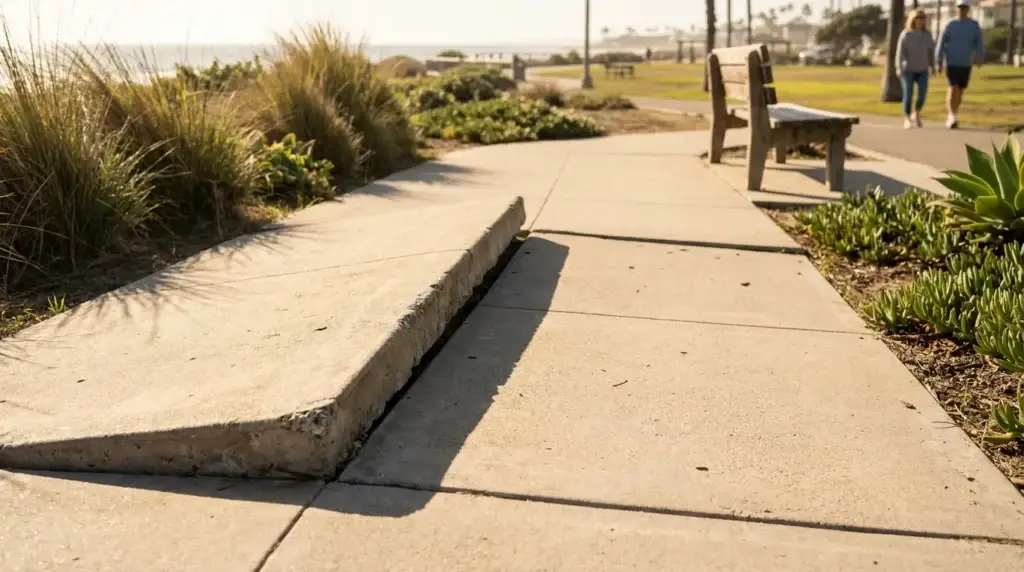
When a City Sidewalk, Roadway, or Park Causes Your Injury
Key Takeaways: California Government Code § 835 governs when public entities like the City of Newport Beach may be liable for injuries caused by dangerous conditions on public property. Injured persons must prove that the entity owned or controlled the property, that a dangerous condition existed at the time of injury, that the condition created a reasonably foreseeable risk of the kind of injury incurred, and that the condition proximately caused harm.
Liability requires showing either that a public employee negligently or wrongfully created the hazard within scope of employment or that the entity had actual notice under § 835.2(a) or constructive notice under § 835.2(b) in sufficient time to take protective measures. Section 835.4 may provide an affirmative defense by weighing injury probability and gravity against repair costs. Beach and water-adjacent claims raise additional immunity questions under §§ 831.2, 831.21, 831.7, and 831.8. Written claims for personal injury must generally be presented within six months of accrual, making prompt preservation of evidence essential.
If you were hurt by a hazard on public property in Newport Beach, California Government Code § 835 generally governs whether the city may be held responsible. Unlike claims against private entities, you cannot simply argue government carelessness. Public entity liability in California is statutory, requiring proof the property was in a dangerous condition at the time of injury, the condition created a reasonably foreseeable risk of the kind of injury incurred, and either a public employee negligently or wrongfully created the condition within scope of employment, or the entity had actual or constructive notice of the dangerous condition under § 835.2 in sufficient time to take protective measures.
If a cracked sidewalk, unlit stairway, poorly maintained bike path, or hazardous beach facility injured you, the team at Bisnar Chase can help evaluate whether a claim against a public entity is viable. Call 800-561-4887 to speak with our Newport Beach personal injury attorneys, or contact us now to request a free case review.
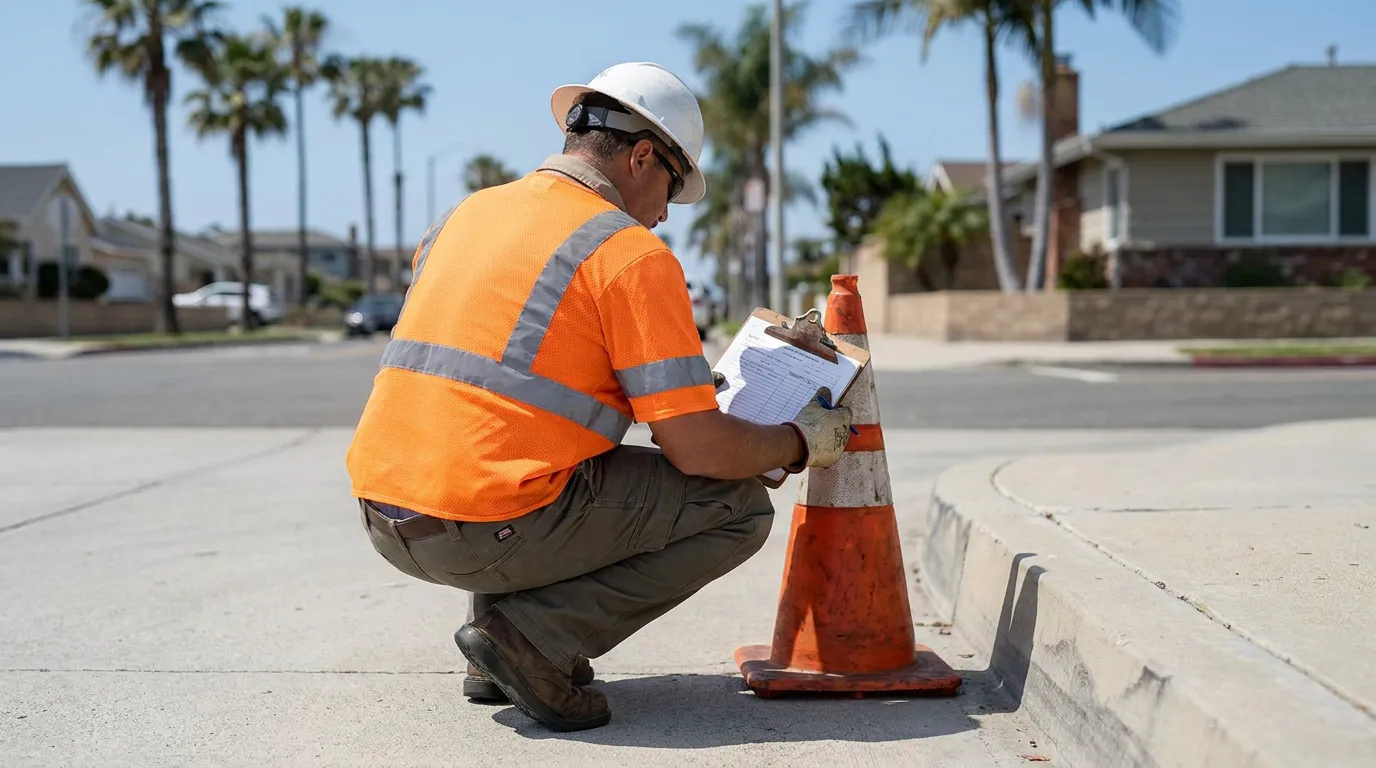
The Elements of Government Code 835 Dangerous Condition Public Property Claims
California courts break a § 835 claim into fixed elements, each requiring proof. The Judicial Council’s pattern instruction on dangerous conditions of public property, CACI No. 1100, requires plaintiffs to establish six elements: (1) the public entity owned or controlled the property; (2) the property was in a dangerous condition at the time of the incident; (3) the dangerous condition created a reasonably foreseeable risk of the kind of injury that occurred; (4) that either a public employee’s negligent or wrongful conduct within the scope of employment created the dangerous condition, OR that the public entity had notice of the dangerous condition for a long enough time to have protected against it; (5) the plaintiff was harmed; and (6) the dangerous condition was a substantial factor in causing the plaintiff’s harm.
The verdict form walks jurors through these questions in sequence. A “no” answer at any stage generally ends the case, explaining why public property injury cases demand early, thorough investigation.
Why “Substantial Factor” Causation Helps Injured Plaintiffs
Causation under § 835 does not require proving the hazard was the only cause of injuries. The verdict form asks whether the dangerous condition was a substantial factor in causing harm. A deteriorating roadway edge, raised sidewalk panel, or poorly designed beach access ramp need only be a substantial contributing cause.
This matters because California follows pure comparative negligence. Even if a jury concludes you were partially at fault for not noticing a hazard, you may still recover damages, reduced by your percentage of fault. Questions about shared responsibility are best addressed with counsel who regularly handle dangerous condition claims against public agencies.
Proving the City Knew About the Hazard
Notice often determines whether claims against Newport Beach and other Orange County public entities succeed or fail. Under Gov. Code § 835.2(a), a public entity had actual notice if it had actual knowledge of the condition’s existence and knew or should have known of its dangerous character. Actual notice often surfaces through prior complaints, work orders, incident reports, or inspection records obtained in discovery or through public records requests.
When no such record exists, constructive notice may become the path forward. Under Gov. Code § 835.2(b), a plaintiff must establish the condition existed long enough and was of such obvious nature that the entity, exercising due care, should have discovered the condition and its dangerous character. The statute identifies relevant considerations, including whether the entity maintained and followed a reasonably adequate inspection system. Photographs showing weathering, vegetation growth in cracks, or long-worn pavement can be persuasive evidence of duration.
Actual Notice vs. Constructive Notice at a Glance
| Type of Notice | What Must Be Shown | Common Evidence |
|---|---|---|
| Actual notice (§ 835.2(a)) | The entity actually knew the condition existed and knew or should have known it was dangerous | Prior complaints, service requests, internal memos, past incident reports |
| Constructive notice (§ 835.2(b)) | The condition existed long enough and was obvious enough that due care, including a reasonably adequate inspection system, should have found it | Photographs showing age of defect, maintenance schedules, inspection logs, witness testimony |
💡 Pro Tip: Photograph the hazard from multiple angles and distances the same day if you can, and include a common object for scale. Cities frequently repair defects quickly after an incident, and post-repair photos rarely tell the story a jury needs to hear.
The Reasonableness Defense Cities Rely On
Proving a dangerous condition existed does not end the analysis, because § 835.4 may give public entities a statutory affirmative defense. Under Gov. Code § 835.4(a), an entity is not liable under § 835(a) if it establishes that the act or omission creating the condition was reasonable, determined by weighing the probability and gravity of potential injury against the practicability and cost of taking alternative action.
Cities may defeat liability even where a hazard genuinely existed if the cost-benefit balance favors the agency. Countering that defense often requires engineering testimony, comparable repair cost data, and evidence about how long the agency had to act. The full text of these provisions is available in the state’s public entity liability statutes.
Where § 835 Fits in the Government Claims Act
Section 835 does not stand alone; it sits inside California’s Government Claims Act. The California Supreme Court has described that statutory scheme as a comprehensive framework setting out the tort liabilities and immunities of public entities and their employees. Because “dangerous condition” is itself a defined statutory term under Gov. Code § 830, the definitions and notice rules do real work in these cases.
Before filing a civil lawsuit against a city or other public agency, an injured person must first present a written government claim to the entity. Under Gov. Code § 911.2, a claim for personal injury must be presented within six months after the cause of action accrues, and suit must then be filed within the short period specified in the rejection notice, typically six months. That administrative deadline is considerably shorter than California’s general two-year civil statute of limitations for personal injury, and relief for late claims is limited.
Beaches, Piers, and Water-Adjacent Property in Newport Beach
Newport Beach’s coastline creates a category of claims governed by additional immunity rules beyond § 835. Under Gov. Code §§ 831.2 and 831.21, public entities are generally immune from liability for injuries caused by a natural condition of unimproved public property, and public beaches are treated as such for most purposes, though claims involving improvements like stairways, piers, railings, or restrooms may fall outside that immunity. Gov. Code § 831.7 separately limits liability for injuries arising from hazardous recreational activities.
Gov. Code § 831.8 addresses reservoirs, canals, conduits, and drains and preserves liability in limited circumstances where the injured person was not trespassing, the dangerous condition created a substantial and unreasonable risk of death or serious bodily harm, the danger was not reasonably apparent to a person using due care, and the entity had actual knowledge in time to take protective measures.
Section 831.8 also contains provisions addressing children, which may preserve liability where the injured person was under 12 years of age, or 16 years of age or younger in the case of certain flood control channels, and because of immaturity did not discover the condition or appreciate its dangerous character, while the entity had actual knowledge of the hazard.
Common Newport Beach Public Property Hazards
- Uplifted or cracked sidewalk panels near tree roots
- Unmarked drop-offs, potholes, and pavement failures on city roadways
- Deteriorated stairways, handrails, and ramps at beach access points
- Inadequate lighting or signage in municipal parking structures and parks
- Poorly maintained bike and pedestrian paths
- Broken or missing barriers along piers and boardwalks
Practical Steps After a Public Property Injury
What you do in the first days after the incident can significantly affect whether a city liability injury claim succeeds. Report the incident to the responsible agency in writing and keep a copy, keeping in mind that an informal report is not a substitute for a formal government claim. Seek medical care promptly so that you document your injuries contemporaneously, and preserve the shoes and clothing you were wearing. Identify witnesses while memories are fresh.
Determining which entity actually owned or controlled the location can be surprisingly complicated. A stretch of walkway may belong to the city, the county, a special district, or Caltrans.
💡 Pro Tip: Send a written preservation request early asking the agency to retain maintenance logs, inspection records, prior complaints, and any surveillance footage for the location. Agencies routinely overwrite video within weeks.
Frequently Asked Questions
1. Can I sue the City of Newport Beach directly for a sidewalk injury?
You must first present a written government claim to the entity, typically within six months of injury, before filing suit. If the claim is rejected, a civil action may follow, usually within six months of the rejection notice. Because these timelines are short, consult an attorney quickly.
2. What counts as a “dangerous condition” under § 835?
The term is statutorily defined in Gov. Code § 830 and generally refers to a condition of property creating a substantial risk of injury when the property is used with due care in a reasonably foreseeable manner. Under § 830.2, a condition is not dangerous as a matter of law if the risk was so minor that no reasonable person would conclude it posed a substantial risk.
3. What if I was partly distracted when I fell?
California’s pure comparative negligence rule may allow recovery even when the injured person bears some fault, with damages reduced proportionally. Public entities often raise this argument and may also argue the property was not used with due care.
4. Does the city escape liability if repairs would have been expensive?
Not automatically, but cost may be relevant. Under § 835.4, the entity bears the burden of establishing the defense, and the trier of fact may weigh the probability and gravity of potential injury against the practicability and cost of alternative action.
5. What if my child was injured at a public beach or water facility?
Section 831.8 includes provisions that may preserve liability in certain circumstances involving young children who, because of immaturity, did not appreciate a danger the entity actually knew about, and other immunities such as §§ 831.2, 831.21, and 831.7 may also apply.
Understanding Your Options Before the Clock Runs
A government code 835 dangerous condition public property claim is demanding but far from unwinnable. Success depends on proving ownership or control, an actual dangerous condition, foreseeability, notice or an employee-created hazard, and substantial-factor causation, then withstanding the § 835.4 reasonableness defense and any applicable statutory immunity. Evidence gathered in the first weeks, such as photographs, witness names, maintenance records, and medical documentation, tends to carry significant weight later.
If a hazard on public property in Newport Beach or elsewhere in Orange County caused your injury, Bisnar Chase is ready to review what happened and explain your options. Call 800-561-4887 or reach out to a Newport Beach premises liability lawyer today for a free consultation.
Disclaimer: This content is for informational purposes only and is not legal advice. Every case is unique, and results may vary. Consult an attorney about your specific circumstances.