


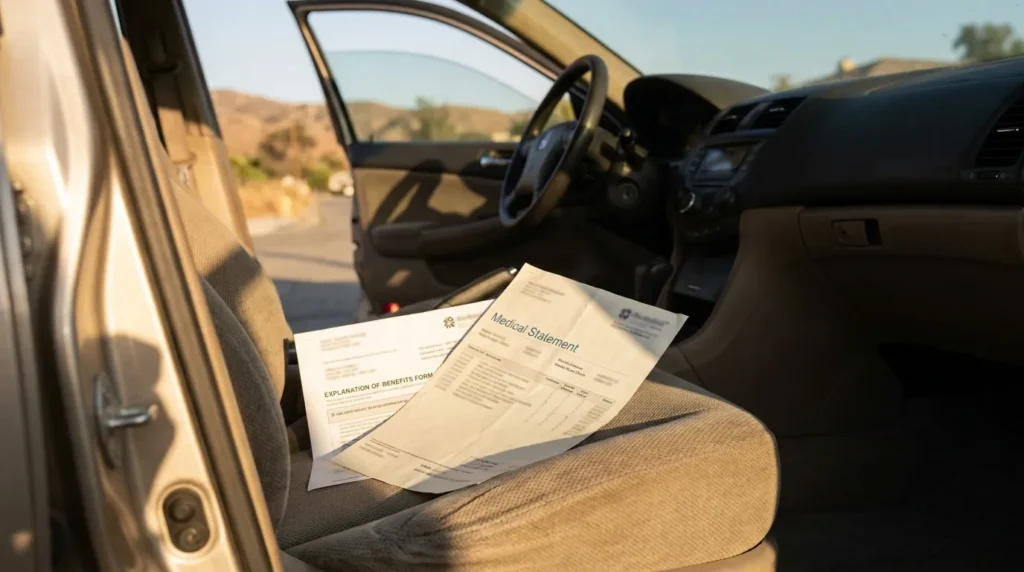
Why Your Medical Bills and Your Recoverable Damages Are Two Different Numbers
Key Takeaways: The Howell paid rule, from Howell v. Hamilton Meats & Provisions, Inc. (2011) 52 Cal.4th 541, limits recovery of past medical expenses in San Bernardino car accident claims to the amount actually paid and accepted as full payment, not the higher amount billed. Recovery generally cannot exceed the amount paid or still owing, and may be further capped by reasonable value.
The rule applies to private insurance, Medi-Cal, Medicare, and workers’ compensation, while uninsured plaintiffs on liens are measured by reasonable value. The collateral source rule still protects amounts your insurer paid, and the at-fault driver receives no credit for your coverage. Corenbaum v. Lampkin extended Howell to limit unpaid billed amounts as evidence of general damages and future care, though Bermudez questioned this. Hospital liens face separate limits, and deadlines like the two-year statute of limitations can bar claims entirely.
If you were hurt in a crash on the 215 or at a San Bernardino intersection, your hospital bills may total tens of thousands while your health insurer paid a fraction. Under California law, what you may recover from the at-fault driver for past medical care is generally limited to what was actually paid and accepted as full payment, not the gross bill amount. This principle comes from Howell v. Hamilton Meats & Provisions, Inc. (2011) 52 Cal.4th 541, and shapes nearly every serious injury settlement in San Bernardino County.
Understanding this rule early can change how you build your claim. If you have questions about how the paid rule affects your case, the team at Bisnar Chase is available to review your medical billing records and explain your options. Call 800-561-4887 or contact us now to speak with someone about your situation.
What the Howell v Hamilton Meat’s Paid Rule Actually Holds
The Howell rule limits recovery of past medical expenses to the amount actually paid and accepted by the provider as full payment, rather than the higher amount billed. The case arose from a traffic collision, applying directly to San Bernardino auto claims.
The numbers explain the doctrine clearly. The plaintiff was billed roughly $190,000 in medical charges, but her providers accepted approximately $60,000 from her health plan as full payment, leaving about $130,000 written off and never paid. The Court held she could not claim the undiscounted sum because the written-off portion was never a real economic loss to her.
The Court did not eliminate the collateral source rule. Amounts your health insurer actually paid remain recoverable from the at-fault driver, and the defendant receives no credit for your coverage. The collateral source rule generally does not excludes written-off amounts that the plaintiff orn her behalf owed or paid. You can read the full Howell v. Hamilton Meats decision published by Justia.
The Two-Prong Test Courts Apply to Past Medical Expenses
Courts reading Howell apply a two-part limit. First, recovery cannot exceed the amount actually paid or still owing. Second, recovery may be further capped by reasonable value of the services. A plaintiff generally recovers the lesser of these two figures.
When You Have Health Insurance, Medi-Cal, Medicare, or Workers’ Comp
The paid rule extends beyond private PPO plans. California courts have applied similar reasoning where workers’ compensation paid the bills (Sanchez v. Brooke (2012) 204 Cal.App.4th 126), and where Medi-Cal or Medicare paid (Luttrell v. Island Pacific Supermarkets, Inc. (2013) 215 Cal.App.4th 196). The logic is consistent: these payors typically bar balance billing, so the discounted amount may be the only sum owed.
When You Are Uninsured and Treating on a Medical Lien
Uninsured plaintiffs face different rules. If no insurer paid and your providers are treating on a lien, damages turn on the reasonable-value prong, which is a jury question typically proven through testimony on market rates. In Bermudez v. Ciolek (2015) 237 Cal.App.4th 1311, the court reduced past medical damages by $46,175.41 in unsupported charges. Understanding the role of a medical lien in a California injury case is essential if you are treating without health coverage.
How Howell Affects Hospital Liens Against Your Settlement
Hospitals cannot simply assert liens for full chargemaster rates. Under the Hospital Lien Act (Civ. Code §§ 3045.1, 3045.6), a hospital’s lien generally reaches only reasonable and necessary charges. Courts have indicated bills alone may be insufficient proof of reasonableness and that valid liens depend on underlying patient debt (State Farm Mutual Ins. Co. v. Huff (2013) 216 Cal.App.4th 1463, Parnell v. Adventist Health System/West (2005) 35 Cal.4th 595). Recovery is also generally capped at 50% of the amount recovered from the tortfeasor after deducting prior liens (Civ. Code § 3045.4).
| Billing Scenario | Governing Prong | Typical Evidence |
|---|---|---|
| Private insurance paid a discounted rate | Amount actually paid | Explanation of benefits, provider ledgers |
| Medi-Cal, Medicare, or workers’ comp paid | Amount actually paid | Payment records, statutory no-balance-billing rules |
| Uninsured, treating on a lien | Reasonable value | Testimony on market rates for the services |
| Hospital asserts a statutory lien | Reasonable and necessary charges | Proof beyond the bill itself, subject to the 50% cap |
What Corenbaum Added, and Where the Law Remains Unsettled
Corenbaum v. Lampkin (2013) 215 Cal.App.4th 1308 extended Howell by holding that full undiscounted billed amounts are generally inadmissible not only to prove past medical expenses but also as evidence supporting general damages and future medical care costs. Corenbaum did not bar recovery of future costs; those may still be proven through expert testimony about reasonable value.
The law remains unsettled. Footnote 6 in Bermudez expressed reservations, noting billed amounts may carry relevance where reasonable value is genuinely disputed. A useful analysis appears in medical liens after Howell published in Advocate Magazine. Outcomes on these evidentiary questions remain fact-dependent.
💡 Pro Tip: Ask your providers for actual paid amounts and adjustment entries, not just itemized charges. The adjustment column shows the negotiated rate differential and often influences the value of your economic damages.
Other California Rules That Shape a San Bernardino Car Accident Claim
Howell does not operate in isolation. Several other statutes commonly affect San Bernardino injury recovery:
- Civ. Code § 3333.4 generally bars recovery of non-economic losses (pain, suffering, disfigurement) in motor vehicle actions where the injured person was convicted of DUI, owned an uninsured vehicle involved in the crash, or operated without financial responsibility. An exception may allow recovery when injured by a driver later convicted of DUI.
- Civ. Code § 3333.1 permits defendants in medical malpractice actions to introduce evidence of benefits from Social Security, disability, workers’ compensation, and health insurance. This statute is limited to malpractice and does not apply to car accident claims.
- California follows pure comparative negligence, meaning your recovery is reduced by your percentage of fault rather than eliminated (Civ. Code § 1714).
Deadlines That Can End a Claim Before Howell Ever Matters
Paid-amount analysis is worthless if the claim is untimely. Most California personal injury actions must be brought within two years of the injury date under Code Civ. Proc. § 335.1. Different deadlines may apply for minors, absent defendants, or delayed discovery situations.
Claims involving public entities follow separate rules. If your collision involved a city, county, or transit vehicle, you generally must present a written government claim within six months before filing suit, as outlined in California Courts guidance on civil filing deadlines. Once rejected, a much shorter lawsuit deadline applies. Missing the administrative claim deadline may bar the lawsuit entirely. Anyone weighing these timelines should speak with a howell v hamilton meats paid rule lawyer before assuming a deadline applies.
💡 Pro Tip: Keep every explanation of benefits your insurer sends. Adjusters frequently value claims based on billed totals, then reduce them late in negotiations. Having paid figures organized from day one keeps the conversation honest.
Frequently Asked Questions
1. Does the Howell paid rule mean my insurance company benefits instead of me?
Not directly. The collateral source rule generally provides that amounts your insurer paid may remain recoverable, so the at-fault driver receives no windfall. Your insurer may assert reimbursement or subrogation rights against your recovery under your plan terms.
2. What if I have no health insurance at all?
Then your past medical expenses may be measured by reasonable value of care received. That figure is generally a jury question requiring testimony about prevailing market rates for similar services.
3. Can the jury still hear my full billed charges?
Under Corenbaum, undiscounted billed amounts exceeding what was paid are generally inadmissible to prove past medicals, general damages, or future care. Bermudez questioned this reasoning, so admissibility can depend on case posture and the trial court.
4. How does the paid rule affect a car accident settlement in San Bernardino?
Adjusters routinely value claims using paid amounts rather than billed totals. Knowing which measure governs your file and having documentation to support reasonable value can strengthen your negotiating position.
5. Does Howell apply to future medical care?
Howell addressed past medical expenses. Corenbaum extended its reasoning to bar using undiscounted billed amounts as evidence of future care costs, but future medical expenses remain recoverable through expert testimony about reasonable cost of anticipated care.
Getting the Numbers Right Before You Settle
The Howell paid rule is not a reason to undervalue your claim, it is a reason to document it correctly. Between the amount paid limit, reasonable value measure, hospital lien limits, and evidentiary questions Corenbaum and Bermudez left open, the difference between a well-prepared file and a poorly organized one can be substantial. Every case turns on its own facts, and you should consult an attorney about your specific circumstances.
You do not have to sort through billing statements and lien claims alone. The attorneys at Bisnar Chase have handled California motor vehicle injury claims for decades and can help you understand what your past medical expenses may be worth. Call 800-561-4887 or visit the Bisnar Chase homepage to get started. Call us today for a free consultation.
Disclaimer: This content is for informational purposes only and is not legal advice. Every case is unique, and results may vary. Consult an attorney about your specific circumstances.