


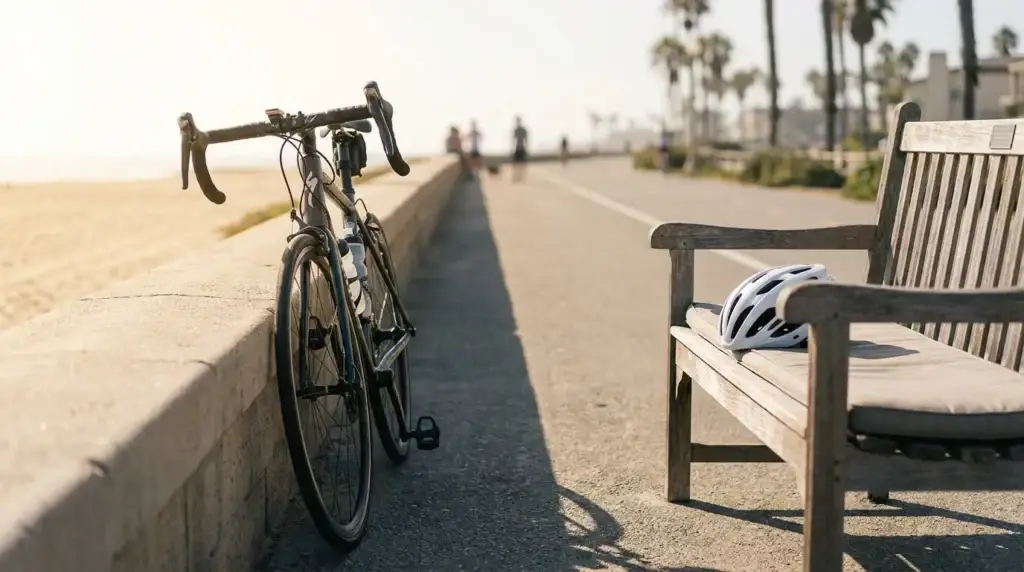
Why Bisnar Chase Handles Newport Beach Bicycle Accident Claims Differently
If you were hit while riding along Pacific Coast Highway, Back Bay Drive, or Newport Boulevard, the real question is not just “what are my rights” but “who should handle this.” Newport Beach bicycle accident claims depend on details most general practices overlook: exact passing distance, bike lighting, potholes that threw you into traffic, and insurance limits behind the driver. Bisnar Chase has represented injured people in Orange County since 1978, approaching these cases as serious injury litigation from day one.
If you are still in the early days after a bike crash, Bisnar Chase offers a free case evaluation. Call 800-561-4887 or contact us now to speak with someone who handles these claims regularly.
The Three Feet for Safety Act Is the Backbone of Most Passing Cases
California gives cyclists a bright-line clearance rule that frequently decides fault. Vehicle Code § 21760, the “Three Feet for Safety Act,” requires drivers to maintain at least three feet between any part of the vehicle and the bicycle when passing. Unlike vague “reasonable care” standards, a measurable distance gives injured riders something concrete to prove.
The statute closes the obvious loophole. Since 2023, a driver on a multi-lane road must move into an available adjacent lane to pass when safe under § 21760(c). Under § 21760(d), if the driver cannot comply with § 21760(c) due to traffic or roadway conditions, “the driver shall slow to a reasonable and prudent speed and may pass only when doing so would not endanger the safety of the operator of the bicycle.”
Penalties escalate when the pass causes harm. Section 21760(e) imposes a $35 fine for violations, but where a collision causes bodily injury, a $220 fine is imposed. While traffic convictions are generally inadmissible in civil cases, proof that the driver violated the California safe passing law can support a negligence per se argument, creating a rebuttable presumption of negligence.
💡 Pro Tip: Ask the responding officer whether a § 21760 citation was issued and note the citation number. That detail is easier to capture at the scene than to reconstruct months later.
How Insurers Try to Shift Blame Onto the Rider
Expect the carrier to build a comparative fault story before discussing your medical bills. California follows pure comparative negligence, reducing recovery in proportion to the injured party’s fault. A cyclist found partially responsible may still recover a reduced amount.
Common insurer arguments include:
- Helmet non-use, though California has no statewide helmet requirement for adults on standard bicycles (Vehicle Code § 21212 requires helmets for riders under 18)
- Equipment claims under Vehicle Code § 21201(a), requiring brakes capable of making “one braked wheel skid on dry, level, clean pavement”
- Visibility claims in nighttime cases based on § 21201(d), which requires lamps visible from 300 feet front and reflectors visible from 500 feet rear
Anticipating these defenses early is critical. Photographing intact rear lights, preserving cracked helmets, and documenting functioning brakes before repairs can neutralize arguments that would reduce settlement. An equipment violation only reduces recovery if causally tied to the crash. Our attorneys review bicycle equipment requirements at intake, because once a bike is repaired, that proof is gone.
💡 Pro Tip: Do not let a body shop or bike shop repair anything until your attorney has documented it. The damaged frame, helmet, and torn clothing are evidence, not junk.
Why 48 Years and a Trial-Ready Posture Actually Matter to Your Case
Longevity signals something specific in personal injury work: the firm has tried cases and can do it again. Bisnar Chase has been in business since 1978, and every one of its lawyers has courtroom experience and is equipped to take cases to trial. That matters because adjusters evaluate opposing counsel. A firm with no realistic trial capability has limited leverage.
Track record is context, not a promise. The firm reports having recovered over $1 billion in settlements and verdicts, served more than 12,000 clients, and obtained verdicts and settlements for catastrophically injured bicyclists. These are past results that do not predict individual outcomes, which depend on liability facts, injury severity, available coverage, and how juries or adjusters view evidence.
Depth also determines which defendants a firm is willing to pursue. Bisnar Chase brings bicycle accident claims against governmental agencies and large corporations, not only individual drivers. That matters when a crash was caused by a pothole, road debris, or poorly designed bike lane, because those claims run against public entities under the Government Claims Act with short administrative deadlines and formal notice requirements.
Coverage Limits Often Decide What a Serious Claim Is Worth
Liability minimums in California are modest compared to serious bicycle injury costs. Under Vehicle Code § 16056(a)(2), policies issued after January 1, 2025 must carry limits of at least $30,000 per person, $60,000 per accident for bodily injury, and $15,000 for property damage. A single orthopedic surgery can exhaust that quickly.
This is why coverage investigation happens early in well-run cases. Underinsured motorist coverage on your own auto policy, household policies, umbrella policies, and employer coverage may all come into play. California underinsured motorist coverage offsets what the at-fault driver’s insurer pays. An experienced Newport Beach bicycle accident attorney maps every available layer before valuing a claim.
What Your Damages Can Include
Recoverable damages fall into two categories. Economic losses cover medical bills, future treatment, lost wages, diminished earning capacity, and property damage. Non-economic losses cover pain and suffering, loss of enjoyment of life, disfigurement, and permanent disability. In serious cases, these often exceed the economic figures.
The non-economic component is fact-driven and contested. Insurers rarely concede it voluntarily, which is why documentation of how the injury changed your daily life carries real weight. California places no cap on non-economic damages in ordinary negligence cases.
💡 Pro Tip: Keep a short weekly journal of pain levels, missed activities, and sleep disruption. Contemporaneous notes are more persuasive than recollections given a year later.
The Evidence Window Closes Faster Than People Expect
What you preserve in the first two weeks often determines what the claim is worth eighteen months later. Seek prompt medical care, obtain the police report, photograph the scene and all damage, and collect witness contact information before people scatter. Surveillance footage from nearby businesses is frequently overwritten within days.
Roadway defect cases demand the fastest action. Crashes caused by potholes, debris, or poor design may create liability for the city, county, or state, but government claims generally must be presented within six months under the Government Claims Act. Missing either administrative or civil deadlines can end an otherwise strong case.
The bicycle itself is a physical exhibit. Bisnar Chase treats that hardware as evidence to be inspected and photographed, not property to be repaired. Much of what we explain about evidence in a car accident claim applies directly to cyclists.
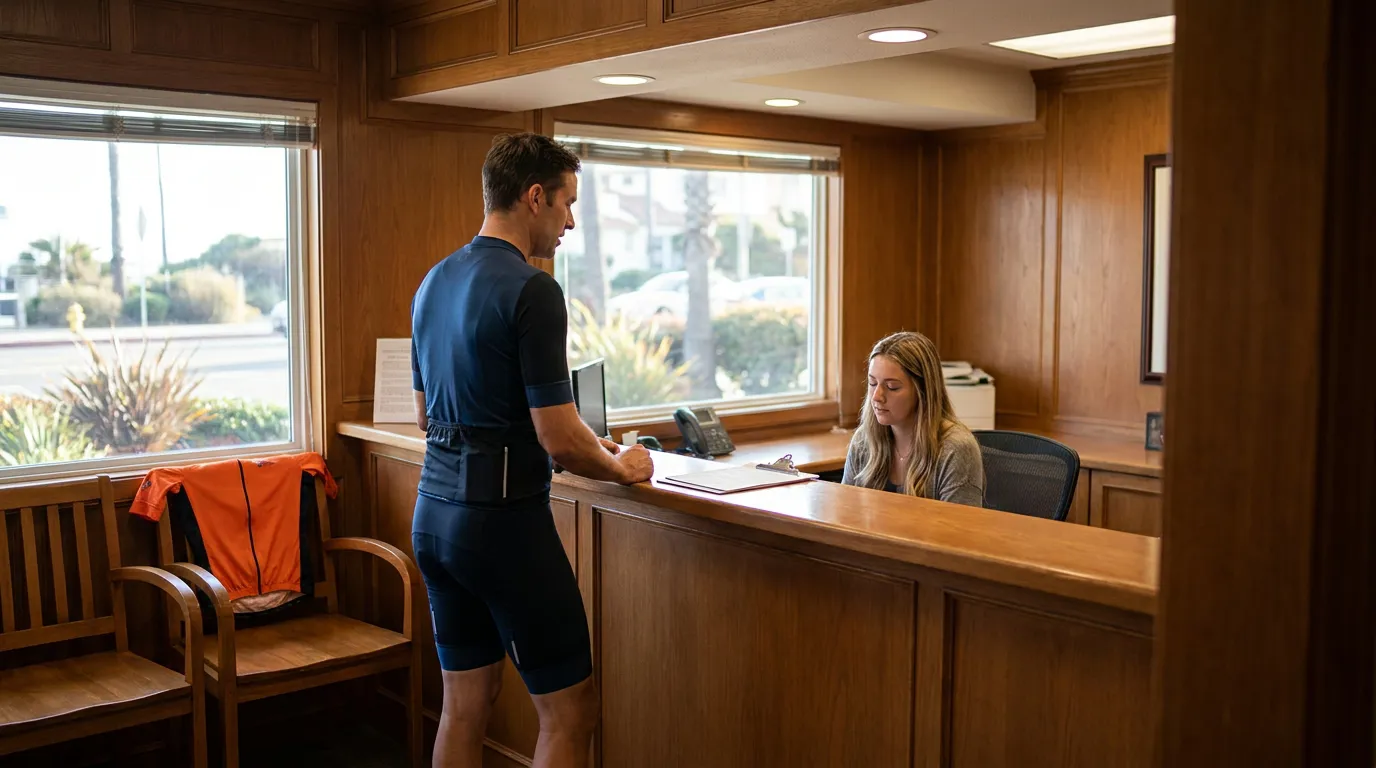
Why You Should Choose Bisnar Chase
The decision depends on whether a firm is suited to handle the type of case that a bicycle crash typically involves. These collisions produce disproportionately severe injuries because there is no metal between rider and roadway, which means claims tend to be high-value, heavily defended, and coverage-constrained. The firm’s Newport Beach bicycle accident lawyers work from the firm’s Orange County home office, which matters when cases require site inspections on local roads and familiarity with how Orange County juries evaluate cycling claims.
Structural details worth knowing before you hire anyone. Bisnar Chase works on a contingency fee basis with a no-win, no-fee guarantee and provides a free case evaluation. The Better Business Bureau rates the firm A+.
What an A+ BBB Rating and a 99% Reported Success Rate Actually Signal
Ratings and reported figures are useful only if you understand what they measure. An A+ Better Business Bureau rating reflects complaint history, transparency, and responsiveness.
The firm’s reported 99% success rate across more than 12,000 clients is a historical figure, not a forecast. Success rates depend heavily on which cases a firm accepts and how “success” is defined. What such a number suggests is disciplined case selection and willingness to invest in the claims it takes.
Frequently Asked Questions
Common Questions About Bicycle Accidents in Newport Beach, California
1. Can the insurer reduce my payout because I was not wearing a helmet?
They may try. California does not require adults riding standard bicycles to wear helmets, though riders under 18 must wear one. Non-use can still be raised where head injuries are involved. To succeed, the defense must show, with medical evidence, that a helmet would have reduced the injury; under pure comparative negligence, a successful argument reduces, rather than eliminates, recovery.
2. What if the driver who hit me fled the scene?
You often pursue hit-and-run cases through your own uninsured motorist coverage, which can apply to cyclists struck by unidentified drivers. California law generally requires actual physical contact with the hit-and-run vehicle, independent corroboration, and reporting the crash to police within 24 hours. Report promptly to your insurer as well.
3. Does California’s two-year injury deadline apply to my bicycle claim?
The general personal injury statute of limitations in California is two years from the date of injury. Claims against a public entity for dangerous roadway conditions involve a separate administrative claim requirement, generally a 6-month period, that operates independently of the civil deadline.
4. Is a dooring accident treated differently from a passing collision?
The core negligence analysis is similar, but the statutory hook differs. Dooring claims generally rest on Vehicle Code § 22517, which bars opening a vehicle door on the traffic side unless reasonably safe. They frequently involve disputes about visibility and lane position.
5. What should I do before I speak with the other driver’s insurance company?
Get medical care, preserve the bike and gear, and consider consulting an attorney first. Insurance companies often use recorded statements taken early, before the full injury picture is known, to argue that symptoms were minor. You are generally not required to give the other driver’s carrier a recorded statement.
Making the Call After a Newport Beach Bicycle Crash
Bicycle claims in Newport Beach are won on specifics: measured passing distance under § 21760, condition of the bike and lighting equipment, timing of government claims when roadway defects caused the fall, and the full map of available insurance coverage. Cyclists in coastal Orange County face real exposure on roads shared with heavy summer traffic, and resulting injuries are rarely minor. Choosing counsel with 48 years of California injury litigation behind it, courtroom capability across every attorney, and a documented history of handling catastrophic bicycle cases gives you a realistic path through a process that insurers navigate every day.
To have your case reviewed at no cost, reach out to Bisnar Chase Personal Injury Attorneys at 800-561-4887 or request a free consultation online. Call us today for a free consultation.