


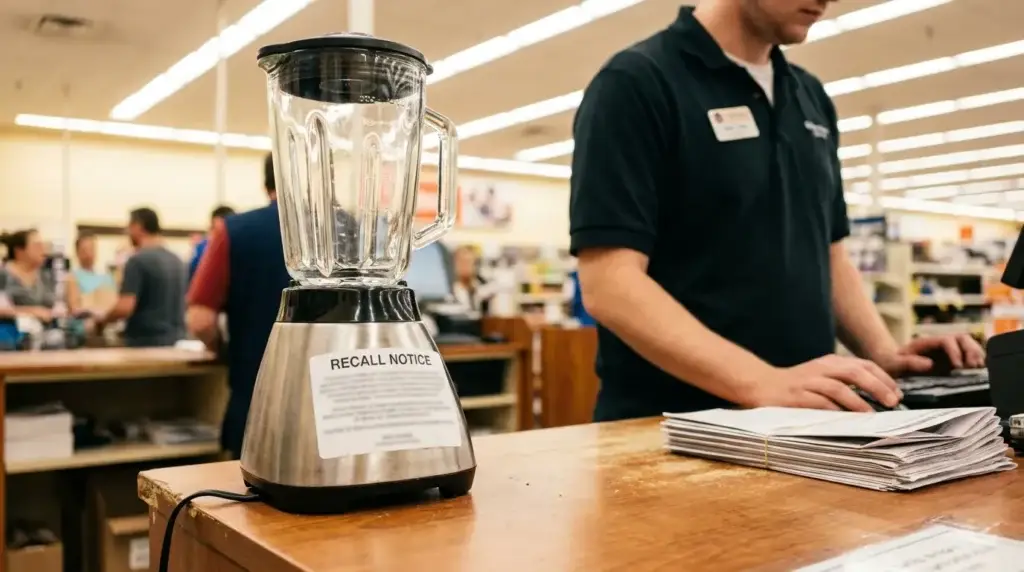
When a Recall Helps Rather Than Hurts Your Injury Case
Key Takeaways: A product recall does not end your right to sue in California and often strengthens your claim by publicly confirming a dangerous defect. Under California’s strict liability standard, the focus is on whether the product was defective and caused your harm, not whether it was recalled. Consumer warranty laws like the Song-Beverly Act provide separate protections, including replacement or refund for unrepairable defects and preserved rights without warranty registration. Liability extends across the distribution chain, from manufacturers to retailers. Strict time limits apply, generally two years for personal injury and three years for property damage, so prompt action is essential.
A product recall does not end your right to sue in California; it often strengthens your claim. A recall is a public confirmation that a product carries a dangerous defect, and that admission can support a liability case. If a recalled item injured you or damaged your property, you retain the right to pursue compensation. The key question is whether a defect caused your harm, not whether the product was recalled.
This issue affects injured consumers across Newport Beach, Orange County, and the greater Los Angeles area. Below, we explain how California law treats recalled products, who is responsible, and the applicable deadlines.
If you were hurt by a recalled item, the attorneys at Bisnar Chase can review your situation. Call us today for a free consultation at 800-561-4887, or contact us now to discuss your options.

Why a Recall Is Evidence, Not a Defense
A recall typically signals that a manufacturer identified a qualifying defect, which is exactly what a plaintiff must prove. California follows a strict liability standard for defective products, meaning an injured person need not prove negligence. The focus is on whether the product was defective and whether that defect caused the injury.
The foundation is a landmark California decision. In Greenman v. Yuba Power Products, 59 Cal.2d 57 (1963), the court held that manufacturers are strictly liable when a product placed on the market proves defective and causes injury. The purpose is to ensure injury costs fall on manufacturers that put products on the market rather than on injured consumers, powerless to protect themselves.
Because liability turns on the defect itself, a recall does not erase the legal basis for a claim. Under strict liability, a defendant can be held responsible for a defective product, regardless of intent or care exercised. A company cannot recall a dangerous product and then argue the recall canceled your right to recover.
💡 Pro Tip: Save the recall notice, product, packaging, receipts, and injury photos. This documentation directly supports the elements of a defective product claim.
How California’s Warranty Laws Protect Recalled-Product Buyers
California’s consumer warranty statutes give owners of recalled products powerful, separate protections. Under the Song-Beverly Consumer Warranty Act, manufacturers carry obligations they cannot contract away. You can review the relevant provisions in California’s consumer warranty repair law.
When a defect cannot be repaired, the manufacturer may owe a replacement or a refund. Under the Song-Beverly Act, if a manufacturer cannot repair goods to conform to the warranty after reasonable attempts, it must replace the goods or refund the purchase price under California Civil Code § 1793.2(d). Section 1793.2(e)(1) addresses installed or affixed goods; the manufacturer must replace and install or reimburse the purchase price plus installation costs, less an amount for use before defect discovery. A recall confirming an unrepairable defect reinforces these rights.
Manufacturers remain financially responsible for repairs, even when done by outside facilities. California Civil Code § 1793.3(c) makes manufacturers liable for actual and reasonable service and repair costs, including parts and transportation, and states that any waiver is void and unenforceable. This prevents companies from using recalls to shield themselves from responsibility.
Your warranty rights survive even if you skipped registration. California Civil Code § 1793.1(a)(1)-(2) confirms that failing to return a registration card does not diminish warranty rights and provides that warranty periods extend while the product is being repaired.
| Recall Situation | What California Law May Provide |
|---|---|
| Defect that cannot be repaired after reasonable attempts | Replacement or refund under Civil Code § 1793.2(d); § 1793.2(e)(1) for installed or affixed goods |
| Repair by an independent facility | Manufacturer pays parts, labor, and transport under § 1793.3(c) |
| Unregistered product | Full warranty rights preserved under § 1793.1(a) |
How a California Product Liability Lawyer Builds a Recalled-Product Claim
A California product liability lawyer evaluates three things: the defect, causation, and responsible parties. To establish a case, a plaintiff must show the product was defective when sold and that the defect caused the injury. A recall can help prove the first element, but you must connect that defect to your specific harm.
California law recognizes three defect categories, and a recall may involve any:
- Design defects: a flaw built into the product before manufacture.
- Manufacturing defects: an error introduced during production.
- Marketing defects: failure to warn or inadequate instructions.
Liability extends across the entire distribution chain. Product liability refers to legal responsibility imposed on parties along the manufacturing chain, which can include component makers, distributors, and retail sellers. When a recalled product reaches you through an online marketplace, responsibility may reach further, and you can learn more about pursuing claims for dangerous products sold on Amazon.
💡 Pro Tip: Identify every company that touched the product, from manufacturer to retailer. Complex liability chains are common in recalled-product cases, and the right defendant is not always obvious.
Strict Liability Is a Consumer Protection Strength
California treats strict products liability as tort law, not contract law. That distinction matters because warranty technicalities, such as notice requirements or privity, generally cannot shield a manufacturer from responsibility for a defective product.
Products liability claims can rest on multiple legal theories. Claims may be based on negligence, strict liability, or breach of warranty of fitness. Because there is no federal products liability statute, California law controls these claims. You can read an overview of these doctrines through the Legal Information Institute’s discussion of products liability principles.
State law also imposes consequences on companies that defy court orders. California Business and Professions Code § 17535.5(a) provides that intentionally violating an injunction issued under the False Advertising Law can carry a civil penalty up to $6,000 per violation, and where the conduct is continuing, each day is treated as a separate violation. While not specific to recalls, it illustrates that companies face escalating exposure when defying legal obligations surrounding unsafe products.
💡 Pro Tip: A recall notice using phrases like “stop using immediately” can be persuasive evidence. It often reflects the manufacturer’s own assessment that the product is unsafe.
Deadlines That Can Affect a Recalled-Product Claim
California sets firm time limits for filing, and missing them can bar an otherwise strong case. For personal injury claims, the statute of limitations is generally 2 years from the date of injury under California Code of Civil Procedure § 335.1. When a recalled product damages property rather than a person, a three-year limit generally applies under § 338.
California’s discovery rule may extend a deadline in limited circumstances. When injury or damage is not discovered immediately, the limitations period can begin from the date the problem was discovered or reasonably should have been discovered. Courts interpret this exception narrowly, so it does not apply automatically, and you should not assume a late filing will be excused.
One important limitation deserves attention. California Civil Code § 1714.45 provides that certain inherently unsafe common consumer products known to be unsafe by ordinary consumers are not subject to certain product liability claims, indicating that not every product claim is treated the same. Because outcomes depend heavily on specific facts, consult an attorney about how these deadlines and exceptions apply to your situation.
Frequently Asked Questions
1. Does a recall automatically prove my product was defective?
Not by itself. A recall can be strong evidence a defect existed, but you must show the defect caused your injury or property damage. Strict liability focuses on the defect and causation rather than the manufacturer’s intent.
2. Can I still sue if I never returned the warranty registration card?
Generally, yes. Under California Civil Code § 1793.1(a), failing to return a registration card does not diminish warranty rights. Your legal claims for a defective recalled product remain intact.
3. What if I already used the product for a while before the recall?
You may still recover. Under Civil Code § 1793.2(e)(1), a refund can be reduced by an amount for your use before defect discovery, but prior use does not eliminate your right to remedy. The specifics depend on your facts.
4. How long do I have to file a recalled-product claim in California?
It depends on the type of harm. Personal injury claims generally fall under a two-year limit, and property damage claims under a three-year limit. Because the discovery rule and other exceptions are applied narrowly, prompt legal advice is important.
5. Who can be held responsible for a recalled product injury?
Potentially everyone in the distribution chain. Manufacturers, component makers, distributors, and retailers may all face liability for damage caused by a defective product. Identifying the right defendants is central to building the case.
Protecting Your Rights After a Recall
A recall is often the beginning of a strong claim, not the end of one. California’s strict liability framework, consumer warranty protections, and statutory penalties all support the principle that a defect should be the manufacturer’s burden, not yours. If a recalled product harmed you, you retain meaningful legal rights, subject to the deadlines and exceptions discussed above. Because every case turns on its own facts, speaking with a knowledgeable defective product attorney California families trust can help clarify your options.
The team at Bisnar Chase has extensive experience handling complex product liability matters for injured consumers throughout Orange County and beyond. Reach out to our Newport Beach personal injury attorneys at 800-561-4887, or contact us now to learn how California law may protect you.