


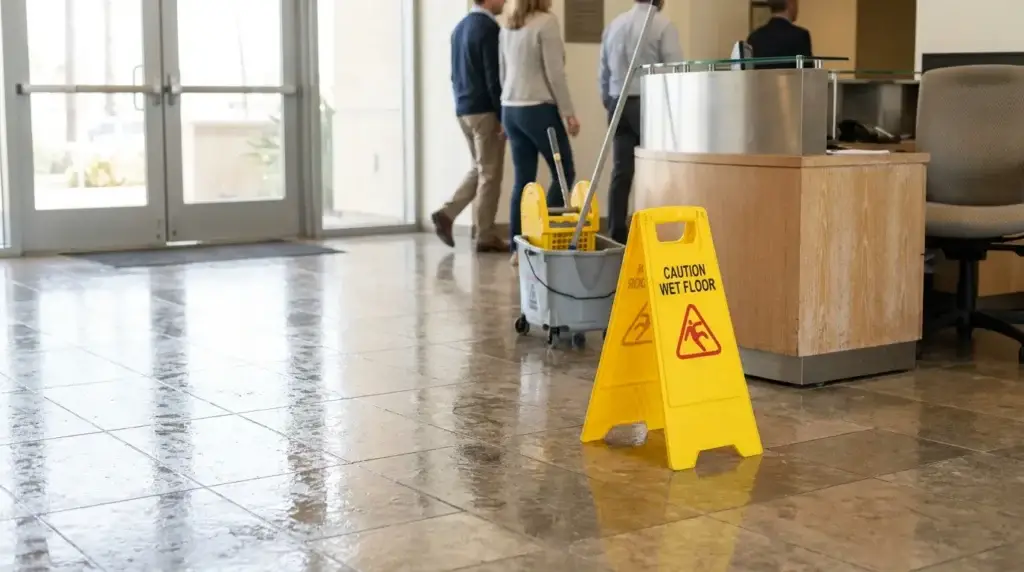
Understanding Fault When You Fall on Someone Else’s Property
Key Takeaways: Liability for a slip and fall injury in Newport Beach generally rests with the property owner or occupier who failed to keep their premises reasonably safe, but responsibility is never automatic. Under California Civil Code Section 1714, owners must exercise ordinary care by inspecting, maintaining, and warning of hazards. A valid personal injury claim requires proving a dangerous condition existed, that the owner knew or should have known about it, that they failed to act reasonably, and that this failure caused your injury.
California follows pure comparative negligence, meaning your own actions may reduce but not eliminate recovery. Injury victims may pursue compensation for medical bills, lost wages, emotional harm, and other losses, with special limits in fatal cases. A strict two-year filing deadline generally governs, making early documentation and legal guidance essential.
Liability for a slip and fall injury in Newport Beach generally falls on the property owner or occupier who failed to keep their premises reasonably safe. Property owners and occupiers have a legal obligation to maintain safe conditions for guests, customers, and other visitors. However, responsibility is rarely automatic. Who pays depends on who controlled the hazard, whether they knew about it, and how a reasonable owner would have responded.
If you were hurt on a dangerous walkway, a wet grocery aisle, or a poorly maintained stairwell, you deserve clear answers fast. Reach out to Bisnar Chase at 800-561-4887, or contact us now to speak with our team about your options.
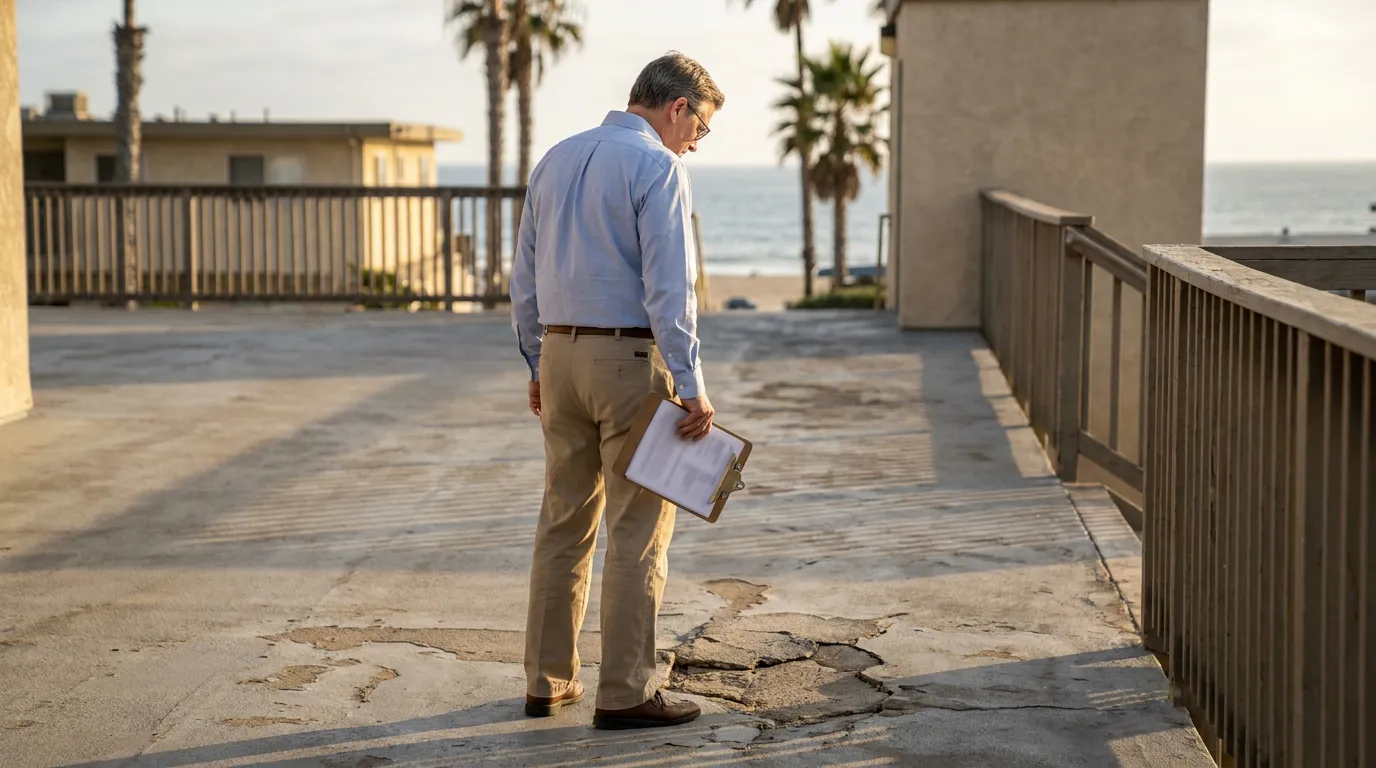
The Legal Foundation for Property Owner Negligence in California
California premises liability begins with a single, powerful statute that applies statewide, including in Newport Beach. Under California Civil Code Section 1714, everyone is responsible for injuries caused by their willful acts or want of ordinary care in managing their property. This is the baseline duty of care courts use to evaluate whether a property owner acted reasonably.
Owners must inspect their premises, maintain them, and warn of hazards they cannot immediately fix. A slip and fall claim in California turns on whether the owner met that standard. When they fall short and someone gets hurt, the injured person may have a valid premises liability claim in California.
💡 Pro Tip: Take timestamped photos of the hazard, your injuries, and the surrounding area before anything is cleaned up or repaired. Conditions change quickly, and early evidence often makes the difference in a slip and fall claim Newport Beach residents pursue.
What You Must Prove to Establish Slip and Fall Liability
A fall by itself does not create liability. It is not enough that you slipped or stumbled on someone else’s property; to hold a property owner liable, your fall must have been caused by a dangerous condition on the property. Without it, there is generally no claim.
The central question is whether the property owner had notice. You must prove that the property owner knew, or should have known, about the dangerous condition. In California, slip-and-fall liability requires connecting the hazard to the owner’s failure to act.
Courts and juries consider whether the owner had regular procedures for examining, maintaining, and repairing the premises and whether a hazard could have been removed, covered, made safe, or properly warned against. These practical questions frequently reveal the property owner’s negligence, which California claims depends on it.
To bring the claim, the core elements include:
- A dangerous condition existed on the property
- The owner or occupier knew or should have known about it
- The owner failed to use ordinary care to fix, remove, or warn of the hazard
- That failure caused your injury and resulting losses
How a Slip and Fall Lawyer in Newport Beach Approaches Liability
A knowledgeable Newport Beach injury attorney starts by identifying every party that controlled the property. Liability can extend to landlords, tenants, businesses, property management companies, or maintenance contractors. In busy Newport Beach retail centers, restaurants, and beachfront properties, more than one party may share fault.
In California, premises liability is a separate cause of action with its own set of rules. Slip-and-fall injuries fall under premises liability; plaintiffs may optionally use the Judicial Council’s premises liability pleading form (PLD-PI-001(4)) when filing suit. This form requires alleging that a condition of the premises caused harm and, if used, must be attached to a complaint form (PLD-PI-001). Use of the Judicial Council form is optional and not required by law.
Building the case means gathering evidence that shows what the owner knew and did. Working with a legal team experienced in California premises liability matters is important because inspection logs, surveillance footage, and incident reports often provide the most accurate account of what happened. Review our guidance on what to do in the first 72 hours after an accident to understand how early action protects your rights.
💡 Pro Tip: Report the fall to the property owner or store manager immediately and ask for a written incident report. Request a copy before you leave, as these documents can later confirm the date, time, and location of your injury.
How Your Own Actions May Affect Your Recovery
California follows a pure comparative negligence rule, and this principle is built right into the governing statute. Section 1714 qualifies liability except so far as the latter has, willfully or by want of ordinary care, brought the injury upon himself or herself.
Comparative fault does not bar recovery, but it can reduce it. If you were partially responsible, for example, by ignoring a posted warning, your percentage of fault may reduce your compensation. A skilled Newport Beach premises liability lawyer can help present the facts in a way that fairly reflects each party’s responsibility.
💡 Pro Tip: Avoid giving a recorded statement to an insurance adjuster before speaking with an attorney. Casual remarks about how the fall happened can later be used to increase your share of comparative fault.
Damages You May Be Able to Recover
Injury victims can generally pursue several categories of compensation after a slip and fall. You can seek money to cover medical bills, lost wages, emotional harm, and other losses from the injury. The specific amount depends on the facts, the severity of the injury, and the strength of the evidence.
When a fall proves fatal, California law limits certain damages in a survival action. Under Code of Civil Procedure Section 377.34, a personal representative may pursue the decedent’s cause of action, but recoverable damages are generally limited to losses the decedent sustained before death and exclude pain, suffering, and disfigurement. A temporary statutory expansion allowed recovery of such damages for certain cases between January 1, 2022, and January 1, 2026, but that provision has sunset. Because these rules are technical and fact-dependent, families should consult a California attorney specializing in property injury promptly.
| Common Damage Category | What It May Cover |
|---|---|
| Medical expenses | Emergency care, surgery, rehabilitation, future treatment |
| Lost income | Missed work and reduced earning capacity |
| Non-economic losses | Pain, emotional harm, and reduced quality of life |
Defenses and Limits a Property Owner May Raise
Property owners and their insurers often raise statutory and factual defenses to reduce or defeat a claim. Beyond comparative fault, California recognizes a narrow bar under Civil Code Section 3333.3, which provides that a plaintiff may not recover damages if their injuries were proximately caused by their own commission of a felony, or immediate flight from it, for which they were duly convicted. This defense applies only in limited circumstances.
Timing also matters, and California’s personal injury deadlines are strict. The statute of limitations for personal injury is generally two years from the date of injury, though courts interpret exceptions narrowly and tolling does not apply automatically. Because deadlines and exceptions are fact-sensitive, this figure should be confirmed with an attorney.
Frequently Asked Questions
1. Who is liable if I slip and fall in a Newport Beach store?
The store, its management company, or the property owner may be liable, depending on who controlled the hazard. Liability requires proof that the responsible party knew or should have known about the dangerous condition and failed to respond reasonably.
2. Can I still recover if I was partly at fault?
Yes, California’s pure comparative negligence rule allows recovery even when you share fault. Your assigned percentage of responsibility simply reduces your compensation.
3. What evidence helps prove property owner negligence?
Photos, incident reports, witness statements, and inspection or maintenance records are often key. Evidence showing the owner lacked a regular inspection routine can strongly support a claim.
4. How long do I have to file a slip and fall claim in California?
The deadline is generally two years from the date of injury, subject to limited exceptions. Because tolling and discovery rules are narrowly construed, quickly confirm your specific deadline with an attorney.
5. Do I need a lawyer for a slip and fall claim?
While not legally required, a slip and fall lawyer Newport Beach victims trust can help protect your rights. Premises liability cases involve technical proof of notice, causation, and damages that benefit from experienced guidance.
Protecting Your Rights After a Newport Beach Fall
Liability for a slip and fall in Newport Beach is based on negligence, notice, and reasonable care. A property owner who knew or should have known about a dangerous condition and failed to fix or warn of it may be held responsible under Civil Code Section 1714. Because comparative fault, damage limits, and filing deadlines all depend on your specific facts, the strongest cases are built early with careful documentation and sound legal guidance.
If you or a loved one suffered an injury on unsafe property, the team at Bisnar Chase is ready to help you understand your options. Call us today for a free consultation at 800-561-4887, or reach out to our Newport Beach personal injury attorneys to discuss your claim.