


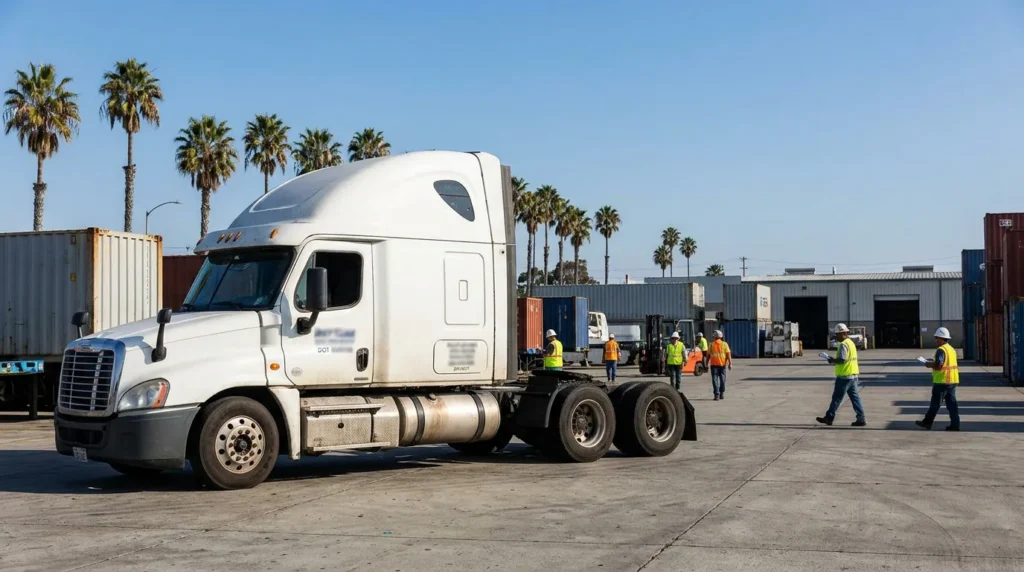
The Federal Insurance Backstop Most Truck Crash Victims Have Never Heard Of
Key Takeaways: An MCS-90 endorsement is a federally required attachment to a motor carrier’s liability policy that functions like a suretyship, obligating the insurer to pay a judgment for injury to the public up to federal minimums once the carrier is found liable, even if the underlying policy has gaps, exclusions, or lapses, subject to the insurer’s right to reimbursement. Courts differ on when it is triggered, and many hold it applies only to interstate transportation of property where no other applicable coverage exists.
It does not create liability, so a Newport Beach truck accident claim still begins with proving negligence under Cal. Civ. Code § 1714(a), which may also reduce recovery based on comparative fault. FMCSA guidance under 49 C.F.R. § 387.15 allows carriers to aggregate coverage in layered primary and excess policies, each with its own Form MCS-90, so multiple endorsements may be relevant in catastrophic cases. California separately requires certain intrastate motor carriers to prove financial responsibility through insurance certificates, surety bonds, self-insurance, or charitable risk pools under Cal. Veh. Code § 34631, with self-insurance not accepted for higher petroleum and hazmat limits.
An MCS-90 endorsement is a federally mandated attachment to a motor carrier’s liability insurance policy that functions like a suretyship: if the trucking company is found legally liable for injuries to the public and its own insurance does not respond, the insurer may still be required to pay the injured person up to the federal minimum, then seek reimbursement from the carrier.
In a Newport Beach truck accident, that document can be the difference between a judgment on paper and money in hand. It does not create liability and is generally treated as a backstop of last resort, protecting the public when a carrier’s insurance program has gaps, exclusions, lapses, or does not cover the trip in question.
If you were hurt by an 18-wheeler or commercial truck in Orange County, Bisnar Chase can help you identify every policy and endorsement standing behind the carrier. Call 800-561-4887 or contact us now for a free consultation.
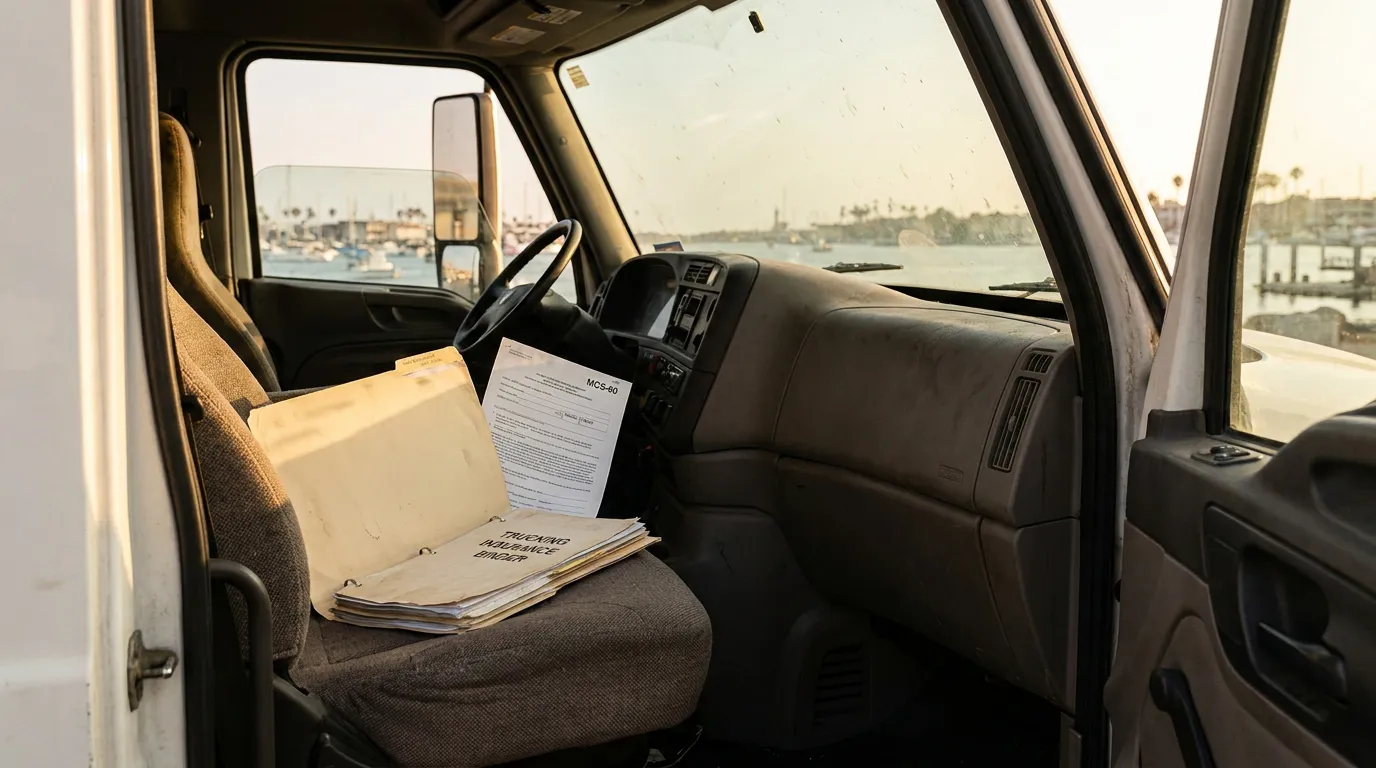
How an MCS-90 Endorsement Truck Accident Claim Actually Works
The endorsement generally pays only after liability is established, which means your case still starts with proving negligence. Under Cal. Civ. Code § 1714(a), everyone is responsible “for an injury occasioned to another by his or her want of ordinary care or skill in the management of his or her property or person.” This statutory duty of ordinary care governs a trucking company’s conduct on Jamboree Road or the 405, alongside common law negligence principles and federal safety regulations.
That same statute reflects California’s comparative fault principle. The duty in § 1714(a) applies “except so far as the latter has, willfully or by want of ordinary care, brought the injury upon himself or herself,” meaning a victim’s own carelessness generally reduces recovery proportionally rather than barring it. This may reduce the judgment amount an MCS-90 endorsement could be called upon to satisfy, though the endorsement’s payment obligation remains capped at the applicable federal minimum.
Understanding the difference between the base policy and the federal endorsement can matter enormously in a serious case. The MCS-90 is layered on top of a carrier’s liability policy. It is not a replacement and does not expand the policy’s coverage terms between the insurer and the insured.
Why One Policy Is Rarely the Whole Story
Federal law permits motor carriers to build their required coverage in stacked layers, and each layer carries its own endorsement. According to FMCSA guidance on aggregating insurance coverage, a carrier “may aggregate coverage, by purchasing insurance in layers, with each layer consisting of a separate policy and endorsement,” and “each policy would have a separate endorsement (Form MCS-90).” That guidance, issued in 2005 (70 FR 58065, Oct. 5, 2005) under 49 C.F.R. Part 387, § 387.15, reflects long-standing federal policy.
The layers are legally distinguished, and the order matters. FMCSA explains that “The first layer of coverage is referred to as primary insurance, and each additional layer is referred to as excess insurance.” An injured claimant may need to identify multiple endorsements, not just one.
A Real FMCSA Example of Layered Coverage
FMCSA’s own illustration shows how much coverage may be in place. A carrier hauling Division 1.1 explosives required to maintain $5 million satisfied that obligation with a $1 million primary policy plus $1 million and $3 million excess policies, each with its own Form MCS-90 endorsement. The primary endorsement states the insurer is not liable for amounts in excess of $1 million for each accident, while the excess endorsements state liability limits “for each accident in excess of the underlying limit” applicable to their respective layers.
| Layer | Limit | Role in a Claim |
|---|---|---|
| Primary policy | $1 million | Responds first to a covered loss |
| First excess policy | $1 million | Attaches above the underlying limit |
| Second excess policy | $3 million | Attaches above both prior layers |
💡 Pro Tip: In catastrophic injury cases, ask early whether the carrier’s federal filings reflect layered coverage. A single declarations page may represent only the bottom of a much taller tower.
What California Requires Carriers to Prove
California independently requires certain motor carriers to demonstrate financial responsibility through specific approved instruments. Cal. Veh. Code § 34631 provides that proof may be evidenced by a certificate of insurance from a company licensed to write insurance in the state, a bond of a surety company licensed to write surety bonds in the state, evidence of qualification as a self-insurer, or evidence of coverage from a qualifying charitable risk pool.
Self-insurance has real statutory limits that plaintiffs should scrutinize. Cal. Veh. Code § 34631(c) provides that a certificate of self-insurance granted to a motor carrier of property is limited to the minimum limits under paragraphs (1) and (2) of Section 34631.5(a) and is not acceptable as proof of financial responsibility for the higher coverage required under paragraphs (3) or (4), which apply to petroleum and hazardous-materials hauling. A self-insured hazmat hauler may have a gap between what it filed and what the law requires.
Out-of-State Trucks Rolling Through Newport Beach
Carriers registered elsewhere may still owe California proof of financial responsibility. Under Cal. Veh. Code § 6854(a), an owner or lessor of a commercial vehicle registered in a non-reciprocal foreign jurisdiction, with unladen weight over 7,000 pounds used to transport property in business, must submit proof of financial responsibility from an insurer authorized to do business in California.
The statute also allows certain federal registration documents to satisfy the state requirement. Cal. Veh. Code § 6854(b) permits proof to be met by submitting a certificate of registration as a foreign motor carrier or foreign motor private carrier issued under Part 1171 of Title 49 of the Code of Federal Regulations. This is where state and federal systems interlock, and where an experienced Newport Beach truck lawyer can trace coverage that a general practitioner might miss.
Deadlines That Can Quietly End a Strong Case
No endorsement helps if the underlying claim is time-barred. For personal injury filing deadlines, California generally allows two years from the injury, subject to exceptions.
Property damage generally follows a different clock. The same guidance provides three years from the date the damage occurred for property damage, so vehicle and cargo claims may survive after an injury deadline has passed. Tolling and delayed discovery can apply in limited circumstances, such as claims involving minors or injuries that could not reasonably have been discovered, but courts generally interpret those exceptions narrowly. Claims against public entities generally require a written government claim within six months, a requirement much shorter than civil lawsuit deadlines.
Building the Liability Case Behind the Coverage
Coverage analysis and liability proof often advance together, not in sequence. Truck cases in California routinely involve overlapping state negligence law and federal safety regulation. Common avenues our firm evaluates include:
- Driver negligence, including fatigue and violations of the FMCSA hours of service rule
- Negligent hiring, training, retention, or supervision by the motor carrier
- Improper loading or securement by a shipper or third-party cargo loader
- Defective brakes, tires, or components implicating a manufacturer
- Broker or lessor responsibility depending on the contractual arrangement
Each additional defendant may bring its own insurance tower. Identifying every responsible party early can matter more to final truck crash compensation than arguing over a single adjuster’s initial evaluation.
💡 Pro Tip: Send a spoliation letter quickly. Electronic logging data, engine control module downloads, and dashcam footage can be overwritten on short retention cycles.
Frequently Asked Questions
1. Does an MCS-90 endorsement mean the trucking company automatically owes me money?
No. The endorsement generally operates only after the carrier is found legally liable, and California liability commonly rests on the duty of ordinary care in Cal. Civ. Code § 1714(a). It is a payment backstop, not a finding of fault.
2. Can I recover if I was partly at fault for the crash?
In many cases, recovery may still be possible. Under California’s comparative fault rules reflected in Cal. Civ. Code § 1714(a), recovery is generally reduced to the extent that an injured person’s own want of ordinary care contributed to the harm, rather than being barred outright.
3. What if the truck was registered in another state?
Carriers operating through Newport Beach may still need to show financial responsibility in California under Cal. Veh. Code § 6854, which allows compliance through certain federal registration documents, and federal filing requirements apply separately.
4. How many MCS-90 endorsements might exist in my case?
Potentially several. Because FMCSA guidance under 49 C.F.R. § 387.15 permits aggregation through layered primary and excess policies, each with its own Form MCS-90, a thorough investigation looks for every layer rather than stopping at the first policy produced.
5. Is a self-insured trucking company still a viable defendant?
Often yes, though the analysis differs. Under Cal. Veh. Code § 34631(c), a state certificate of self-insurance does not satisfy the higher limits required for petroleum or hazardous materials hauling, which may reveal meaningful gaps.
What This Means for Your Recovery
An MCS-90 endorsement is one piece of a larger financial responsibility framework built from California statutes and federal FMCSA regulations. The endorsement helps ensure payment to the public up to federal minimums once liability is established, layered coverage may increase the funds potentially available, and state law separately dictates what proof certain carriers must file. None of it helps unless someone identifies the instruments, preserves the evidence, and files within the applicable deadlines.
If a commercial truck has upended your life, the team at Bisnar Chase is ready to review your case at no cost. Call 800-561-4887 or reach out to our Newport Beach personal injury attorneys today for a free consultation.
Disclaimer: This content is for informational purposes only and is not legal advice. Every case is unique, and results may vary. Consult an attorney about your specific circumstances.