


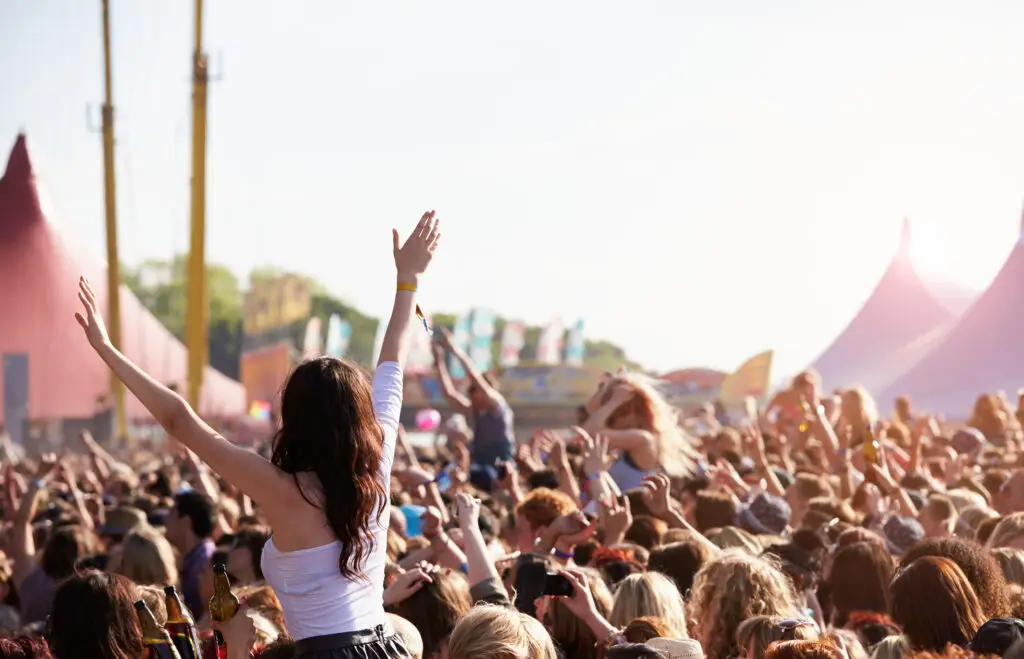
California summers bring an explosion of outdoor events. From massive county fairs to beach concerts, street fairs, firework displays, and other community gatherings, these events draw tens of thousands of visitors over the busy summer months.
From mega events like the OC Fair to smaller settings, these gatherings define the summer season for residents and visitors. But they also increase the risk of accidents and injuries. Temporary stages and other structures, uneven ground, dense crowds, heat exposure, and high-volume vendor activity combine to cause dangerous situations that rarely occur at permanent venues.
When someone is injured due to unsafe conditions, liability questions arise quickly under California premises liability law. This guide explains the legal landscape for injuries at summer festivals and other outdoor events across the state.
We cover the biggest events and common hazards, the duty of care owed by event organizers and property owners, the liable parties, practical steps to take after an injury, and strategies for pursuing a legal claim.
NOTE: This is general information and does not constitute legal advice for any specific situation. Anyone injured should contact an experienced California personal injury attorney at Bisnar Chase for expert legal advice specific to your accident.
Table of Contents: Resources for Outdoor Event Injuries
Popular Summer Outdoor Events in California
California hosts an extraordinary range of outdoor events from late spring through early fall. Understanding the typical settings can help identify hazard patterns.
⇒ County and State Fairs
County and state fairs are among the largest categories. Some of the biggest fairs will run for several days or weeks, featuring live music, carnival rides, petting zoos and livestock exhibitions, food vendors, fireworks, and various displays.
Some of the top regional events across California include:
- Orange County Fair: The OC Fair runs for a full month in Costa Mesa. It attracts about 1-1.4 million visitors every year.
- San Diego County Fair: The San Diego fair is held at the massive 370-acre Del Mar Fairgrounds, drawing between 900,000 and 1.5 million visitors.
- LA County Fair: Held in May, before the start of summer, the LA County Fair is hosted at the Fairplex in Pomona and regularly draws 800,000 visitors over a 3-week run.
- Big Fresno Fair: The Big Fresno Fair is one of the largest events in the San Joaquin Valley area. It has been running for over 140 years and now attracts 600,000+ visitors over 12 days.
This is just a small flavor of the events on offer throughout the year in California, but there are plenty of others not mentioned here.
These environments feature large crowds using compacted dirt or gravel paths that often become uneven or muddy. You might also come across temporary fencing and power cables that cross walkways, elevated platforms for stages and rides, potential food and drink spillages, and heavy pedestrian foot traffic.
⇒ Beach and Coastal Concerts
When the weather is at its best through the summer months, many cities in California host outdoor concerts at various venues, including beaches, piers, and boardwalks. In those cases, temporary seating and stages are often set up on sand or other uneven transitional surfaces.
Examples of summer concerts in California in 2026 include:
- Ohana Festival – Doheny State Beach, Dana Point: A festival with 35 performers (including headliners Eddie Vedder, Billy Idol, and Bad Religion in 2026).
- LA Jazz Festival – Dockweiler Beach, Playa del Rey: The inaugural LA Jazz Festival was scheduled for August 2026. It was slated as a 17-day event, closing with a beach concert headlined by John Legend and Janelle Monae. But the event was canceled at the last minute after organizers failed to secure the proper permits.
- Sun Soaked Festival, Huntington State Beach, Huntington Beach: Set up directly on the sand in HB, Sun Soaked is an annual EDM event produced by Kaskade in September.
There are also plenty of smaller regular events running throughout the summer, such as the Redondo Beach Pier Summer Series and Beachside Beats in Long Beach.
In addition, further events take place outside the peak summer season, such as the Darker Waves beach concert in Huntington Beach, scheduled for November.
Even shows at established venues can pose challenges, and the risks are heightened at temporary and sometimes unstable venues.
Changing weather conditions can impact the environment. In addition, stages with complex lighting and sound equipment, temporary fencing, multiple vendor zones, and limited shade can create conditions in which crowd movement, equipment failures, or heat-related issues pose serious risks.
⇒ Farmers Markets, Community Street Fairs, and Flea Markets
These community fair events usually feature temporary stalls set up by vendors in public areas, such as parks and blocked-off streets. They might also utilize churches, schools, and parking lots.
Some popular events include:
- Long Beach Antique Market
- Sherman Oaks Street Fair
- Sunday Marin Farmers Market
- Rose Bowl Flea Market
- Lodi Street Faire
- Mountain View Art & Wine Festival
These are just some of the biggest events in California. But there are many others, from small weekly events to major draws. While they are not always at the scale of the biggest county fairs and concerts, they can still attract hundreds or thousands of visitors, and many of the same dangers apply.
Such events rely on temporary setups and infrastructure in crowded areas, which can create legitimate risks of accidents and injuries.
⇒ Air Shows
Several great air shows take place across California, with spectacular airborne displays, flyovers, and aerobatics dazzling the crowds below. Some of the best shows include:
- Central Coast AirFest (Santa Maria)
- Pacific Airshow (Huntington Beach)
- MCAS Miramar Air Show (San Diego)
- Apple Valley Airshow (Apple Valley)
- California International Airshow (Salinas)
- San Francisco Fleet Week Air Show (San Francisco)
While the action is happening in the air, these events attract large crowds and vendors, with temporary seating and structures that can cause issues.
⇒ Parades
A variety of different parades wind their way through the streets of California. Some of the biggest parade events include the New Year’s Day Rose Parade in Pasadena and the Hollywood Christmas Parade. But we’re focusing on the summer months here, when the biggest parades include:
- San Francisco Pride Parade
- Huntington Beach 4th of July Parade
- Long Beach Pride Parade
- Pacific Palisades 4th of July Parade
Parades often have crowds packed along the sides of the route, with performers and vehicles moving along the route itself. The potential for accidents and injuries can be high.
⇒ Fireworks Displays
Firework displays also bring large crowds together on major holidays, such as July 4th and Labor Day. Many cities put on official displays – some of the biggest include:
- Big Bay Boom in San Diego
- Back Bay show in Newport Beach
- The waterfront show in San Francisco
- The ocean show in Huntington Beach
Other large firework displays are launched in Marina del Rey, Woodland Hills, and Long Beach near the Queen Mary.
⇒ Ocean Events
One of the biggest events to hit the water in Southern California is the US Open of Surfing, held annually in Huntington Beach in July and August. Surfers and spectators descend on the beach for the world’s largest surf competition and festival.
This event brings massive crowds down Main Street and onto the beach, requiring serious infrastructure. This includes large temporary gazebos and seating built on the sand.
⇒ Conventions
A ton of big conventions are held at venues in California. Some of the most popular convention events included:
- Comic-Con (San Diego)
- Anime Expo (Los Angeles)
- Fire & Ice Gaming Expo (Roseville)
- GalaxyCon (San Jose)
- LAcon V / Worldcon (Anaheim)
- Dreamforce (San Francisco)
- SacAnime Summer (Sacramento)
Many of these events take place at established indoor venues. They are built to handle large crowds and are experienced in running major events. Accidents are less likely in these cases because the venues are mainly indoor controlled environments. But issues can still crop up.
Common Causes of Accidents at Outdoor Events
Common injuries at outdoor events fall into several recurring categories. These include:
⇒ Slip-and-Fall and Trip-and-Fall Accidents
Falling incidents are among the most frequent at outdoor venues. This often involves tripping over a hazard or slipping due to a compromised surface. The types of hazards that can lead to slips or trips are more common outdoors, especially when there is heavy foot traffic. Some examples include:
- Uneven pavements, dirt paths, or sand.
- Unmarked changes in elevation.
- Electrical cables snaking across walkways.
- Spilled drinks or food.
- Wet or muddy conditions caused by wet weather.
- Unstable or improperly anchored temporary stairs, platforms, and ramps.
- A lack of proper handrails on temporary structures.
- Poor lighting makes it harder to see the dangers underfoot.
⇒ Crowd-Related Injuries
Injuries caused by crowds at big events can include trampling, surges near stages or exits, and crush injuries when dense groups move suddenly. Several factors can exacerbate these dangers. Inadequate barriers, overselling safe capacities, or poor flow design can turn ordinary crowd swells and movement into dangerous situations.
⇒ Heat-Related Illness
Problems caused by excessive heat and dehydration at outdoor events are predictable risks during the summer months in California. High temperatures combined with limited shade, insufficient free water stations, long lines, and longer days of sun exposure, and physical activity – such as dancing or standing for hours – can cause serious issues.
People at outdoor events can suffer from dehydration, heat exhaustion, and, in severe cases, heatstroke. Organizers who fail to plan for foreseeable heat-related conditions may face liability if they are deemed to have contributed to these issues through negligence. Free water, shade, and medical monitoring are increasingly viewed as part of the reasonable standard of care for daytime summer events in California.
⇒ Structural and Equipment Failures
The types of temporary structures often used for outdoor events are inherently less secure than permanent buildings. Temporary stages, lighting towers, scaffolding, tents, canopies, and restrooms must be properly engineered, anchored, and inspected.
A structure collapse or falling objects can cause catastrophic injuries. Other machinery you might see at outdoor events includes carnival rides and other temporary attractions. They can pose operational risks due to inadequate maintenance, operator error, or failure to follow inspection protocols. These failures can lead to serious harm.
⇒ Negligent Security
Negligent security contributes to assaults, fights, and other acts of chaos and violence. The risk of this type of incident is predictable in large gatherings, especially at events where alcohol is served.
It is the responsibility of event organizers or venue operators to ensure they have sufficient security for the crowds at a specific event. You need adequate monitoring and staffing to cover the visitor numbers at an event or venue.
⇒ Food-Related Illnesses
Most events will have food or drink vendors on-site. But with consumables, you introduce additional risks. The handling and storage of food can be a challenge in food trucks and temporary preparation areas, making foodborne illnesses more common.
In addition, food vendors pose the risk of burns to people (both food workers and event visitors) from hot equipment and slips from grease or spills.
⇒ Traffic and Parking Issues
Traffic and parking at a venue can be among the most common causes of accidents and injuries. Insufficient traffic control and attendants, poorly designed access points, and failures in controlling traffic flow can lead to collisions between vehicles and pedestrians.
In most cases, vehicles are moving slowly through parking areas. But even low-speed collisions can cause serious injuries. Accidents become more common in temporary parking areas set up specifically for outdoor events. This is because temporary parking lots sometimes lack the rules and full-time staff that can keep a parking area moving safely.
These hazards are not just theoretical. There are plenty of instances of such accidents causing serious injuries. Large outdoor events concentrate people, temporary infrastructure, and environmental stressors in ways that demand heightened attention to safety.
When that attention is lacking, California law provides avenues for injured people to seek compensation.
Premises Liability Basics Under California Law
California premises liability law rests primarily on California Civil Code section 1714, which establishes a general duty of care in California. Property owners, occupiers, and those who control premises must use reasonable care to keep the property in a safe condition and to warn of dangers that are not obvious.
Under California premises liability law, this duty of care extends to people who enter a property as invitees or guests. As such, it essentially covers everyone attending festivals and other summer events.
In the context of outdoor events, the duty of care extends to the temporary grounds on which an event is held, and everything within those boundaries. That includes the stages, walkways, vendor areas, parking facilities, and any other spaces under the control of the organizer or property owner.
Control is a key concept. An event organizer who leases a fairground or park and directs the layout, security, vendor placement, and operations typically assumes significant responsibility for conditions during the event, even if the underlying landowner retains some residual duties regarding permanent features.
The premises owner is generally not responsible for property outside their boundary of ownership or control, such as the public street right outside.
Establishing a Premises Liability Claim
To establish a premises liability claim, an injured person generally must show four elements. They are:
- The defendant owed a duty of care.
- They breached that duty by failing to maintain safety or warn of a danger.
- The breach was a substantial factor in causing an injury.
- The plaintiff suffered actual damages as a result, such as medical bills, lost income, and pain and suffering.
Foreseeability plays a central role in the success of a legal claim. Courts examine whether the specific risk or hazard was reasonably foreseeable given the nature of the event, the expected attendance, the physical setting or venue, the weather conditions, alcohol service, prior incidents at similar events, and industry knowledge.
In many of the scenarios that we have listed on this page, the danger is foreseeable. There are plenty of examples of similar accidents occurring, and it is the responsibility of the event organizers and operators to plan accordingly.
For example, a large music festival with known crowd-density issues near the stage creates higher expectations for robust crowd management measures than a small neighborhood farmers market. Similarly, temporary structures in windy coastal areas require a higher standard of anchoring and inspection. Organizers must take all of these elements into account.
The Standards of Premises Liability
The standard is one of reasonableness, not perfection. It is unreasonable to expect that no accidents will ever occur, and organizers do not have to guarantee absolute safety.
However, they must take all reasonable steps to inspect for hazards, correct those discovered, warn of dangers that cannot be immediately removed, and implement systems appropriate to the scale and character of the event. This could include hiring adequate security personnel, conducting regular safety inspections, arranging proper on-site medical coverage, and ensuring the venue has sufficient, well-placed emergency exits.
One of the most important factors is whether the danger was reasonably foreseeable. When you take legal action, a court will decide whether the risk should have been predicted, given the nature of the event, the setting, the expected attendance, the alcohol service, and the weather conditions.
Organizers need to take all of these factors into account, combined with industry knowledge and information based on prior events. Not every danger is predictable, but event organizers must make all reasonable provisions to prevent accidents or face legal liability.
Limitations to Legal Action Over Event Accidents
Several points of law exist that can limit financial recoveries after accidents at outdoor events in California. Some of the most common issues that can complicate legal action include:
- Comparative fault or negligence allows a reduction in financial damages if the victim was partly at fault for the accident.
- California’s recreational use laws (Civil Code 846) provide some legal protection to landowners who open their private land for events without charging a fee. However, events that charge admission fall outside that loophole, as do commercial and ticketed events. In addition, that law does not shield anyone from liability when gross negligence, willful misconduct, or failure to warn is involved.
- Waivers and releases signed at entry or as part of a ticket purchase are common. But waivers do not protect against gross negligence or willful misconduct, and they depend on strong, enforceable conditions and language. Even if you signed a waiver, you could still have a legal case.
- You must file most personal injury claims within two years of the date of the accident. But cases against the government are subject to stricter time limits. In these cases, the statute of limitations is reduced to six months. Missing this deadline can completely negate a legitimate case. This could apply to accidents on government-owned property or at public venues, as well as to accidents at events sponsored or organized by government parties.
If you are unsure if you might have a valid claim, the best thing to do is contact an experienced lawyer who can evaluate your case.
Safety Law Requirements for Outdoor Events
The general duty of care is always in effect. But outdoor events in California also operate under a web of other rules. These include permits, fire safety codes, and other ordinances specific to local events.
⇒ General Permits
Most counties and cities require event permits for gatherings above a certain size or those that operate on streets, parks, and other public spaces. To secure a permit, event organizers must usually submit an application that defines the event area and emergency exits, as well as security, medical, and emergency response plans.
⇒ Fire Codes
Authorities might require separate permits displaying compliance with fire codes. For example, the event plan must show clearly marked fire lanes that allow emergency vehicle access.
Regulations will also set capacity limits, ensure that canopy, tent, and other structure materials are flame-resistant or treated, determine the number and placement of fire extinguishers, and allocate safe placements for food vendors with cooking apparatus.
⇒ Security
The number of security personnel required for an event will depend on the type of event, the crowd size, and its location. For example, California Fire Code Section 403.12 requires at least one crowd manager for every 250 people.
But the industry standard security ratio is closer to one guard for every 50-100 attendees, adjusted according to risk factors – such as whether alcohol will be served.
⇒ Safety Inspections and Certificates
Portable amusements and rides that are present at events fall under the California Division of Occupational Safety and Health. They might require inspections, safety certifications, and proof of insurance for ride equipment.
Ride operators might be liable if they fail to maintain the equipment, follow manufacturer instructions, or provide properly trained staff. Event organizers and government agencies may also share liability if they fail to check insurance documents or conduct inspections.
⇒ Insurance
Insurance is always required for public events. Organizers are typically required to carry comprehensive general liability insurance. It may carry higher limits when potentially hazardous activities or large crowds are involved.
Individual vendors at events are usually required to carry their own insurance, which can overlap with the overarching coverage. Between them, these policies can compensate accident victims.
The California Concert and Festival Crowd Safety Act
The California Concert and Festival Crowd Safety Act was a new law created in 2022 through AB 2681. It established new safety standards for large outdoor events held at non-permanent venues with expected attendance of over 10,000 people.
Under the law, which applies to events all across California, event runners must prepare an operations plan addressing sight layout, entry and exit points, security, crowd management, medical response, and emergency action. Without approved plans, no permits may be issued.
It is designed specifically to make outdoor events safer for attendees by forcing organizers to consider and plan for the conditions.
Who Is Liable for Injuries at Summer Festivals and Outdoor Events?
Anyone whose negligence contributes to an accident could face legal action for injuries sustained. The most common liable parties include:
⇒ Event Organizers and Promoters
The organizers of the event usually bear primary responsibility for any injuries on their watch. They control everything from layout, ticket sales, and capacity decisions to vendor selection, security contractors, medical staffing, emergency planning, and everything in between. If their actions or inaction result in an accident, they would be ultimately responsible.
⇒ Venue Owners and Property Managers
When a private venue is hired for an event, such as a fairground or amphitheater, the owner may retain responsibility over the permanent elements of the structure. This could include the lighting, walkways, and any structural issues. The same rules apply if public government-owned land is leased for an event, such as a park or parking lot.
If the owner knew or should have known about a dangerous condition before turning the property over to event runners, they will likely retain liability.
⇒ Security Providers
Security companies and their staff members will be liable if they fail in their specific duties. It is the job of event organizers to hire enough security for an event. But once they do so, the onus passes to the security company that they have hired.
If the company provides inadequate staffing numbers based on the information provided to them, or staff without the training required to do their job safely, they may be responsible for incidents. They could also face liability for failing to monitor high-risk areas or respond to incidents effectively. In some cases, event organizers and the company they hire could share liability.
⇒ Vendors
Vendors and concessionaries will be responsible for hazards coming from their own operations. For example, if a food vendor spills grease that creates a slip hazard or sets up equipment that poses a burn hazard for customers without warning signage, they could be a direct defendant in any legal proceedings.
⇒ Structural Contractors
Many outdoor events involve temporary structures, such as stages, fencing, and scaffolding for lighting and sound equipment. Contractors are often trusted to provide and build these structures.
When structures are old or damaged, or not built safely or securely, the contractors might be liable for any resulting accidents.
⇒ Negligent Drivers
If there is a car accident in or around a venue, or in a parking lot, the at-fault driver will be liable. However, the event organizer could also be included as a defendant if they failed to provide effective traffic control or attendants.
Determining liability can be tricky. There are plenty of potentially liable parties, and they can overlap. Even when individual vendors or contractors are at fault, event organizers often bear ultimate liability, especially if they are not diligent in selecting the companies they work with and verifying their certifications.
What You Should Do Immediately After an Injury at an Outdoor Event
The actions that you take in the hours and days after an accident can significantly impact your physical recovery from any injury. But it is also vital in preserving your legal rights and strengthening any later legal claim.
- Seek medical attention promptly. Some injuries, such as severe trauma or heatstroke, require immediate on-site attention. Accept help from venue medics if necessary. But even if you think your injuries are not bad enough for treatment, you should try to visit a doctor the next day. Sometimes, injuries are not immediately apparent and can develop in the following days and weeks.
- Report the incident. Ensure that the incident is reported to the venue or staff while you are still there, if possible. Request that a written accident report be recorded and ask for a copy.
- Document the scene in detail. Take pictures and videos of the hazard if you are able. If not, you could try asking someone else to do so. You want to record any evidence of hazards, as well as any absence of warnings.
- Preserve physical evidence and documentation. Keep anything that may be relevant. This can include paperwork such as incident and medical reports. It could also include physical evidence, such as your shoes and clothing, tickets, wristbands, or anything else related to your accident and the event.
- Keep communication with insurers to a minimum. The insurance company will likely ask you for a recorded statement or approach you about a settlement. It is always best to be cautious at this stage. You can provide the facts, but you will be best served by speaking to an attorney before giving a statement.
Once you have prioritized your health, the best advice is to at least discuss your case with a lawyer before taking any further action. Let a legal professional know what happened, the evidence you have, and ask for guidance.
Building a Legal Claim
A successful legal claim for an injury sustained at an outdoor event will begin with an in-depth investigation into liability, causation, and damages.
Your legal team will work to obtain incident reports, medical records, witness statements, and any available pictures or videos. They will also likely submit requests for important information that can help identify areas of negligence, such as:
- The event permit application
- Site plan
- Security and medical plans
- Vendor contracts
- Insurance certificates and inspection records
In building a strong legal case, a legal team may also arrange site inspections by safety experts, engineers, or crowd management specialists, depending on the nature of the accident and the severity of the victim’s injuries.
Proving a Duty of Care Breach
The success of the case will depend on the actions of the event organizer and other involved parties. If they took all reasonable actions and did everything they could under the circumstances, there won’t be much of a case against them.
However, if the evidence shows that a hazard existed long enough to be discovered through reasonable inspection, or that the danger had been identified but not addressed, the victim would have a case.
Similarly, an attorney could establish a case by showing that similar incidents had happened before, that permit conditions or industry standards were ignored, or that staffing and planning were inadequate for the known conditions and risks at the outdoor event.
Damages in an Injury Case
Damages in California personal injury cases include economic losses. These are basically out-of-pocket expenses related to the accident that have an easily calculated dollar amount. They can include past and future medical expenses, lost earnings and earning capacity, related property damage, and so on.
You can also recover non-economic damages, which are harder to calculate because they don’t have a set dollar value. Non-economic damages can include compensation for pain and suffering, emotional distress, and a compromised quality of life.
In cases involving especially reckless conduct, gross negligence, or malicious actions, punitive damages may be available. This is akin to a fine against the at-fault party for their actions, with the money going to the victim.
How a Case is Decided
Most cases are settled through negotiations with the relevant insurance carriers, with compensation paid from the at-fault party’s insurance policy coverage.
For example, if the event organizers are at fault, their general liability policy will pay out when the liability and damages are clear.
However, when liability is disputed or the insurance company tries to lowball and refuses to reach a reasonable compromise, the case could proceed to litigation. This is when a lawsuit is filed with the courts.
Once the case goes to litigation, it could go all the way to a jury trial, or it could still be settled along the way.
Accident Prevention Considerations for Attendees and Organizers
While the primary focus of this guide is the rights of injured eventgoers, a brief note on accident prevention is warranted.
Attendees can reduce personal risk by remaining aware of their surroundings, especially in large crowds, watching for uneven surfaces, loose cables, and other hazards, staying hydrated, knowing the locations of exits and medical stations, and promptly reporting any hazards they spot to staff.
Organizers can benefit from thorough pre-event risk assessments, documented inspections during the event, properly trained security and medical staff at a good ratio to attendees, clear emergency plans, and strict adherence to all permit conditions and applicable codes.
These measures protect the public from injuries and event organizers from legal liability.
Outdoor Events: Frequently Asked Questions
Can I recover compensation if I signed a waiver or release when I bought my ticket?
Many waivers are enforceable when they involve acts of ordinary negligence that lead to injury during recreational activities. To be enforceable, it must provide clear guidelines, and those guidelines must not violate public policy. However, releases and waivers do not bar claims for gross negligence or willful misconduct. An attorney can evaluate the language of the waiver and the facts of the incident to decide if the victim might have a claim.
What if the event was free and held on private land?
Liability can still apply, even if the event was free to enter and held on private premises. In some cases, the property owner has immunity if a free-entry recreational event is held on their private land. But that immunity does not apply in cases of gross negligence or willful misconduct. The absence of a ticket doesn’t automatically nullify claims.
What if the event was held on public land?
If an event is held on public land – either because the site has been rented out by its controlling body, or because the controlling body is running the event – normal premises liability laws apply. The government entity that controls the land may well be liable. However, any legal action against a government body will have a stricter deadline.
How long do I have to take action after an accident?
The general personal injury statute of limitations is two years. This means that you must file a claim within two years of the date of the accident. However, one exception is claims against government entities, which usually require an administrative claim within six months. Prompt action is always advised. In addition to the deadlines, evidence and witnesses become harder to secure over time.
What if more than one party shares responsibility?
California allows claims against multiple defendants. Fault can be allocated among them, depending on their level of involvement in causing the accident. Identifying all of the responsible parties and naming them as defendants in any legal action is the best way to maximize the potential for compensation.
Are heat-related illnesses or injuries from crowd surges covered?
You can recover compensation for heat and crowd-related incidents in some cases. Attendees are responsible for looking after themselves at an event, and crowd surges can be unpredictable. However, an organizer could be liable if they fail to take reasonable precautions against predictable risks. For example, if the organizer fails to provide adequate water stations, shade, medical response, or crowd management measures, they may be liable for such incidents.
Do I need a lawyer for a festival or outdoor event injury claim?
While not legally required, these cases often involve multiple parties, insurance policies, technical safety standards, and potential defenses such as waivers. Experienced attorneys give you a much better opportunity to identify all liable parties, preserve evidence, and obtain full compensation.
Handling Outdoor Event Accidents and Injuries
Summer festivals, county fairs, beach concerts, and outdoor gatherings are central to California life. They also create environments in which temporary conditions, large crowds, and other factors can cause serious injuries when safety is not properly managed.
California premises liability law holds organizers, venue owners, security providers, vendors, and others accountable when they fail to exercise reasonable care.
If you or a loved one has been injured at a California outdoor event, the steps you take early on after the incident can make all the difference. That can include seeking medical care, documenting the scene, reporting the incident, and consulting with an experienced lawyer.
The right personal injury lawyer will evaluate the facts, identify responsible parties, navigate procedural requirements, and pursue the compensation needed for medical care, lost income, and the full impact of the injury.
The information in this article is provided for educational purposes and does not create an attorney-client relationship or constitute legal advice. Every case is unique. For advice regarding a specific incident, contact a qualified California personal injury lawyer as soon as you can.
Bisnar Chase is a top-rated personal injury law firm based in Newport Beach. We have a 99% success rate with over $1 billion recovered for our clients.

Brian Chase
Articles, blogs, and content have been reviewed by legal in-house staff. Brian Chase is the managing partner of Bisnar Chase Personal Injury Attorneys, LLP. He is the lead trial lawyer and oversees cases handling dangerous and defective products that injure consumers. Brian is a top-rated injury attorney with numerous legal honors and awards for his work relating to auto defects and dangerous products. His firm has recovered over $1B for its clients. Brian is a frequent speaker for CAOC, Dordick Trial College, and OCTLA, covering personal injury trial techniques.