


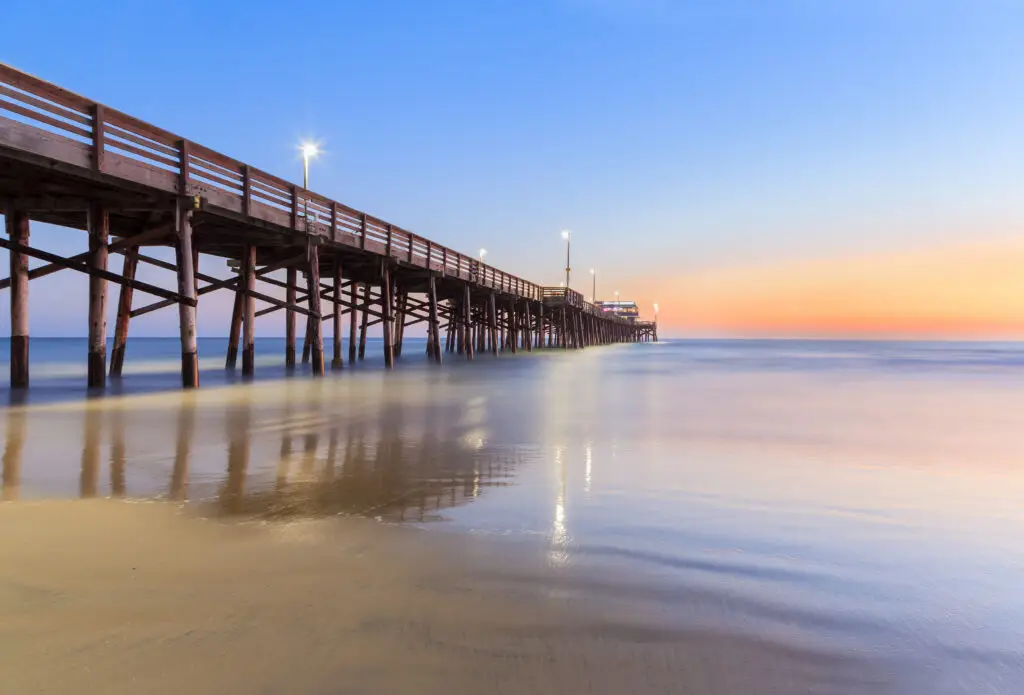
California’s iconic coastline is famous for its beautiful beaches. From the rugged cliffs of NorCal to the sandy shores of SoCal, California’s coast attracts millions of visitors every year.
But underneath the picturesque scenery are very real dangers. In fact, these beaches are among the most hazardous public areas in the state.
We explore the real dangers at California beaches, including how injuries occur and when those dangers cross the line from unavoidable natural risk into legally actionable negligence.
If you suffer an injury on a beach in California and believe you might have a legal case based on the information provided here, contact Bisnar Chase for a free consultation. We have been winning personal injury cases for over 4 decades, including premises liability and government entity claims. We have a 99% success rate and have recovered over $1 billion for our clients.
Risks and Liability Issues Behind California’s Coastline
Beaches are shared spaces, which means there are often multiple layers of responsibility depending on where and how accidents occur.
Indoor facilities, like stadiums and commercial stores, have clear liability boundaries. In contrast, beaches have overlapping interests. They include:
- Public land management and government oversight: Beaches are often managed and maintained by city, county, and state government agencies.
- Private commercial operations: Many companies operate on beaches, including water-sport schools, equipment rental companies, and tour and charter services.
- Environmental hazards: Beaches are dangerous, in part, due to environmental factors such as rip currents, coastal erosion, sneaker waves, and water contamination.
- Tourism activity: The number of visitors to California’s beaches increases the risk of accidents. The dangers are worse for tourists, who are often unaware of the risks and don’t understand them.
- Recreational Infrastructure: Many structures pose additional risks when improperly managed. They include boardwalks, piers, walkways, bike paths, stairs, restrooms, fire pits, and lights.
Because beaches attract a lot of foot traffic, including people engaged in a wide range of activities, identifying legal accountability for accidents can be difficult. But it’s not impossible.
In California law, the existence of natural conditions and hazards does not automatically eliminate liability. When risks are foreseeable, preventable, or worsened by human involvement, legal responsibility can still apply.
Natural Ocean Hazards that Cause Serious Injuries
Arguably, the most significant dangers on California’s beaches are the natural factors. This is perhaps because most people don’t understand these dangers and, as a result, don’t take the necessary actions to protect themselves.
Rip Currents and Undertows
Rip currents are powerful, narrow channels of fast-moving water that flow away from the shore. They are some of the most dangerous and misunderstood ocean hazards.
There are several reasons why they are so dangerous. For one thing, they can be present even when the water looks calm. Similarly, undertows are subsurface currents that flow below the surface.
Even powerful and experienced swimmers can be overwhelmed by rip currents and undertows. It can still pull you off course and sweep you out to sea, even when you are swimming against it.
Risk factors include:
- An unfamiliarity with Pacific Ocean conditions, especially among tourists.
- Inadequate lifeguard coverage.
- A lack of warning signage.
- Poor communication of hazards.
- A lack of awareness of how coastal conditions can impact currents, including breakers, piers, jetties, and alcoves.
Legal Issues: When rip currents are known, recurring, and predictable, a failure to warn beachgoers could expose beach management agencies to liability. However, that is not always the case, because flash rips can appear suddenly and may be impossible to predict.
Rogue Waves and Sneaker Waves
Rogue waves are sudden surges of water that appear without warning. We define these waves as being twice the height of the surrounding waves. Once considered a myth, they have become a well-documented phenomenon along the California coast. Studies show that they are fairly common, especially during poor weather.
These “sneaker waves” catch people off guard because they don’t match the surrounding conditions. They have been known to sweep people off beaches, rocks, and coastal walkways with devastating force.
Legal Issues: Waves are a natural phenomenon and generally fall outside any legal responsibility. However, a failure to warn of known high-risk zones and recurring surge patterns can result in legal exposure.
Shore Break and Surf Impact Zones
The shorebreak and surf impact zones are areas of the ocean where waves break near the shoreline.
Depending on the weather and water conditions, wave breaks can create high pressure and turbulence, even in shallow waters.
Shore break areas can be especially dangerous when the beach slopes down toward the water. This means that waves can break quickly and steeply. Hard-breaking waves can hit people in the water with an intense crushing force, pushing people down into the ocean floor and creating a significant risk of spinal injuries.
In these high-danger areas, swimmers and surfers can also be held under the water, disoriented, and pummeled by the force of continually breaking waves. These zones are not static. They are so dangerous because they can change quickly with the tide and swell, as well as with the structure of the beach.
Legal Issues: People often assume they are safe when close to shore, but that is not necessarily true. As with other beach dangers, break and impact zones are naturally occurring. But they can be especially dangerous for visitors unfamiliar with local conditions.
Beach management agencies have a responsibility to communicate these dangers and provide adequate lifeguard coverage.
Marine Wildlife Encounters
Beyond the waves and currents, there are plenty of other environmental threats facing beachgoers in California.
Our waters are home to marine life that can cause serious injuries. Some encounters have even proved deadly. The following are some of the dangerous beach wildlife you can encounter in California.
Shark Bites and Other Shark Encounters
Despite being a fear for many Americans since Jaws hit movie theaters in 1975, shark attacks are relatively rare. But they do happen off the coast of California.
There are about 60 unprovoked shark attacks worldwide every year. In 2025, there were 10 reported shark-related incidents in California alone. However, only three of these encounters resulted in injuries.
But just because they are rare does not mean they are not a real danger that we must take seriously. There have been two recent incidents at the time of writing that prove the point.
- January 2026: Surfer Tim Civik, 26, was in the water near the Gualala River mouth in Mendocino County when a suspected great white shark attacked him. The shark broke his surfboard in half and bit into the man’s thigh.
- December 2025: Erica Fox, 55, was a triathlete who was in a group swim off Lovers Point, near Monterey, when she disappeared. Her body was found on a remote beach six days later, and still had a ‘shark band’ deterrent attached to her ankle. She had sharp and blunt force injuries, and coroners recorded her cause of death as a shark attack.
Stingray Injuries
Experts estimate that there could be as many as 10,000 stingray injuries every year in California. They have also warned that the numbers are rising. Most stingray accidents happen in warm waters, making them more common in CA than in other ocean areas.
Stingrays have flat bodies and barbed tails. They often bury themselves on the ocean floor as a form of camouflage, both to hide from predators and to ambush their own prey.
When they do so in shallow waters, people who are swimming or wading through the ocean can sometimes stand on stingrays lying on the seabed. When this happens, stingrays instinctively whip their sharp, venomous tails into the person. This can cause extreme and immediate pain and lead to infections.
Jellyfish Stings
Jellyfish are common in Southern California during spring and summer. They usually move toward warm waters or drift toward shore due to the currents or weather conditions.
It is estimated that 150 million people worldwide are stung by jellyfish each year. One report from lifeguards in San Diego estimated that they dealt with up to 200 stings per day during peak summer activity.
Most jellyfish stings are relatively minor, causing pain and rashes. Some can cause more extreme reactions, with heightened pain, muscle cramps, and fever.
Aggressive Seals and Sea Lions
Sea lions are not typically aggressive toward humans. However, they can be dangerous in certain situations. For example, they are sometimes territorial and aggressive during mating season or when startled or threatened.
In some situations, they have been known to bite or attack swimmers, surfers, and boaters who get too close. Sea lion bites can cause deep wounds and create the risk of infection.
Males can weigh between 400 and 900 lbs, so they can cause significant damage when they attack, including dragging targets underwater.
There has been a recent increase in sea lion attacks in California. These have been linked to toxic algae blooms, which have caused neurological issues in these powerful animals. High concentrations of domoic acid can cause them to experience confusion, erratic behavior, and extreme aggression.
- In 2025, an aggressive sea lion chased surfers in Newport Beach. It was caught and diagnosed with permanent brain damage caused by a toxic algae bloom. The animal was euthanized.
Legal Issues: Ocean-based wildlife cannot be negligent, and we cannot hold the creatures themselves accountable for any injuries. But failures to provide proper warnings, to communicate information promptly, or to manage risks effectively could raise liability concerns in some cases.
Sand Collapses on California Beaches
Sand can be unpredictable, and there have been several accidents involving dangerous sand shifts and collapses in California over the years. These accidents cross categories because they involve natural elements, but usually occur due to human actions.
- July 2024: A teen girl’s beach day almost turned deadly when a hole that she was digging collapsed on her. The victim was in the middle of digging a deep hole at Mission Beach in San Diego. The hole was reportedly 6-8 feet deep, about 20 feet from the water line. But it collapsed, burying her up to her neck and trapping her. Lifeguards, park rangers, and firefighters were able to dig her free.
- July 2014: Adam Pye, 26, died when a sand tunnel collapsed around him at a Bay Area beach. He had carved out a 10-foot-deep hole at Francis State Beach in Half Moon Bay. But it collapsed around him, completely covering him in sand. It took emergency responders about 30 minutes to find and dig him out, but he was pronounced dead at the scene.
- July 2011: Sacramento teen Angelica Marroquin was digging sand tunnels with her brother at Doran Beach, on the Sonoma Coast, when a sand collapse trapped her. Frantic family members dug her out in about two minutes. A bystander was able to perform CPR and revive the girl, and she was rushed to a nearby hospital.
- July 2001: A 12-year-old boy was digging a hole into the side of a sand dune at a beach in Marin County when his tunnel collapsed around him. He was trapped for several minutes, unable to breathe in the compacted sand. Rescuers eventually freed the youngster, but he died at Children’s Hospital in Oakland.
There have been many similar stories over the years, both on California beaches and elsewhere across the U.S. Sand can be incredibly unpredictable and reacts differently depending on several environmental factors. Experts advise against digging holes larger than waist-deep to prevent this type of accident.
Water Quality Hazards and Toxic Exposure
Both naturally occurring and human-caused factors can lead to toxic exposure in ocean water.
In California, we have seen algal blooms, also known as “red tides.” This is when algae grows rapidly and forms a green, blue, brown, or red foam on the water’s surface.
It can produce toxins that are harmful to people and animals. Effects include:
- Skin irritation
- Respiratory issues
- Neurological symptoms
Other issues can also cause water pollution in California. Some of the most common and dangerous ocean water contaminants in California include:
- Stormwater runoff
- Industrial contamination
- Sewage discharge
- Urban drainage systems
Legal Issues: These issues can expose beachgoers to dangerous pathogens and bacteria. In most cases, agencies are responsible for monitoring water quality, identifying problems, and preventing harm to people.
Their responsibilities may include monitoring and reporting problems, launching remediation projects to solve any issues, warning the public, and even closing beaches in extreme cases.
Failure to monitor, address, and warn about dangerous issues in ocean water can result in legal liability.
Human-Created Hazards on Public Beaches
It is not only natural threats that can pose hazards to beachgoers in California. There are also plenty of issues that are directly caused by people.
Boardwalk and Pathway Accidents
Most beaches have paths running adjacent to the shoreline. These paths are often packed with:
- Bicycles and e-bikes
- Skateboarders
- Electric scooters
- Walking pedestrians
- Beach tour pedal buggies
When you have a lot of people moving in different directions in a relatively small area, accidents are bound to happen. The dangers have only increased with the rise in electric bikes and scooters that can travel at high speeds.
We have seen accidents involving high-speed collisions between pedestrians and riders. Posts on a Huntington Beach Facebook group highlighted at least three serious incidents in 2025.
- June 2025: A woman was struck by a young man riding an electric bike. Both parties were injured. The crash happened on the boardwalk near Seacliff and PCH.
- July 2025: A rider on a pedal bicycle was hit by a woman on an e-bike traveling at about 20 mph.
- September 2025: Witnesses reported seeing a woman being knocked unconscious in a collision on the boardwalk bike path near Cabo Wabo Beach Club.
- November 2024: A woman was riding her bike on the coastal bike path near Dog Beach, at Goldenwest in Huntington Beach, when she was struck by a man on an e-bike in a hit-and-run accident.
These incidents all occurred over a span of less than a year along a single stretch of oceanfront in Huntington Beach. There are countless other accidents every year across the rest of California.
Some areas, such as Long Beach, have physically separated pedestrian and cycle paths along the beach to prevent high-impact accidents.
Legal Issues: Pathway accidents can sometimes be attributed to government bodies when poor signage, faded markings, and inadequate lane separation contribute to them. In most cases, individuals are at least partially at fault for their actions. For example, an e-bike rider who hits someone while weaving between pedestrians at high speed would take the majority of legal liability.
Equipment and Facility Hazards
Many beaches have businesses running at or near the boardwalk. Sometimes private companies run these businesses. In other cases, a government agency responsible for the beach might run or sponsor them.
Commercial spaces at California beaches are often leased from the controlling stakeholder, though some might be privately owned.
Common beach facility dangers include:
- Unsafe rental equipment
- Poorly maintained buildings
- Broken stairs and ramps
- Beach fire pit burn hazards
- Slip-and-fall accidents
Legal Issues: Most beaches will have stores that rent everything from bikes and buggies for cycling along the boardwalk to beach chairs and surfboards. If any of that rental equipment is defective or poorly maintained and causes an accident, the rental company might face legal issues.
Premises liability laws also apply to commercial buildings at the beach. Operators owe a duty of care to lawful visitors and must ensure the store is safe and well-maintained. When they fail to do so, and accidents occur, they may be responsible for any injuries under California law.
Commercial Activity Risks
Plenty of water sports take place in the water off California’s shoreline. When an individual is on the water using their own equipment, legal liability might be limited. But there are often water sports schools and operators offering training and supervision.
Common commercial operations include:
- Jet ski rentals
- Surf schools
- Parasailing operations
- Paddleboard rentals
There are several ways that these businesses can open themselves to legal issues. Some of the most common causes of legal action include:
- Negligent supervision
- Equipment defects
- Improper training for instructors
- Unsafe instructional practices
Legal Issues: Most water-sport operations require participants to sign waivers before getting in the water. But it is important to note that waivers do not always shield operators from liability under California law when negligence is involved.
Anyone who sustained injuries while under the supervision of a water sport operator can contact an attorney to determine whether their case may qualify for legal action.
Dangers from Motorized Watercrafts
People in the water in bays, harbors, peninsulas, and open-ocean water can be at risk from high-speed watercraft.
Powered boats, jet skis, and other motorized crafts can hit high speeds. Boats are also not always easy to maneuver quickly, while jet skis and sea scooters are often used by novices with little experience operating them.
That can put swimmers and paddleboarders at risk when they are in the same area of water as the motorized craft. Swimmers, in particular, can be hard to spot in the water and are extremely vulnerable to serious injuries in the event of a collision.
There may be several avenues of potential liability in this type of case, as shown in the case study below.
Case Study: Paddleboarder Struck and Killed by Jet Ski
A fatal accident occurred in Mission Bay, near San Diego, in 2023. Savannah Peterson, 12, was paddleboarding in De Anza Cove when she was struck by a jet ski traveling at about 50 mph. She sustained fatal injuries.
The jet ski rider pleaded guilty to criminal charges. But the victim’s family also filed a wrongful death lawsuit naming several parties as defendants.
The lawsuit alleged that the U.S. Coast Guard and the Army Corps of Engineers failed to enforce safe conditions for swimmers and paddleboarders in the area. It says the area should be separated by signage, buoys, and safety patrols to ensure it is clear of motorized crafts.
In addition, the lawsuit names several defendants, including the city of San Diego, the jet ski operator, and online marketplace OfferUp, which was used to rent the jet ski.
Tour and Charter Services
There are plenty of opportunities to get out on the water in California with rental boats. Many companies along our coast operate whale-watching tours, party boats, and other commercial ventures.
Some boat rentals will include an operator who will be in charge of the craft during the trip. Other areas, including Newport Beach and Long Beach, rent small Duffy boats and other crafts that you can operate yourself without a license.
Risks of rental boat services include:
- Power failures and steering issues
- Lack of proper training for operators
- Passenger behavior
- Overcrowding
- Poor craft and equipment maintenance
- Emergency response failures
Legal Issues: In boat accidents, liability depends on the circumstances of the incident. Responsibility could rest on the boat driver, the operating company, or the passengers on the craft. An accident could also be caused by someone on another craft that you are sharing the water with.
Surfing Accidents in California
California’s powerful Pacific swells, crowded lineups, and variable ocean conditions contribute to a wide range of surfing accidents each year. While some risks are inherent to the sport, many surfing injuries result from preventable factors.
Common causes of surfing-related injuries include:
- Collisions with other surfers in crowded breaks, often caused by poor surf etiquette or reckless behavior.
- Impacts with surfboards or fins can result in deep lacerations, fractures, or head injuries.
- Shore-break injuries occur when breaking waves push surfers into the ocean floor.
- Invisible hazards, such as submerged rocks, reefs, or debris.
- Sudden changes in surf conditions, including rogue waves and strong currents.
- Equipment failures, including defective boards, fins, or leashes.
Serious surfing injuries may include traumatic brain injuries, spinal cord injuries, broken bones, and severe soft-tissue damage.
Liability in a surf accident will depend on how and why the accident happened. The responsible parties might include:
- Other surfers who have acted recklessly.
- Surf schools or instructors, if an accident was caused by negligent supervision or instruction.
- Equipment manufacturers or rental companies, when the accident is caused by equipment issues.
- Property owners or managers, if an accident resulted from known hazards that were not properly marked or warned against.
Legal Issues: While California law recognizes the assumption of risk when surfing. But surfing accidents are not always just part of the sport. Legal liability can apply when accidents are caused by negligent actions, reckless behavior, or unsafe commercial practices.
Alcohol-Related Incidents
California’s beaches are a massive attraction, whether you’re looking for a scenic walk or a fun day of activities for people of all ages.
Some people – particularly in younger age groups – choose to drink alcohol at the beach, or head to the beach after drinking. But alcohol can be a major factor in contributing to accidents. It impairs judgment and compromises balance and reflexes.
Alcohol-related beach dangers include:
- Drownings
- Boating accidents
- Physical altercations
- Falling from rocks and cliffs
- Risk-taking behavior
- Fire pit burn injuries
Many beaches in California now prohibit alcohol consumption or require special permits. But that can be difficult to enforce.
Legal Issues: Local government agencies are responsible for monitoring beach erosion and addressing it before it becomes dangerous. This is difficult because the ocean is relentless, even as actions are taken to mitigate its impact. But a legal responsibility still exists.
Dog Bites on California Beaches
Dogs are not born dangerous, but some become overly aggressive when not properly trained or when they have negligent owners.
Many people take their dogs to the beach to run and play, and most do so without incident. But some irresponsible dog owners let their pets off-leash in public places when they lack sufficient control.
As a result, many beaches in California have an outright ban on dogs or restrict them on certain beaches at certain hours.
For example, in Huntington Beach, there is a dedicated dog beach—an area that is always available to dog owners. But the pups are restricted from other areas along the HB coast.
Despite the restrictions, dogs can still sometimes attack, bite, or injure people on California beaches.
Legal Issues: When a dog bites someone on a beach, liability will probably rest on the dog’s owner, according to California’s strict liability law. Other factors, such as a lack of signage or enforcement, might mean that other parties share the blame in some situations.
Infrastructure Dangers
Some California beaches have infrastructure zones and attractions with high foot traffic that create an added risk of accidents and injuries.
Some of the most famous examples include:
- Santa Monica Pier
- Balboa Pier in Newport Beach
- Huntington Beach Pier
These tourism hotspots attract large numbers of visitors year-round. For example, Santa Monica Pier gets about 10 million visitors a year, averaging about 30,000 people per day. It has shops, restaurants, and a small amusement park with a variety of rides.
Common accidents in these areas can include:
- Slip-and-fall hazards
- Fishing gear injuries
- Structural defects
- Overcrowding risks
- Ride breakdowns and other amusement park accidents
- Emergency access limitations
Legal Issues: In the event of an accident at an attraction such as the piers listed above, there may be overlapping responsibilities. Public areas might fall under the responsibility of a government agency or other controlling interest. Private businesses (such as restaurant and entertainment chains) often lease premises in those structures and will likely be responsible for any injuries that occur within their buildings under California’s premises liability laws.
Cliff Falls and Other Dangers Caused by Coastal Erosion
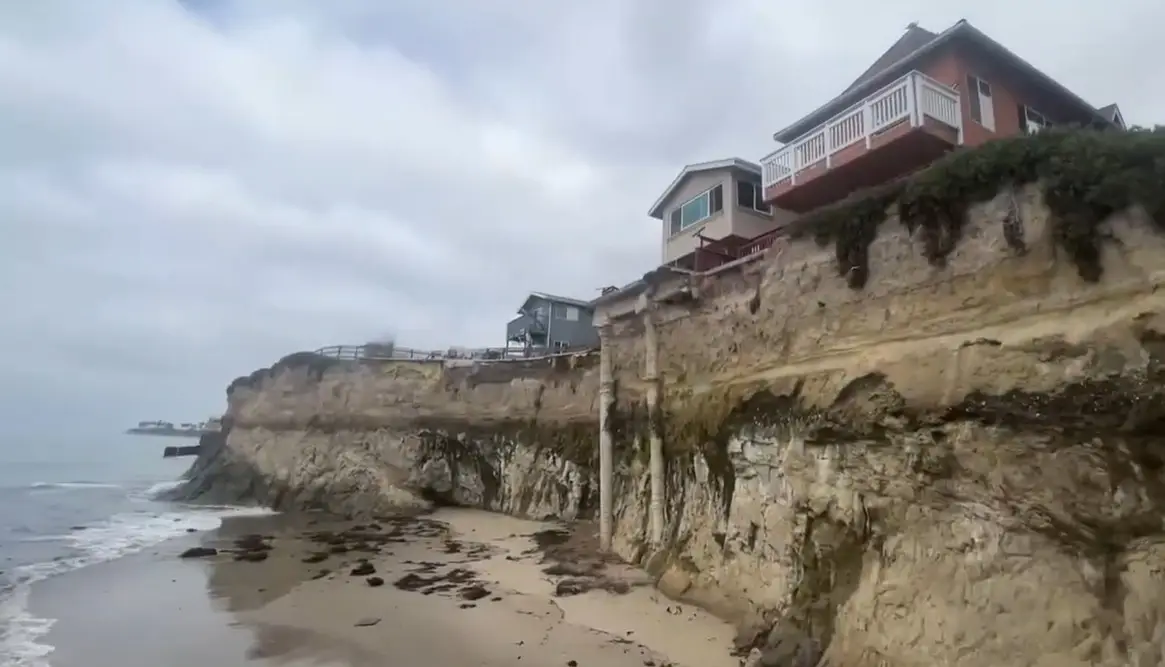
Coastal erosion is a serious problem that is becoming worse over time. It involves ocean waves and currents crashing onto beaches and cliffs, wearing away the land over time.
This erosion is a natural process that causes land to crumble into the ocean. And coastal erosion can create dangers on California’s beaches in various ways. These include:
- Collapsing bluffs
- Failing walkways
- Fencing, lighting, and signage failures
- Structural instability
- Sinkholes
- Falling debris
It can weaken cliff edges and cause debris to fall onto beaches without warning. It can also pose a danger to people living on cliff edges.
For example, an area of clifftop homes and paths in Santa Barbara has seen 14 fatal accidents over the last three decades. There are several reasons for this high accident rate.
For one, erosion has shifted the cliff line over time, making the edge less stable. This has also compromised fencing. It is also an area with a lot of student housing, and some of the accidents involved alcohol.
Who is Legally Responsible for Beach Injuries?
Legal responsibility will always depend on the circumstances of the accident. Not all injuries carry blame, and some accidents are not eligible for legal action. But the following are some of the potential parties that may be liable for certain accidents under specific circumstances.
Government Entities
- Cities
- Counties
- State agencies, including the California Department of Parks and Recreation and the California Coastal Commission
Private Operators
- Concessionaries
- Tour operators
- Rental companies
Commercial Property Owners
- Beachfront hotels
- Restaurants
- Resorts
- Private marinas
Under California law, multiple parties can share responsibility for a single accident or injury. Our state follows comparative negligence principles. This means that even the victim can share responsibility under the law if their actions contributed to the accident.
Legal Doctrines that Apply to Beach Injury Cases
The key legal principles used to take legal action over injuries occurring on and around California beaches include:
- Premises liability
- Negligence
- Failure to warn
- Governmental claims
- Dangerous conditions of public property
- Recreational use immunity limitations
- Assumption of risk
There are plenty of beach hazards that are not actionable because they occur naturally. But when negligence is involved, an attorney can hold the responsible parties accountable. The legal principles listed above can help determine when a natural risk becomes a legally preventable danger.
Why Beach Accidents Become Legal Issues
Several scenarios can turn a beach accident into a lawsuit or insurance claim. Legal action typically emerges when:
- The danger was foreseeable.
- The hazard was preventable.
- A duty of care existed.
- Safety measures and actions were inadequate.
- There were no warnings or signage flagging dangers.
- There had been previous incidents that provided warnings of future dangers.
But why do procedural and safety failures and breakdowns occur on our beaches? Many beach dangers persist due to:
- Budget constraints
- Staffing shortages
- Tourism pressures
- Regulatory gaps
- Infrastructure neglect
- Communication breakdowns
- Enforcement limitations
- Individual errors
Legal accountability isn’t just about the victim recovering money to help with their medical expenses and compensate their experience. It also functions as a public safety mechanism. By taking legal action after an accident, we force institutions and businesses to take accountability for their mistakes and correct dangerous conditions.
Evidence Preservation After a California Beach Accident
Beach conditions are constantly changing. Any accident scene is likely to be impacted by weather conditions and changing tides. When possible, injury victims should document the conditions at the time of their accident.
Important evidence can include:
- Photos and video of the scene, the hazard, and any injuries.
- Lifeguard and emergency service incident reports.
- Witness statements.
- Medical records and emergency response documentation.
- Weather and tidal data, and environmental condition reports.
- Surveillance footage.
Early evidence preservation is often vital in establishing liability. It can be tricky, because beaches are public places. As such, they often attract a lot of foot traffic and may be staffed or monitored by cameras. While it can be difficult after an accident, we advise documenting the accident and location as best you can.
Taking Legal Action for a California Beach Accident
California’s beaches are among the most treasured public spaces in the world. But they are not risk-free. Natural hazards, human negligence, commercial activity, and infrastructure failures can intersect in ways that create serious dangers for the public.
The idea that beach injuries are all simply acts of nature is inaccurate. That is sometimes the case, and not every injury is actionable. But when risks are known, foreseeable, and preventable, the law may recognize responsibility.
Understanding these dangers is not about discouraging beach days or fearing the ocean. It is about protecting public safety, enforcing accountability, and keeping people free of preventable harm.
If you have suffered injuries at the beach and believe that you might have a legal case, contact Bisnar Chase for a free consultation. Our law firm has been dealing with personal injury cases for over four decades, including premises liability and governmental claims. We have a 99% success rate with over $1 billion recovered.

Brian Chase
Articles, blogs, and content have been reviewed by legal in-house staff. Brian Chase is the managing partner of Bisnar Chase Personal Injury Attorneys, LLP. He is the lead trial lawyer and oversees cases handling dangerous and defective products that injure consumers. Brian is a top-rated injury attorney with numerous legal honors and awards for his work relating to auto defects and dangerous products. His firm has recovered over $1B for its clients. Brian is a frequent speaker for CAOC, Dordick Trial College, and OCTLA, covering personal injury trial techniques.