

California Car Accidents
A huge number of people are hurt every day in car accidents across California. Our roads are always busy and can be extremely dangerous. In fact, you have a greater chance of being involved in a crash in California than in any other state.
No two car accidents are exactly alike. You could be involved in anything from a minor fender bender to a DUI hit and run. Victims can suffer vehicle damage, losses, severe injuries, or emotional trauma and anxiety behind the wheel.
Deciding to take legal action is not an easy choice, and it is not for everyone. But many victims choose to file a lawsuit after a crash to make sure they get justice for their losses and suffering.
Bisnar Chase is a top-rated car accident law firm based in California. We are not here to tell you what you must do after an accident. It is a personal decision. But we have produced this guide – The Ultimate California Car Accident Guide – to ensure you are fully informed about your options after a crash. We are here if you need us!
Do You Need a Lawyer?
Not all car accidents are going to end in a lawsuit. But when a crash is caused by negligence, it often leads to legal action.
It is only fair that victims are not left out of pocket after a collision. If you were hit by a reckless speeding driver, you should not have to pay out of pocket for any related vehicle damage or medical bills that are not covered by insurance.
In this guide, we provide all of the car accident information you will need.
We work through the process of a car accident in chronological order to make it as clear as possible, starting with the crash action and moving on to what you should do at the scene, how to handle insurance companies, and how to file a lawsuit.
Consult our table of contents and jump ahead if you need specific advice after a car accident. Otherwise, read on to learn about the different types of car accidents, potential injuries, and the ins and outs of the legal process.
Table of Contents: Everything You Need to Know About Car Accidents
Types of Car Accidents
A wide range of car accidents occurs on both freeways and surface streets across California. The type of accident can affect the injuries and damage sustained.
Rear-end collision: When a car crashes into the vehicle in front of it, impacting the rear-end bumper.
Rollover crash: When the impact of a collision causes a car to roll onto its side or roof.
Head-on collision: When two cars crash while both are moving forward toward each other.
T-bone accident: When the front of one car smashes into the side of another, forming a ‘T’ shape.
Sideswipe collision: A side-by-side collision, when one vehicle veers into another. The two cars are usually moving in the same direction.
Multi-car collisions or pileups: A crash involving several vehicles, usually with an original point of contact creating a larger hazard.
These are among the most common types of car collisions in California. But any form of accident involving at least one car can be classified as a car accident.
Car Accidents in California
Car accidents are extremely common in California and across the United States. The following facts and stats show why you might need a car accident lawyer in California.
If you are focused on actionable advice and are not interested in the figures, please feel free to skip ahead.
There are more than 284 million vehicles registered for use on U.S. roads, each with the potential to cause massive damage if a driver makes a mistake or fails to take proper care. With numbers like that, rising every year, it is no wonder that there are so many crashes resulting in major injuries and property damage.
- About 6.2 million police-reported motor vehicle accidents happened in the U.S. in 2024.
- The number of total crashes, including those that go unreported, is believed to exceed 10 million per year.
- About 4.7 million crashes caused substantial property damage.
- Over 2.4 million people were injured in those accidents.
- More than 39,250 people died in fatal car crashes.
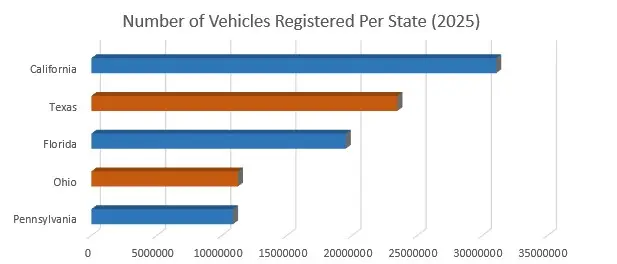
California is the most populated state in the U.S., so it should come as no surprise that it also has the most cars – by far. There are more than 31 million registered vehicles in California, compared to 23 million in Texas, the second-place state.
California-Specific Car Accident Statistics
The roads in California are notorious for heavy congestion, especially in high-volume areas like Los Angeles, San Diego, San Francisco, and Orange County.
- According to NHTSA data from the Insurance Institute of Highway Safety (IIHS), there were more than 4,000 fatal accidents on the roads in California in 2023. That number topped 4,500 in 2022.
- California also averages about 200,000 reported crashes resulting in injuries every year (via the California Statewide Integrated Traffic Records System).
- The annual medical costs of car accident-related injuries and treatments in California exceed $49 million.
- The loss of work hours due to CA car accidents totals $5.3 billion per year.
The cost of treatment and lost work hours related to car accidents in California was last released by the CDC for 2018. With rising costs, those numbers are likely to be much higher now.
Fatal Car Accidents
The table above shows the five U.S. states with the most fatal vehicle crashes in 2018, according to the Insurance Institute for Highway Safety (IIHS).
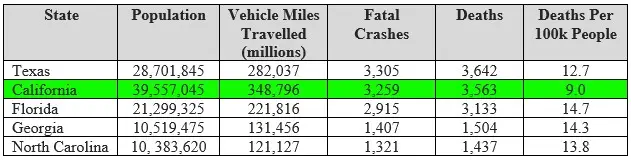
Texas saw the most fatal accidents and total fatalities, with California finishing a close second. These statistics underscore how dangerous California’s roads can be.
Bisnar Chase has mapped out some of the accident hotspots in Orange County specifically. The most dangerous streets in Orange County, running through areas including Anaheim, Huntington Beach, Santa Ana, Newport Beach, Costa Mesa, Fullerton, and more, include:
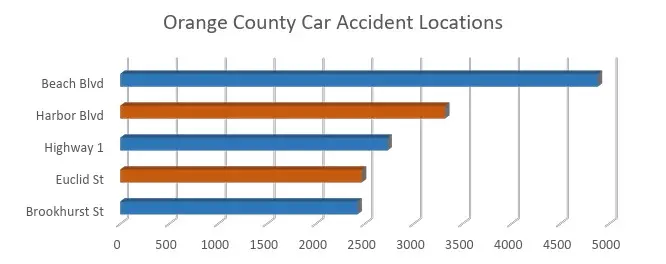
These facts and figures show how many people are impacted by car accidents across California every year. Nearly everyone has driven past the aftermath of a crash or been hit themselves. No matter how careful a driver you are, it can be unavoidable.
Causes of Car Accidents in California
What is the cause of the hundreds of thousands of car accidents happening in California each year? Of course, it varies. A wide range of factors can ultimately cause a collision resulting in victim injuries.
The most common car crash causes include:
Speeding
When a driver exceeds the speed limit or drives faster than the conditions allow, it drastically increases the chances of a crash occurring and endangers everyone on the road.
Driving under the influence
Driving while under the influence of drugs or alcohol (DUI) can be deadly, as the driver’s reflexes and decision-making are both compromised.
Distracted driving
When a driver is distracted, their focus is diverted from the road, creating dangerous situations. Driver distractions include looking at a phone, talking to a passenger, eating, drinking, and more.
Running red lights
It is common to see drivers in a hurry run through red lights in California these days. When they do, it can create an extreme intersection hazard.
Turning across traffic
Improper turns are a major source of road crash dangers in California. This involves drivers turning when they do not have the right of way, often turning left across oncoming traffic.
Failing to account for weather conditions
We do not get much inclement weather in California, but when we do, it can make the roads slippery and dangerous. When drivers fail to account for conditions and adjust their driving style, they can put themselves and others in danger.
Vehicle defects
Car accidents and injuries can result from design or manufacturing defects in the vehicles themselves. Some famous examples are listed later in this guide, including sudden unintended acceleration and airbags that fail to deploy.
Road maintenance/design defects
Some accidents are caused by poor road designs that force drivers into dangerous situations. In other cases, a lack of maintenance, such as failing to fill in potholes, can cause tire blowouts and crashes.
Lack of visibility
In some crash cases, drivers struggle to deal with poor visibility. This might be due to driving at night, to weather conditions such as rain or fog, or to the driver’s eyesight.
Recklessness/lack of care
Many car accidents are caused by the driver failing to take due care and attention. For example, changing lanes on a freeway without looking or signaling first is extremely reckless and can easily cause a sideswipe accident.
Tailgating
All too often, we see drivers following the car in front too closely. If the leading car brakes suddenly, the tailgating driver might not be able to react in time, leading to a rear-end collision.
Lack of experience
When drivers first get behind the wheel, they might not have the experience to deal with certain situations on the road. This can cause them to panic and trigger an accident.
Vehicle maintenance
Drivers have a responsibility to make sure their vehicles are properly serviced and in a roadworthy condition. If they fail to do so and an accident is caused by a worn tire blowout or a brake failure, they could be held liable.
Medical
Sometimes a driver’s medical condition can contribute to an accident. For example, the driver could suffer a seizure or heart attack while behind the wheel.
The circumstances of a car accident are not always straightforward. As you can see from the list above, there are plenty of potential causes of a crash or collision, and an investigation may be needed to determine exactly what happened.
What to Do After a Car Crash
So, you have been involved in a car crash. Maybe another driver rear-ended you at a red light, or a car t-boned yours at an intersection. What now?
We are going to start at the very beginning – what to do seconds after the crash happens – and work through the different steps in manageable installments.
Our goal is to make sure you know how to react safely and secure justice after a crash. This includes guiding you through the evidence you need to record at the scene, offering advice on how to talk to the insurance company afterward, and going through what NOT to do.
To start with, you MUST stop at the scene. Even if you believe the other driver was negligent, failing to stop at the scene of an accident could be considered a hit and run. Next, follow these steps. We will go into much more detail on each step later in the guide.
Step 1: Safety first
If your car is still working, move it off the street or to the side of the road for the safety of other drivers. If the crash wreckage is in an unsafe position and you can’t move it, try to leave the vehicle and move to safety.
However, if you have been injured in the collision and need serious medical attention, try to remain still until emergency services reach you.
Note: In some cases, damaged vehicles might leak fluids and pose a risk of fire or explosion. Bystanders or emergency services must weigh the risk of moving an injured person against the risk of leaving them in the car.
Step 2: Contact the authorities
You should always call the police after a crash. Depending on the circumstances of the accident, the area where it occurred, and the officers’ workload in the area, the police may or may not attend the scene.
If officers do arrive, follow their instructions and give them the sequence of events from your point of view. You can request a copy of their report.
Step 3: Communicate with the other driver(s)
Once you are in a safe position and in no immediate danger, it is time to talk to the other driver. This can be an awkward conversation, depending on the cause of the crash, the other driver’s temperament, and how you approach it.
Exchange details with the other driver, and make sure you get pictures of their license, vehicle plates, and insurance details.
Step 4: Collect evidence
You need to gather as much evidence as possible from the accident scene. Take pictures or video of anything associated with the crash, such as the damaged vehicles. This becomes important when you are making a claim or filing a lawsuit.
Step 5: Seek medical attention
If you have sustained serious injuries in the accident, you will likely be taken to a nearby hospital by ambulance, making the other steps in this guide moot.
If you are not taken to the hospital, you should visit a doctor as soon as you can, even if your injuries are relatively minor.
These are the basic steps that you need to take after being involved in a car accident. As mentioned above, the process of collecting evidence and communicating with authorities, drivers, and witnesses is vital to the later legal process.
Keep reading for comprehensive guidance on handling these important steps.
How and When to Report a Car Accident
No two car accidents are exactly the same. Some crashes will simply leave the victim shaken, while others will cause serious damage or major injuries – from whiplash and broken bones to permanent spinal cord damage.
Do You Have to Report a Car Accident to the Police in California?
According to California law, you must report an accident to the police if:
- It has caused injury or death.
- It has caused any property damage.
That guidance means that you must report a crash, even if it only resulted in minor injuries. Property damage might involve damage to a vehicle or a personal item within the car. It could also refer to damage done to a nearby structure. For example, a crash can cause a car to hit and damage a wall or fence.
The law requires you to inform the police within 24 hours of the incident. In most cases, it is best to call them right away.
What Authorities Should You Call?
You should dial 9-11 to speak to local police dispatchers. If the accident is serious, the police will coordinate with paramedics and send an ambulance to the scene.
Not all areas are covered by a city police force. Some areas are unincorporated, which can raise questions about jurisdiction. If you are involved in a collision in an unincorporated area, you should ask to be put through to the California Highway Patrol instead.
The reality is that a police officer may not always attend a crash scene. Police resources are more stretched than ever, especially in larger cities across California. It will depend on the severity of the accident, whether it has created a road hazard, the condition of those involved, and how busy the police are at that moment.
When you speak to a police dispatcher, answer their questions as clearly and concisely as possible. Always follow their instructions, whether they tell you to stay at the scene and wait for an officer to arrive, or to exchange details with the other driver and leave.
Working with Police Officers at a Crash Scene
If dispatchers tell you to wait for authorities to arrive, you must wait. In some cases, the negligent party will insist on leaving before the police arrive. If they do so, you must take down identifying details from them before they leave.
What can you expect from the police after a car accident? Once at the scene, a police officer’s job is to ensure everyone involved is safe, address the aftermath of the crash, and document the incident. They might facilitate the clean-up by cordoning off the area, removing debris from the road surface, and redirecting traffic around potential hazards.
Officers will examine the positions of the vehicles and may take pictures of the scene. They will likely talk to everyone involved, as well as any witnesses. They will either ask you questions or have you fill out a report of the incident.
In some cases, the police officer may mark down who they believe is at fault, based on their examination of the scene. You can request a copy of the police report to use later in your legal claim.
You may leave the scene once the police have permit you to do so.
Do You Need to Report a Car Accident to Anyone Except the Police?
Being involved in an accident is stressful. It is not just the initial crash scene that you have to worry about – you might have to inform other parties after the event as well.
For example, an accident should be reported to the DMV within 10 days of the incident if:
- It caused injury or death.
- It caused property damage of $1,000 or more.
Failure to report an accident to the DMV can lead to the suspension of a driver’s license.
You will also need to report the incident to your insurance company. You should do so as soon as possible. A comprehensive guide to dealing with insurance companies is included later in this guide.
Approaching the Other Driver
For many people, it can be daunting to approach and talk to another driver who has crashed into your vehicle or caused a collision. It can be difficult to know what to say or how to handle the situation.
Most drivers – even when they have caused an accident with careless, reckless, or negligent driving – will do the right thing and stop to exchange details after a collision.
It is important to remember that the law is on your side. Under California law, anyone involved in an accident must exchange details with the other parties.
You should ask for the following details from the at-fault driver:
- Name, address, and phone number
- Driver’s license number
- Insurance company and policy number
- License plate number
- Registered vehicle owner
- Vehicle identification numbers (VIN) of any vehicle involved
You will likely be left shaken by the collision. The most reliable way of recording the information you need is to take pictures.
Use your phone to take pictures of the driver, their license, their vehicle’s plates and VIN, and their insurance card.
Don’t Offer Too Much Information Without Speaking to an Attorney
We advise victims not to give out too many of their own details. It is impossible to know exactly who you are speaking to. The other driver may be similarly hesitant.
That is okay, you don’t have to force anything. But the bare essentials that you MUST collect include the insurance policy details, driver’s license, and plate numbers. You can leave anything else to the police.
If the negligent driver refuses to provide these details, you should inform the police immediately. Try to at least take down their license plate before they leave the scene to later assist authorities.
In some cases, the negligent driver might ask you not to call the police or say they need to leave the scene before police arrive. It is your prerogative, but you should never be afraid to involve the authorities. They are there to support you.
Compiling Car Accident Evidence
When you come to file an insurance claim or a car accident lawsuit in the days, weeks, or months after your crash, you will rely on evidence to prove that the incident happened as you said it did.
Using evidence, you will be able to prove your case and secure compensation, either through an out-of-court settlement negotiation or through a jury trial verdict.
But what evidence do you need, and how do you collect it?
Start at the Scene
You should start collecting evidence at the accident scene right after it happens.
First, call the authorities. Then, start the collection process. Many forms of evidence can disappear quickly, so it is important that you document as much as you can, as soon as possible.
If you are badly injured and unable to walk, you could ask someone else at the scene to take pictures and talk to witnesses for you. You could ask a friend or family member, or even a supportive bystander.
Pictures of the vehicles
Take pictures or video of the damaged vehicles – both your own and any other vehicles involved. If possible, get photographs showing their initial position after the crash before anyone moves them. Get close-ups of the damaged portions of both vehicles, as well as wide-angle landscape shots showing where they are in relation to their surroundings.
The crash scene
Document the scene itself. Show the surroundings and any intersections nearby. Take pictures of any skid or tire marks on the road, any debris on the surface, and try to document weather conditions and anything else that factors into the incident.
Your injuries
If you have visible injuries (such as cuts and bruising), take pictures of them. If your injuries are internal (broken bones, whiplash, muscle strains, etc.), you can later request copies of medical reports to provide proof instead.
Personal recollection
Write down a personal account of the accident as soon as you can, while the events are still clear in your mind. Use a piece of paper and pen, or the notes or text functions on your phone. Car accidents are stressful, and clear memories can fade as the adrenaline wears off.
Witness accounts
Speak to witnesses who saw or heard any part of the accident, including the events leading up to the crash, the actual collision, and the aftermath. You can ask them to write an account, or record an audio recording on your phone with their permission. You should also ask for the names and contact details of witnesses.
To source additional evidence, you could identify any nearby stores or premises with security cameras that may have captured footage of the crash, and request a copy of the police report from officers at the scene.
Remember that pictures and videos can be worth a thousand words when building a strong legal case.
When you work with Bisnar Chase, we will use every piece of evidence at our disposal to prove your case and secure the maximum compensation possible for your car accident. But nothing demonstrates a case as clearly as pictures or videos from the scene.
As attorneys, we will carry out our own investigations and hire experts to help us prove your case. But images and recordings from the scene, taken immediately after the crash, will always be a huge help.
What Not to Do at the Accident Scene
There are plenty of things you need to concentrate on doing at the scene of an accident, from phoning authorities and dealing with the other driver to compiling evidence.
We know this is stressful enough, especially since you are probably shaken by the collision itself.
But there are also some things you should make sure not to do.
DO NOT:
Admit fault
When heading over to talk to the other driver involved in a car accident, many people’s first instinct is to apologize. Try not to apologize, confess to anything, or admit fault while you are at the scene. If you do, defense teams and insurance agents may later use this against you.
Even if you were partly at fault for a vehicle collision, it does not mean the other driver was not negligent, and it does not disqualify you from seeking or deserving compensation. Say as little as possible about the circumstances of the crash to the other driver while you are at the scene.
Be too confrontational
It is understandable to be angry or upset if someone hits your car while driving carelessly. But try not to lose your temper at the scene of the accident. Focus on exchanging details and collecting evidence.
Screaming and shouting will not get you anywhere. The best thing you can do in the pursuit of justice is to let your car accident lawyer do their job.
Leave the scene
Even if you are the victim, it is a crime to leave the scene of an accident without exchanging details and speaking to authorities if necessary. It does not matter if you are in a hurry; stay at the scene and handle the situation properly.
Give out too much information
There is no need for you, as the victim, to give out too much of your personal information at this point. For example, you do not need to give out your home address.
Most people are honest and trustworthy, but you never know who you are talking to, and giving out personal information to a stranger is not a good idea. There is a danger that you could later be harassed in an attempt to prevent you from filing a lawsuit.
After the Crash: Medical Attention
There is so much to deal with at the scene of an accident that it can be overwhelming. But once you have spoken to the other driver and exchanged details, made a report to the police, and removed your car from the scene, there is still plenty to think about. For example, you must seek proper medical attention.
If you have suffered major injuries in a vehicle collision, you will likely be treated by paramedics at the scene and then taken to the hospital by ambulance for more comprehensive care.
But what if your injuries do not require urgent care at the crash scene?
Anyone involved in an accident should visit a doctor the following day. Have a full check-up, and report any pain you might be feeling, even if it is relatively minor.
Describe any symptom or concern to your doctor, and request a copy of your medical report.
It is important to note that:
- Injuries are not always instant.
- Pain can develop in the days and weeks after an accident.
- Injuries do not always follow the same timeline.
If pain develops later, you should return to the doctor for a follow-up appointment to have your new symptoms examined.
Above all, you should be honest and thorough with the doctors. Tell them about even the slightest symptoms, from physical pain to emotional trauma. Your legal team might later call on the doctors to provide expert testimony if required for a lawsuit.
When To See A Doctor After a Car Crash
Our top tips for getting the right medical attention after a car accident include:
- Visit a doctor straight away.
- Make extra appointments if new symptoms develop.
- Keep your appointments.
- Ask to see a specialist if necessary.
- Be diligent with any prescribed medications or exercises.
- Keep all rehab appointments.
- Keep any paperwork relating to your medical visits after an accident.
- Mention any symptoms, no matter how big or small.
- Write down your own dated timeline and journal of symptoms developing and medical appointments.
Just because an injury developed a week or two after your accident, it does not mean that you cannot file a lawsuit or win compensation.
The defense team for the negligent driver will always look to cast doubt on the validity and scope of your injuries. You must mention every new symptom or concern to your doctor as it arises, or the defense might grill you on why you failed to do so.
As long as you are open and honest with your doctors and lawyers, you will be able to secure the justice you deserve.
Car Accident Injuries
Car accident injuries come in many forms. No two crashes are exactly the same, and different types of collisions carry different results.
A wide range of factors can affect the severity of the victim’s injuries, including the speed at which the cars were travelling and the point of impact.
For example, a high-speed freeway accident that causes a vehicle rollover is likely to result in greater injuries than a lower-speed rear-end collision.
However, it is important to note that this is not always the case. There is no way to account for the injuries that a harsh jolt may cause. Typical car accident injuries can include:
Whiplash
The most common car accident injury is whiplash. This usually occurs when the jolt of a collision snaps the victim’s head and neck back and forth quickly. It can happen even at low speeds, causing lasting problems.
Cuts and bruises
Many car accident victims sustain significant bruising, either from straining against their seatbelt or from an impact with a steering wheel or dashboard. Cuts often occur when windows break under the force of the collision or from impact trauma.
Broken bones
The force of a car crash will sometimes cause broken bones, particularly in areas that are outstretched to absorb the impact, such as arms, legs, hands, feet, and wrists.
Spinal cord injuries
In most injury cases involving the spine, a person’s spinal cord is damaged by some form of major trauma, such as a car accident. Depending on the area of the spinal cord that is damaged, a victim might suffer partial or complete paralysis.
Internal organ injuries
Organ damage and internal bleeding can occur when organs within the body are damaged. Car accidents commonly cause many different conditions, from a ruptured spleen to a collapsed lung. Internal injuries can be caused by piercing bone or debris, or by the force of an impact, which can cause the body to crush in on itself. Internal injuries are particularly dangerous because there is often no visible warning.
Back injuries
Car accidents often cause back injuries due to the extreme pressure a collision can place on the spine. The back is a delicate collection of muscles and ligaments and cannot handle major strains. Back injuries can lead to long-lasting, debilitating conditions.
Hearing damage
Some car accident injuries involving trauma to the head and neck can have a knock-on effect, causing the victim to experience a constant ringing in their ears. Audio issues like this can have a huge impact on a person’s quality of life.
Traumatic brain injuries (TBI)
A traumatic brain injury (TBI) is a particularly severe form of internal injury. Usually caused by a serious blow to the head, a TBI can cause memory loss, brain damage, and even death. There are nearly 3 million serious traumatic brain injuries in the U.S. every year, with falls and vehicle accidents among the most common causes.
Burns
Depending on the type of crash occurring, a car accident might result in the wreckage catching fire. It could also send scalding steam, liquids, or chemicals spilling from the damaged vehicle. A victim can suffer significant burns if they come into contact with any of these substances.
Facial injuries
Some people suffer facial injuries in car accidents, including major trauma, dental damage, broken noses and jaws, and more. Facial injuries often occur when the collision throws the body forward, and the face impacts against the steering wheel or dashboard.
Knee injuries
Drivers extend their legs out to press against the pedals when their car is in motion, while passengers have their feet pressed against the footwell. When an accident jolts the car, it can cause the knee joint to compress, hyperextend, or twist under the pressure. The force can cause serious damage to the cartilage or meniscus.
Amputation
When large, heavy vehicles collide, a significant amount of force is involved. Any collision of this type can cause a limb or appendage to be severed. Many car crashes can also cause crush injuries, which may require the victim to undergo a surgical amputation just to save their life. Both forms of limb loss will have an unimaginable impact on the victim.
Emotional trauma
Not all scars are visible, and not all car accidents cause physical injuries. But this does not mean that the victim has not suffered. Many people develop mental and emotional issues after being involved in a car accident, such as depression, or struggling with extreme anxiety while driving.
Death
A huge number of deaths are caused by car accidents every day in the U.S. When a fatal crash has occurred, the family of the victim can take legal action against a negligent road user.
This is just a snapshot of some of the most common injuries that occur in car accidents. The fact is that cars are dangerous weapons in the hands of negligent drivers, and collisions can have severe consequences.
Whether you have suffered whiplash and emotional trauma, have been paralyzed by a high-impact collision, or have lost a loved one, you deserve justice.
Any of these injuries can have both short-term and long-term impacts on the victims. Contact an attorney to file a car accident lawsuit and fight for full compensation.
After the Crash: Speaking to the Insurance Company
How do you make sure you are properly compensated for whatever form of injury you have suffered?
There are two options, and we will explore both in great detail. Those options are to file an insurance claim or to pursue a lawsuit. In most cases, you will start by communicating with any relevant insurance companies. If they do not provide a fair compensation offer, your attorney can escalate the case and file a lawsuit.
It is important to note that drivers in California are required to have auto insurance. The minimum required insurance limits in California are 15/30/5. This means the policy will pay up to $15,000 per person for bodily injuries, up to $30,000 per accident for bodily injuries, and up to $5,000 per accident for property damage.
In many cases, the cost of an accident will far exceed this minimum limit. Many people choose to pay for better insurance coverage as a result. However, others try to shirk the law and get away with no insurance.
Do you have to report a crash to your insurance firm?
The first step should always be to contact your insurance company. You might hear of some people choosing not to contact their insurance agent when only property damage is involved, to handle the repairs privately and save on the deductible.
But when you are involved in a car accident resulting in injury, you must contact your insurance company, even if you were not at fault.
Failing to contact any relevant insurance companies promptly can give them cause to deny a claim.
How do you report a crash to insurance?
There are different types of car accident insurance claims. No matter the circumstances of the accident, you must start by notifying your own insurance company. It is important that you do so as soon as possible after the incident.
Some people might call from the scene of the accident, while others wait until the following day. Our advice is to stay calm and collected when you make the call. The insurance agent will ask you questions about the circumstances of the crash. Make sure you have all the details that you have collected at hand so you can answer the questions clearly and concisely.
The three main forms of insurance relevant to you after a crash are First-Party Insurance, Third-Party Insurance, and Uninsured Motorist Insurance (UM/UIM Insurance).
First-Party Insurance
First-party insurance is a claim involving you (the policyholder) and the insurance company. This will most often be utilized when a car accident did not involve another negligent party. However, elements of a first-party claim could be used to compensate the policyholder for fixing their vehicle while a further claim is ongoing.
Third-Party Insurance
A third-party insurance claim is when you are claiming compensation against a negligent driver’s insurance. As the crash victim, you are the third party, with the other two parties being the policyholder (the at-fault driver) and their insurance company. This is usually the most relevant form of insurance in car accident cases.
UM/UIM Insurance
Many people pay for UM/UIM insurance as part of their policy. This can help bridge the gap and make sure victims are compensated if the at-fault driver does not have insurance, or does not have enough insurance to cover any losses.
When the other driver and their insurance company accept fault, the process will be much smoother. However, in some cases, they will contest who is at fault for the accident.
Do you need a lawyer to deal with the insurance companies?
Many people start a car accident claim by trying to deal with the insurance companies themselves. This is often not a great idea. Each insurance company works differently, and it can be difficult to deal with.
We always advise people to contact a lawyer before calling the insurance company, so they can have an expert argue their case. This will give you a much better chance of winning maximum compensation.
Do not worry if you did not involve a lawyer right away. You can always make that choice later in the process if you are struggling to deal with the insurance agents.
In the meantime, if you start by tackling the insurance company yourself, make sure you stay consistent with your account of the accident, and do not admit fault. This is very important.
Continue reading this guide for comprehensive information on the tactics that insurance companies will use to save having to pay out, and to learn exactly how a car accident attorney will help you.
Insurance Company Tactics
There is a very good reason we recommend that car accident victims contact a lawyer, especially when filing a third-party insurance claim against the negligent driver.
The unfortunate truth is that insurance companies do not want to compensate you. An insurance company is a business that operates to make money. The agents that you speak with focus on resolving your claim as quickly as possible, while offering as little compensation as possible.
Companies train insurance agents to provide great customer service with a sympathetic phone manner. But when you are speaking to adjusters, it is important to remember that they are not working for you. They are loyal to their employers, to the company’s bottom line, and to their own careers.
As with other professions, great work by insurance agents earns promotions and bonuses.
Of course, we are not saying that insurance agents are dishonest or bad people, out to cheat or con you. That would be completely unfair and untrue. It is simply their job to pay out as little as possible, and as such, they are not always working toward your best interests.
In the case of third-party car accident claims, the agent will be looking to minimize your claim against the at-fault driver (the policyholder).
Insurance agents will use a range of tactics to minimize your claim. These include:
Providing a friendly voice
As we have mentioned, insurance agents provide a sympathetic voice when they contact you. They will ask about your injuries and appear kind and concerned. Many people relax and speak more freely when faced with a friendly voice.
Top Tip: It is important to be on your guard. Remember who you are speaking to and be careful what you say and agree to.
Asking for a recorded statement
Insurance agents often ask if they can record your statement about the accident. This is NOT a formality, such as when the DMV phone line informs you that calls will be recorded for training. It is optional and specifically for use as evidence in your claim.
If you allow your statement to be recorded, they can use it against you later to cast doubt over your case, even if you misworded something or your circumstances changed later.
Top Tip: Just say no. You are under no obligation to give a recorded statement, so politely decline when asked.
Casting doubt over fault
The insurance company of the at-fault driver will often look to deny liability. In doing so, they might try to show that the policyholder was not at all to blame, or that you were partially at fault for causing the collision.
Top Tip: Do not accept their version of events. You know the circumstances of the crash better than they do, and you will be able to prove your case with the evidence you have collected. If the circumstances and liability are contested, it is more important than ever to work with a car accident attorney.
Offering a quick settlement
One of the most common tactics used by auto insurance firms is to offer a quick settlement in exchange for your dropping any future claim.
Car accident victims are often in a vulnerable state and are worried about paying their medical bills and vehicle repair bills. A quick offer with some guaranteed income might be more appealing than starting the uncertain process of a lawsuit. But this is a tactic to make sure the insurance company does not have to pay out as much as your claim is worth.
Top Tip: The first offer – especially a quick one – is almost always a lowball offer designed to prey on your concerns and leave money on the table. Never accept the first offer, and speak to an attorney before agreeing to any settlement.
Requesting medical authorization
An insurance agent might ask you to sign a medical authorization that gives them access to your medical records. They will tell you that this will allow them to assess your injuries and pay out on a settlement sooner.
Once insurers have medical authorization, they will use it to review any conditions, injuries, or treatments that predate the accident. They will use this knowledge to minimize your claim, saying that past incidents or preexisting conditions influenced injuries suffered in the accident.
Top Tip: Do not sign a medical authorization for the insurance company unless asked to do so by your attorney. It is not a requirement, so you are within your rights to politely decline.
Delaying tactics
As we mentioned, the insurance company may try to rush a settlement. But in other cases, they will look to slow the process down and string it out for as long as possible.
Delaying tactics can leave a victim exasperated with the process or desperate over financial concerns. They might then give up the fight completely or settle for a lesser sum to resolve the case.
Top Tip: Be patient. This is always easier said than done, but this is a tactic designed to test your resolve. Wait them out and make them pay the full amount with help and support from an attorney.
Disputing injuries
Another tactic is for insurance companies to dispute certain aspects of a car accident claim. For example, they may argue that some injuries are not legitimate or are not related to the vehicle collision.
Even if they are forced to settle the claim, they aim to reduce the amount they will have to pay out by raising doubts over certain parts of the injury claim.
Top Tip: Let your lawyer fight your case. Part of your legal representation will include securing evidence and testimonies from medical experts and treating doctors to prove that your injuries are legitimate.
Use social media against you
Insurance agents will use any means possible to discredit your car accident claim. One tactic they use is to search through your social media accounts. If they see pictures of you traveling, at the gym, or doing anything else physically demanding, they will use it as proof that your injuries are exaggerated.
For example, if you post a picture of yourself snowboarding at Big Bear three weeks after your crash, the insurance agents will use it to cast doubt on your whiplash injury claim.
Top Tip: Be very careful about what you post to your Facebook, Instagram, Twitter, and other social media accounts while you have a claim in progress. Set your accounts to private if possible, and be conscious of what you are posting and how it could be viewed.
Advise you not to hire a lawyer
An insurance company may advise you against hiring an attorney. Agents do not want to deal with experienced legal experts on the other side of the table, because a good lawyer will ensure their client receives the maximum possible compensation.
Top Tip: You can take on a claim without a lawyer if you want to; there is no requirement. But it must be your choice. Do not be discouraged from hiring legal representation by the insurance company. Car accident victims who work with lawyers are proven to win more in compensation than those representing themselves.
Keep these tactics and tips in mind if you are negotiating a claim with an insurance company, and remember that hiring a lawyer can help you win more in compensation and make the process much easier on you.
Tips to Deal with Insurance Companies
The previous section in this guide outlines the tactics insurance companies use to deflect fault and minimize the money they pay out to car collision injury victims. Use our concise list of tips below to ensure you are treated fairly by insurance agents.
- Be prepared when you speak to the insurance company.
- Talk to them at a time that is convenient for you.
- Do not agree to have your statement recorded.
- Do not provide medical authorization unless instructed to by your lawyer.
- Be polite but firm; do not let them bully you.
- Do not post information on social media that can be used against your claim.
- Never accept the first settlement offer.
- Do not get discouraged or give up on your case.
- Hire a lawyer to handle the tough parts for you.
There is no need to worry or fear this process. Going up against an insurance company can be daunting, but that is what car accident attorneys are here for.
Our top tip is to call a lawyer first. A skilled attorney will be able to handle the vast majority of interactions with the insurance company and can support you through every step of the process.
Filing a Car Accident Lawsuit
What are the criteria for filing a car accident lawsuit, and how quickly do you have to take legal action? These are great questions.
Not every accident results in a successful claim under an insurance policy. Generally speaking, a car accident lawyer in California will only get involved in a case if the accident was caused, at least in part, by some form of negligence.
What is negligence?
Negligence involves a person or business entity failing to take proper care or deliver an expected quality of work.
Negligence can be either an act or a failure to act. For example, looking at your phone while driving could be an act of negligence, while failing to perform required quality checks on a vehicle at the manufacturing level, later causing accidents, would be a form of negligent inaction.
We run through the potentially negligent parties that you can target for compensation after a car accident in the next section.
What is the statute of limitations for a car accident in California?
There are rules in place that dictate how long you are allowed to wait before making a car accident claim. This is just good sense; it prevents people from deciding 10 years after an accident that they want to sue, clogging up the courts with decades-old cases and little evidence.
The statute of limitations is a point of law that sets a maximum time limit for initiating court proceedings. It varies by the type of case. For example, the statute of limitations for a civil car accident injury claim will differ from that for a criminal case (such as murder).
According to California law, the statute of limitations for a car accident lawsuit is two years. This means that injured plaintiffs have two years from the date of the accident to file a claim through the courts.
Who is Liable for a Crash, and Who Do You Sue?
Earlier in the Ultimate California Car Accident Guide, we outlined the most common causes of auto collisions and injuries. The long list includes everything from speeding and driving under the influence to poor road design.
So, who is responsible for your collision, and who do you take legal action against?
This is not always a straightforward question, but it revolves around the question of negligence. Essentially, you can take legal action against anyone whose negligence contributed to your accident.
Here are some of the most common negligent parties sharing at least partial fault for car accidents:
The other driver
In the majority of car accident cases, the at-fault driver will be liable for any injuries and damages if their actions have caused the crash.
For example, if the driver were speeding, distracted, driving under the influence of drugs or alcohol, or caused an accident through a lack of experience or general carelessness, they could be held liable for the accident.
Car manufacturer
Some car accidents will also become vehicle defect cases – a type of lawsuit that Bisnar Chase law firm specializes in.
When auto companies make mistakes in the design or manufacturing process, a vehicle may carry inherent faults that cause dangerous situations on the road. Vehicle defects will be covered in greater detail later in this guide.
Car owner
There are some instances in which a car owner might be held liable, even if someone else is driving their car and causes an accident.
In many cases, car insurance covers the vehicle and its driver, so a third-party accident claim may be made against the car owner’s insurance policy. But the owner could also be held personally liable if they allowed somebody who they knew to be unfit to drive to get behind the wheel.
Employer
When an employee causes an accident while driving as part of their business duties, the employer could share liability.
This law could apply to employees whose job is driving, such as delivery drivers, but it will depend on the terms of their contracts. It could also apply to other workers asked to perform an additional duty involving driving.
Maintenance workers
If maintenance work on a car makes it unsafe to drive and causes a crash, the company, garage, or staff could be held liable.
For example, if someone made a mistake and the maintenance work compromised the vehicle’s steering or brakes, leading to a loss of control and an accident, there would be a clear issue of liability.
City authority
In some cases, accidents are caused by poor road maintenance or by unclear, confusing, badly designed, or poorly marked out roadways. In these cases, the city authority responsible for building and maintaining the roads could be held accountable.
For example, if the city failed to fix a dangerous pothole, or was aware of an accident blackspot and failed to redesign the road to make it safer, it would be responsible for any accidents that occurred as a result.
Fact Check: In many instances, more than one party will share some portion of blame.
Lawsuits can be filed against multiple parties if various people are at fault for the same crash. For example, if a speeding driver strikes you at a notoriously dangerous intersection with poor visibility, you could name multiple parties in the lawsuit.
You could sue both the offending driver and the city authority for failing to fix a hazardous intersection.
You do not need to worry too much about trying to work out who was most at fault for a crash. As you can see, it is not always easy.
When you speak to a law firm, legal experts will go over the circumstances of the collision with you in great detail to determine whether there are any additional liable parties, beyond the other driver involved.
What is Comparative Negligence?
You might have heard of the term comparative negligence in car accidents, but you might not really understand what it is or how it works.
Essentially, comparative negligence is a law used in California injury cases when more than one person is to blame for an accident. It is particularly relevant in car accident claims, where there are often shades of gray and nuance in determining fault.
One of the most frequently asked questions by car accident victims is whether they can make a claim or file a lawsuit if they were partially to blame.
The answer is yes, thanks to the comparative negligence rule. Comparative negligence apportions blame on a percentage basis, based on each person’s level of negligence. This percentage influences how much money the victim ultimately receives in compensation.
Example Comparative Negligence Scenario:
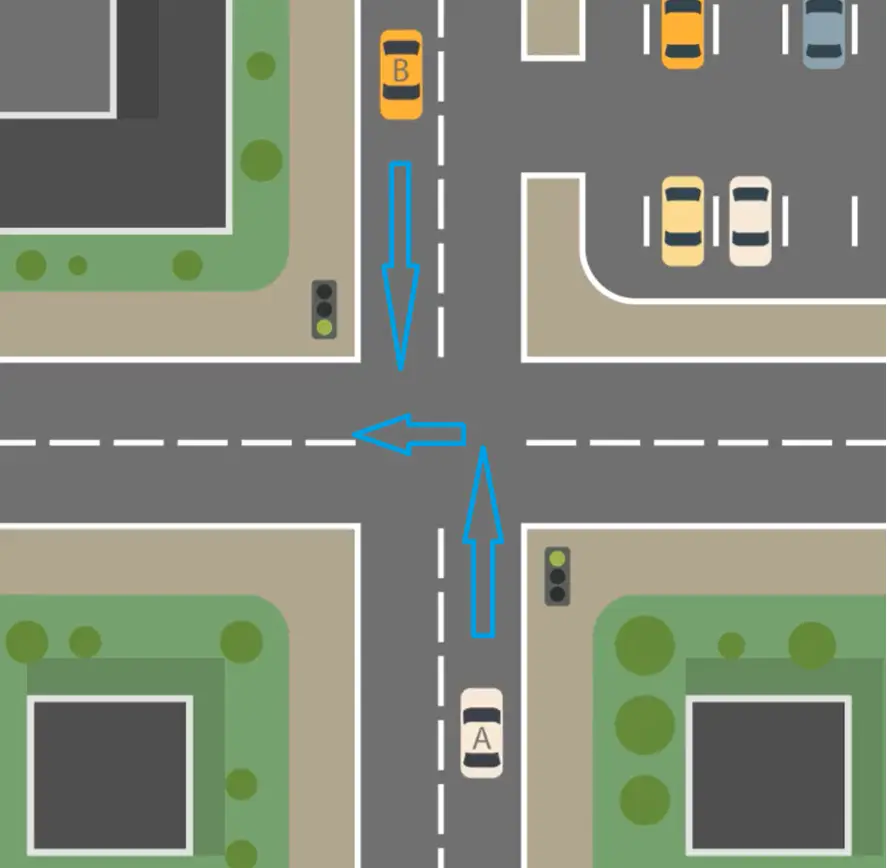
- Driver A reaches the intersection with a green light (not a green arrow) and makes a left turn across traffic.
- Driver B travels toward the intersection from the opposite direction, moving at 15mph over the speed limit – much faster than Driver A anticipates – while checking their phone rather than making sure the way is clear.
- The vehicle driven by Driver B collides with the vehicle driven by Driver A.
- Driver A is injured in the collision and files a claim against Driver B.
- A settlement cannot be agreed with Driver B’s insurance company, so the case goes to court, where Driver A is the plaintiff, and Driver B is the defendant.
- It is decided that Driver B is 80% at fault for causing the crash, while Driver A is 20% at fault for making the turn.
Please note: This example is purely hypothetical and is not based on a real-life claim or court decision. We are simply using this scenario to show how comparative negligence works.
According to this scenario, both drivers are partially at fault. But California law states that accident victims should not be punished by disqualifying them from taking legal action if they share only a small portion of the blame.
However, if a victim is partially at fault, their compensation will be reduced. This will occur in accordance with the percentage set forth in the comparative negligence judgment.
Returning to the example above, if Driver A is awarded $100,000 in compensation for their injuries and damages, this will be reduced by 20% in line with their degree of negligence. As such, the award will be reduced to $80,000.
Do not be afraid to take legal action, even if you were partially at fault for an accident. You are still well within your rights to hold the other driver accountable for their actions.
Criminal Lawsuits vs. Civil Cases
Questions are often asked about the kind of lawsuit that is filed after a car accident. There are two main forms of litigation: criminal and civil.
Criminal Cases
Criminal charges are filed when a person has broken the law and is prosecuted by the state or federal government. Sentencing for a criminal case includes punishments such as fines and prison time.
Civil Cases
Civil cases are filed when there is a private dispute between two or more people or entities. A civil action is usually brought when one party wrongs another by negligently breaching a legal duty. It can result in the defendant having to pay the plaintiff financial compensation.
The vast majority of car accident lawsuits in California are civil cases. However, in some cases, the liable party may face criminal charges after a car crash if their negligence violates the law. Examples include:
Driving under the influence (DUI)
Driving while intoxicated by drugs or alcohol is a criminal offense. If a driver is involved in an accident and has a blood alcohol level above the legal limit of 0.08%, they could face criminal charges.
Hit and run
If you are involved in an accident while driving, hitting another vehicle or a pedestrian, you must stop and exchange details with the victim. Failing to do so is referred to as a hit-and-run and is a felony.
Reckless driving
Some forms of reckless driving, such as excessive speeding, may result in criminal charges if they endanger other road users or pedestrians.
It is extremely important to note that even if the at-fault driver has been indicted with a criminal charge, that DOES NOT stop you from filing a civil lawsuit against them.
Criminal charges punish the liable party for their actions, but do not make the victim whole. It is up to the victim to pursue civil legal action to ensure they are properly compensated for their injuries, damages, and suffering.
How to Hire a Lawyer for Your Car Accident Case
Most people know how to go about hiring a lawyer for an injury case. You are likely to ask friends and family for recommendations, perform a Google search for the best car accident attorneys located near you, or call around a few different local law firms to see if any stand out above the rest.
But it can sometimes be difficult to make sure you get the right fit for your needs. You need to make sure you find a skilled, experienced lawyer you can trust.
Here are some of the key features that you should look out for when hiring a law firm for a car accident case:
Free consultation
Make sure you choose a law firm that offers a free initial consultation. This will allow you to chat with a firm and receive general advice and guidance on the merits of your case, without any obligations to sign on the dotted line. You can sign with a law firm once you are happy with the terms and find the right fit.
No win, no fee guarantee
You should choose a law firm that offers a no win, no fee promise to clients. This is referred to as a firm working on a contingency basis. It means clients are protected from having to pay major initial costs. The firm will advance all fees necessary to win your case, such as filing fees and the cost of hiring expert witnesses. If your case is won, a pre-agreed percentage will go to the lawyer. If it is not won, you will owe nothing. This system removes the need for expensive retainers and hourly rates. It provides legal support to people of all means and creates a win-win situation.
Trial lawyers
Many cases are resolved through an out-of-court settlement. Your legal team will negotiate with the at-fault driver’s insurance company and will usually secure a compensatory settlement that everyone is happy with. But that is not always the case. Sometimes the insurance company will dig its heels in, and the only option will be to take the case further. This may involve a court case, with a jury deciding the outcome. You should hire a lawyer with substantial trial experience who can provide outstanding representation in court.
Track record
It almost goes without saying that you should work with a legal team that has extensive experience handling car accident cases like yours, winning significant settlements and jury verdicts in the past. This has two main advantages. It will give you a greater chance of success because your lawyers have been there and done it all before and know exactly how to operate to secure the best possible results. It also gives you peace of mind during the difficult legal process, knowing your case is in experienced hands.
The feel
Some law firms feel a little different from others. Some are run purely as businesses, rushing through cases without paying enough attention to the people involved. Other firms put a greater emphasis on providing a personal touch. At Bisnar Chase, we know that being involved in an accident and dealing with the aftermath is incredibly stressful. Our entire team is focused on providing superior representation, changing lives, and making sure clients feel secure and cared for.
Great reviews
If you do not trust yourself to pick the right law firm based on feel alone, you can use the experiences of others to help make your decision. Law firms have always put testimonials on their own websites. But platforms like Google now offer a cross-section of unbiased reviews to base your selection on. Every firm will have some negative reviews; sometimes they are deserved, other times less so. There will always be disgruntled clients. But these reviews will give you a strong sense of a business’s quality.
For reference, Bisnar Chase has 114 Google reviews at the time of writing, with an average rating of 4.7 out of 5 stars. This compares well with other firms, and we believe it accurately demonstrates our firm’s quality and care.
Accessible
Everyone has heard horror stories of injury victims finding it impossible to contact their lawyer or legal team to get so much as an update on their case. Make sure you choose a law firm that is responsive, with the resources and care to keep you updated on any developments. At Bisnar Chase, we regularly contact our clients, even if we do not have an update for them. We believe it is important to check in frequently and to be accessible.
These are just some of the key tips when it comes to choosing the right lawyer for your car accident case in California. Above all, make sure you do your homework and pick a legal team that provides a great fit for your needs.
Car Accident Compensation: How Much Will You Get?
Once you have hired a lawyer and started legal proceedings, how much money can you expect to win from your car accident claim?
As usual, this is not a straightforward question. There is no standard amount that is awarded for all car accidents. Every incident is different, and a victim’s compensation will depend on the specific circumstances of their collision.
Money is awarded mainly to compensate the victim for any losses, pain, or suffering they have incurred as a direct result of the accident.
Several key factors are considered when deciding how much car accident compensation will be awarded. These include (but are not limited to):
Property damage
Car accidents often lead to property damage. At the very least, your car is likely to have sustained damage in the crash. Any compensatory award may account for the cost of repairs to vehicles and other damaged property.
Medical costs
The most significant expense associated with car accidents is usually medical care. If you have suffered an injury, the cost of treatment and care (including everything from basic care to surgeries and hospital stays) can be extreme. It is not fair that a victim will be left to pay out of pocket when the accident was not their fault, and so compensation will usually cover medical expenses.
Lost wages
Suffering an injury in a car crash can often cause you to miss work. The injury may have made it difficult for you to get into the office, caused significant enough pain to prevent you from being able to work, or forced your doctor to order a period of bed rest. You may also have to miss work while attending medical appointments. Any compensation should reimburse you for earnings that you have lost out on as a direct result of the crash.
The loss of the ability to work in their chosen profession
Some injuries are so severe that they can limit your capacity to work certain jobs. For example, if your profession involves some form of physical lifting, but you are experiencing chronic shoulder pain due to a car crash injury, you may be forced out of the career or profession you have chosen. If an accident has destroyed your capacity to work and earn money in your chosen field, any compensatory amount should take this into account.
Emotional trauma
The impact of a car accident extends beyond physical injuries. In many cases, crash victims will experience various forms of emotional trauma, such as anxiety and depression. This kind of mental scarring can be just as serious as any physical effects. It can hugely impact a victim’s day-to-day life, preventing them from sleeping or making them fear getting behind the wheel again. As such, this should also be factored into the compensation offered.
Rehabilitation costs
Sometimes medical costs extend beyond hospital stays and immediate treatments required after an accident. Those who have suffered injuries in car collisions often face extended periods of rehabilitation to regain full feeling and motion after an injury. This might involve working with a physical therapist to make gradual improvements. This should always be accounted for in a compensatory award.
Chronic conditions
Some injuries will never fully heal, leaving the victim to deal with long-term conditions after an accident. This means that they may never regain full mobility or might be left with chronic pain for the rest of their lives. Serious and chronic conditions that impact crash victims into the future will rightfully result in much higher settlements and verdicts to compensate the victim for this additional suffering and impacted quality of life.
Ongoing cost of care
A victim may be left with ongoing care costs after a car accident, especially when their injury is serious. For example, some accidents result in paralysis. Depending on their home situation, this may force the victim to hire a care worker to help them with any needs. They may also need specialist equipment, such as wheelchairs and vehicles, or home alterations such as widened doorways, ramps, or extensions. This should all be accounted for in a settlement request.
Pain and suffering
Pain and suffering combine to form a general category of compensation that is hard to calculate. How do you know how much pain a person is in, or how much they have suffered? Still, car accidents can be physically and mentally traumatic, and it is important that victims are properly compensated for their suffering, in whatever form it takes.
Average Car Accident Compensation
Car accidents come in all shapes and sizes, from disastrous high-impact wrecks resulting in fatalities to low-speed rear-end fender benders that result in minor injuries.
As a result, the compensation for a car accident can also vary wildly. The most minor of accidents might result in a small settlement to cover any medical expenses and property damage sustained.
Victims of more serious accidents might receive millions of dollars, based on the factors listed above.
The average car accident settlement in California is in the $10,000-$20,000 range. But the car collision attorneys at Bisnar Chase have also won major multi-million-dollar settlements, including:
- $24.7 million: Seatback failure auto defect.
- $14.4 million: Auto defect accident.
- $11 million: Motor vehicle accident.
- $10.5 million: Auto defect accident.
No matter which end of the spectrum your case is on, we know how important it is to you, and we are here to support you. We are in the business of helping people and are dedicated to winning your case.
Do Not Trust Online Calculators
Some websites claim to have accurate car accident compensation calculators. These allow you to plug in some of the specifics of your accident, such as the cost of your medical expenses, and provide an estimate of the amount you may receive.
It is never a good idea to trust these online calculators, as they often cannot provide an accurate number.
In some cases, this is because the victim entering the numbers does not have all the necessary information available to them. They are probably unable to estimate their future medical expenses, do not know how to estimate economic and non-economic damages, and have no idea how to choose a pain and suffering “multiplier” number.
This all means that it is impossible to rely on a number produced by an online car accident calculator. Instead, it is much better to consult with an attorney and get their expert opinion.
A lawyer will be able to draw on their past experience and consult with experts to produce a target figure for compensation demands.
Above all, it is important to work with an experienced California car accident attorney, because they will be able to maximize the amount of compensation you receive. They will build a strong case, provide convincing arguments, and know how best to negotiate with insurance agents and persuade juries.

How a Car Accident Lawyer Will Help You
We have talked a lot about how a car accident lawyer will win you the maximum possible compensation for your case. But how will they do that, specifically?
Below is the step-by-step process from the first time you contact a law firm through to the completion of a case.
Our team of attorneys and paralegals is highly experienced, having achieved successful outcomes in thousands of cases. This is how they do it:
Make Contact
When you research law firms and pick one or more that look like a good fit, the next step is to make contact by calling, emailing, or using a live chat feature on the law firm’s website.
You will speak to an experienced, highly trained intake expert who will review the details of your case with you. They will provide guidance on the merits of your case and whether that firm is able to handle it or if they would need to refer you to another law firm. They would also discuss the legal process and the terms of the no-win, no-fee guarantee.
If both parties decide it is a good fit, you will be sent documents to sign and return. This can often be done digitally.
Build the Case
The next step is to build a case that proves you were the victim of negligence and deserve to be compensated. There are a few steps that can be taken to build the most powerful argument possible.
To do so, our experts will start by reviewing the crash circumstances with you in great detail while assembling the evidence you have already collected, such as photos of the vehicles and the collision scene.
In some cases, people are unable to secure this evidence at the time of the collision. Maybe you were seriously injured and could not walk around taking pictures, or were in shock and did not think to do so. Do not panic.
We will work with you to build the best claim possible based on the evidence available to us. We can also help by requesting police reports and showing you how to secure medical records.
This might be enough to get the ball rolling, but we are thorough and like to be prepared. Some accidents might be open-and-shut cases, with the at-fault driver unable to deflect blame or contest their role in the accident. Others might be contested.
Bisnar Chase will hire experts to help strengthen and prove your case. This might involve hiring an expert witness or an investigator to gather additional details about an incident or an individual.
Negotiations and trials will frequently include testimonies from doctors and car crash reconstruction experts to show the extent of your injuries and the circumstances of the collision. Our law firm will advance the costs of hiring investigators and experts to strengthen your case to protect you from initial out-of-pocket costs.
Negotiations and Filing a Lawsuit
The process starts with your legal team sending a demand to the at-fault driver’s insurance company. This will be for an amount considered to be a fair settlement, based on the severity of your injuries and the impact they have had on your life and finances.
The demand letter will trigger a period of back-and-forth negotiation between your legal representative and the insurance agent. You will be assigned a pre-litigation expert who is highly experienced in dealing with insurance companies. They will be responsible for communicating with the adjuster, providing evidence, and making your case.
The majority of accident claims will be settled at this stage, with the two sides agreeing on a fair offer based on the merits of the case.
However, in some cases, the insurance company will not agree to a fair settlement. When this happens, we can move your case on to litigation. Your lawyer will file a complaint in the relevant California civil court.
Going to Trial if Necessary
If the insurance company is unwilling to admit fault or agree to a fair settlement, it may be necessary to proceed to a jury trial.
When the complaint paperwork is filed with the court, the defendant will be served with notice. The victim and their legal team have two years from the date of the accident to file this case with the courts.
The case may proceed to a jury trial, though it is also important to note that settlement negotiations can continue after a complaint is filed with the court. Many cases are only settled after the plaintiff proves that they are willing to keep fighting for justice.
If a case does go to trial, a jury will ultimately decide its outcome. It will be your attorney’s job to make your case in front of the court and win the support of the jury.
As you can see, the process of filing a car accident claim, negotiating with the insurance company, and potentially going to court, is not always simple. It will almost always be a bad idea for a victim to try to represent themselves.
At Bisnar Chase, our personal injury lawyers are highly trained with an incredible track record of success. They are here to help you win your case. It is true that a lawyer will take a pre-agreed percentage of any settlement or jury award to cover their costs. But the skill and experience they bring will be invaluable in winning the case.
It is much more likely that you will win any form of settlement, verdict, or justice with a California car accident attorney in your corner.
California Car Accident Trials
For many people who are considering filing a car accident claim, the idea of going to court is extremely daunting. It can even put many people off pursuing their claim.
But you should not let the fear of a trial prevent you from fighting for justice.
Some insurance firms of defense teams will even attempt to call your bluff as a tactic, refusing to compromise on a fair settlement and sticking to lowball offers to see if you are willing to tell your story in front of a jury.
In this section of the Ultimate California Car Accident Guide, we aim to dispel any myths and put your mind at ease by mapping out the processes when a case goes to trial.
Step 1: Paperwork filed
The first step in filing a lawsuit is to actually file the relevant paperwork with the courts. The document that must be filed is called the “complaint”, and it will provide a broad overview of the allegations. Your legal team will consult with you as needed and ensure the paperwork is filed on time with the correct California civil court.
Once the complaint has been entered within the court system, an initial court date will be set. From that point, your legal team will be given a certain period of time to locate the defendant and serve them with the complaint, notifying them of the lawsuit and their first scheduled court date.
The defendant named in the lawsuit will then have at least a month before that initial court date to inform their insurance company (if applicable) and hire a defense attorney.
Step 2: Pre-trial and discovery
During the pre-trial process, both sides will build their cases so that they are ready to present in court. A key phase of pre-trial proceedings is called “discovery”. At this point, the legal teams for the plaintiff and for the defense will exchange evidence and witness information. For example, they would exchange photographic evidence of the vehicles and the crash scene.
As part of the discovery stage, both legal teams will carry out depositions. This means that they will interview you (the victim), the at-fault driver, anyone else involved in the incident, and any witnesses. These interviews will be carried out under oath and recorded, and the contents can later be used in court.
The pre-trial phase includes all preparations necessary to be ready to appear in court. The length of time it takes to complete this stage can vary based on the complexity of the case, but it could take several months in the case of a car accident lawsuit.
While this is going on, the two legal teams will appear in court periodically to provide progress updates to a judge and ensure that the date set for the trial is reasonable. It is also your lawyer’s job to keep you informed every step of the way during this phase.
Step 3: The trial
Once the trial begins, it will likely last between a few days and a few weeks, depending on the complexity of the case and the number of experts and witnesses set to take the stand.
First, both lawyers will give opening statements, starting with the plaintiff’s representative. After opening statements, your lawyer will make your case. They will do so by introducing evidence, by bringing experts to the stand to speak about their areas of expertise, and by talking to witnesses on the stand about what they saw. As the victim, you may be called to the stand to provide a first-hand account.
Once the plaintiff rests, the defense will have the chance to make its own opposing case. Both sides will be able to question the witnesses and experts produced by the other side before they are dismissed.
After both sides have made their cases, they will deliver closing statements to the jurors. There will be 12 jurors tasked with the job of deciding your case. They will be asked to assess whether there was negligence leading to an accident, whether the accident caused harm or injury, and to provide guidance on how much the defendant should pay in compensation.
If the jury awards compensation to the plaintiff, the defense team could later file an appeal that extends the process.
You Can Still Settle
Even when paperwork is filed with the California civil courts, negotiations over a settlement can still continue. In fact, a settlement is still the most likely outcome.
A settlement can be agreed upon at any time before the jury returns to deliver its verdict. This means that both legal teams can get a feel for how the trial is going and how they think the jury is responding, while still pursuing a solution to remove the uncertainty.
Some cases will even settle as the jury is about to head back into the courtroom.
Most lawyers prefer to settle, as long as a fair package can be agreed upon. This is because a jury can be completely unpredictable. Car accident attorneys want to guarantee a good outcome for their clients.
A client must agree before a settlement is accepted, though. Once an offer is made, the legal team is obligated to present it to its client. They can offer support and guidance, but if the client wants to hold out and wait for the jury verdict, that is absolutely their decision.
Trial vs. Settlement: Pros and Cons
As with everything, there are pros and cons when you are considering pushing for a trial verdict versus settling.
Trial Pros
- More money: You could get more money awarded from a jury compared to the sum agreed to by the defense or insurance company.
- Sympathy: In some cases, it can be easier to appeal to the sympathies of the jurors about the impact a car accident has had on you. Jurors are more likely to put themselves in your shoes than a lawyer or insurance agent.
- Accountability: A trial is held in a public court and ensures that an at-fault driver or car manufacturer is named and held accountable. In contrast, a confidential settlement will protect the negligent driver from admitting any wrongdoing.
Trial Cons
- Risky: The main risk of a trial is that juries can be completely unpredictable. You might get more compensation, but you also could end up with nothing. There is something to be said for the guarantee that comes with an agreed settlement.
- Time: Between the pre-trial preparation and discovery phase, as well as the trial process itself, proceedings take a long time. A trial may delay you from receiving any compensation you are due.
- Costs: It can cost a fair amount of money to win a case in court. Between filing fees and attorney costs, as well as the considerable costs of hiring expert witnesses to speak in court, trial costs can quickly mount. These fees are necessary to win a trial, and it is important to note that Bisnar Chase will advance these costs so that a victim will not have to pay out of pocket. But these expenses will still be subtracted from any eventual compensatory award.
Car Accident Trial FAQ
How long will a trial take?
There is no set time period. It will depend on the specifics of your case, such as how many witnesses and experts each side needs to depose during pre-trial preparation. You should expect the pre-trial phase to take several months, with the trial itself taking between a few days and a couple of weeks.
Will you have to speak in court?
You will likely take the stand to provide your account of the car accident. Yours will be a key voice in the trial. You can describe the circumstances of the collision, how it felt, and the injuries and effects that you have suffered as a result. Many people are nervous about speaking in court. But your lawyer will provide outstanding preparation, support, and guidance. Ultimately, it is worth it to ensure you receive the compensation and justice you deserve.
Top Car Accident Trial Tip
Keep a cool head and take legal advice from your attorney on board when it comes to deciding on a settlement offer. Some clients become fixated on the amount they could win in a trial and do not properly consider their options or make sensible, reasoned decisions.
We know how important it is to you that you find a sense of justice in your case. This might mean a recognition of wrongdoing or just being properly compensated. But it is important not to make any assumptions when it comes to a trial.
We cannot stress enough that you can never know which way a jury will go. In some cases, defense teams will make improved settlement offers after the case has concluded but before the jury returns with a verdict, based on how the trial went.
It is important not to get carried away. If a fair offer is on the table, it often makes sense to minimize any risk and go with the guaranteed win, even if it means taking a little less money.
The risk associated with jury trials is why some lawyers avoid them altogether.
Bisnar Chase is not a law firm that avoids trials or runs from a fight. We have the skill, experience, and resources to take on even the toughest defense teams. With that said, we will provide advice and guidance, but the client must make the decision to accept a settlement offer. It is up to you.
What If I Had a No-Injury Crash?
There are all kinds of car accidents, resulting in various degrees of injury and vehicle damage. But can you still file a car accident lawsuit if you were not injured in that accident?
Typically, when a car accident involves only property damage, the victim does not need to escalate their case from an insurance claim to a lawsuit.
However, there are still cases that could develop and give the victims cause to file a lawsuit.
- Depending on the nature of the damage, the victim could file a property damage lawsuit.
- The victim could file a lawsuit against the at-fault party if they do not have insurance to cover the cost of their actions.
It is also important to note that not all injuries are physical. An injury could involve emotional trauma, as well as other invisible symptoms or physical symptoms that develop over time. Even if you think you have not suffered an injury in your car accident, it is worth checking in with an attorney.
Bisnar Chase primarily handles accidents that result in injury. But there are exceptions depending on the circumstances of an accident. To find out if you can take legal action with the help of our expert team, contact us now for a free case review.
How Will You Receive Payment if Your Case is Won?
If your car accident case is won, either through an agreed settlement or a jury verdict, the next step is collecting your compensation.
Unfortunately, the losing side doesn’t just hand you a check. The process is a little more complicated and time-consuming than that.
So, how will you receive payment if you win your case?
After a settlement
Once the two sides reach a settlement, the two opposing legal teams notify the court that the lawsuit has been resolved. The defense team will prepare a release, which is a piece of legal paperwork that sets out the terms of your settlement.
The defense will send the release to your lawyer to approve. There may be some back-and-forth between the lawyers if they need to change any of the finer details of the settlement. Once each side reaches a final agreement, it is your turn to sign the document.
Once you sign the release, everything will be finalized. From that point, the only thing left is for your attorney to secure the funds to pay out your compensation. The money might come from insurance payouts, medical liens, or a lien on the defendant’s assets.
After a trial
Appeals often delay trial verdict payouts. After a trial has concluded, the defense’s legal team will usually file an appeal of the decision in the hope of having it changed.
The court may uphold or reverse the decision, order a new trial, or adjust the amount of money awarded. If the court upholds the original decision, your attorney will secure a payment order to make sure you receive the compensation owed. But if not, the process will be delayed while the lawsuit continues.
If you are unsure what is happening and want clarification on when you will receive your compensation, you should ask your car accident lawyer.
They are experts and will have gone through this process countless times before. They will be able to give you the best possible estimate and accurate updates on the status of your case.
Can I Sue Someone Who Has No Insurance?
What do you do if you have been involved in a car accident, but the at-fault driver does not have insurance?
This can be a tricky situation, but it is still possible to seek justice, even if the other driver is uninsured.
First, it is important to note that it is a legal requirement in California to have insurance coverage for all vehicles on the road. Drivers are required to carry evidence of insurance in their vehicle at all times so they can produce it in the event of a crash or upon request by police.
But not everyone abides by this law. Some people try to get away without insurance, hoping or assuming they will never be involved in an accident. In some cases, this disregard for the law is financially motivated, with the vehicle owner either unable to afford an insurance payment or just trying to save a few dollars.
This can create an awkward situation in the event of an accident. It can make it much harder for accident victims to get the compensation they deserve.
Targeting Assets
Whether you can sue a driver without insurance depends on the circumstances. California personal injury lawyers often do not take cases involving uninsured drivers with limited assets, because it can sometimes be impossible to secure any compensation for the victim. As frustrating and infuriating as it can be to accept, it may simply not be worth taking legal action.
Even if you were to win a verdict in your favor, there would be no money to pay your compensation. While you would deserve compensation, we cannot produce money or assets out of thin air.
However, in some cases, a driver might not have purchased insurance, but could have significant assets to their name. This could include savings, an owned home, a vehicle, or other similar resources. In such a case, the victim could make a claim against the driver’s assets.
In other cases, when there are other factors involved in the accident, you may be able to take legal action against another party, such as the vehicle manufacturer. This takes the uninsured at-fault driver out of the equation and gives you a chance to secure compensation.
Just because the other driver is uninsured does not necessarily mean you are without options. Contact a car accident lawyer and let them investigate whether it could be worth suing the uninsured driver.
Top tip: Make Sure You Have UM/UIM
At Bisnar Chase, we always advise drivers to purchase the highest level of UM/UIM insurance they can afford. This stands for uninsured motorist/underinsured motorist insurance. It is an add-on that you can include on your own insurance policy.
Having a policy that includes UM/UIM insurance can be extremely valuable. When you are involved in an accident with another driver who has no insurance, the UM/UIM feature may provide compensation from your own insurance company.
Your insurance company may end up making a claim against the uninsured driver to cover these expenses, but you will not have to worry about that. You will be compensated, and you do not need to be concerned about being left out of pocket for a crash that was not your fault.
It might still be necessary to involve an attorney to make sure you get a fair UM/UIM insurance payout. But having UM/UIM coverage will protect you against reckless drivers who are on the road without insurance.

California Car Accident and Road Laws
California road laws are in place to make the streets safe for all who use them. That includes drivers, cyclists, pedestrians, and everyone else.
A huge number of laws are in place to govern how people behave on CA roads. They are largely outlined in the California Driver Handbook, published by the DMV and updated every year.
California road laws cover everything from drunk driving restrictions to right-of-way regulations.
New laws are added annually, and this guide can help you stay on top of the latest updates.
New California Road Laws in Recent Years
Traffic Stop Civil Rights
The DMV has provided a more comprehensive outline of a driver’s civil rights in the event of a traffic stop. The regulations are in place to support both drivers and law enforcement officers.
Used Tire Laws
A new state law was passed to ensure that vehicle dealers and repair facilities do not install unsafe used tires on vehicles. A visual inspection must be carried out to make sure tires meet the new stricter tread and wear regulations.
License Laws
New laws were introduced to prevent the DMV from revoking, suspending, or delaying a person’s license if they have committed a crime that does not involve traffic laws or the use of a vehicle.
Consuming Cannabis
While cannabis has been legalized in California in recent years, it is still illegal for drivers to consume it while behind the wheel or to drive while under the influence. But a new law has extended this ban to passengers, including those riding in cars, taxis, buses, and other vehicles. This is to prevent drivers from being impaired by secondhand smoke.
Tougher Distracted Driving Punishments
New laws come into force in July 2021 to crack down on distracted driving, which is one of the most common causes of car accidents in California. It was already illegal to hold a phone while driving, while under-18s are also not allowed to make hands-free calls. Until now, the punishment for holding a phone while driving was an escalating fine. Under the new laws, distracted drivers will still face escalating fines but will also now receive points on their license. Accumulated points can result in a suspended or revoked license.
Move Over, Slow Down
A legal amendment called ‘Move Over, Slow Down’ was introduced on January 1 2021. This law requires drivers on all roads to move into a different lane and slow to an appropriate speed as they approach a stationary emergency vehicle, a tow truck, or a Caltrans vehicle.
Breaking into a Vehicle
You are now allowed to break into a vehicle to save a child aged 6 or under if they are in danger (for example, from a lack of ventilation, excessive heat, or cold). The new law means you are now exempt from any kind of liability in this situation.
Speed Limit Flexibility
An AB 43 update gave cities and CalTrans more authority to lower speed limits on specific local streets and state routes based on safety data.
Autonomous Vehicle Citations
Law enforcement can issue notices of noncompliance to manufacturers for traffic violations involving autonomous or self-driving vehicles. (AB 1777)
Street Takeovers
A package of bills expanded powers to crack down on street takeovers, barricading streets, speed contests, and exhibitions.
Parking Near Crosswalks
Stricter rules were introduced to prohibit parking within 20 feet of a crosswalk. They were designed to improve pedestrian visibility and prevent accidents at street crossings.
School Zone Speed Limits
An update to the law (AB 382) reduces the speed limit in school zones to 20 mph, enforced during drop-off and pickup times.
Vehicular Manslaughter While Intoxicated
The probation period has increased from 2 years to 3-5 years for cases involving convictions for gross vehicular manslaughter while a driver is under the influence of drugs or alcohol.
These are just some of the new road-related laws introduced in recent years in California that you need to be aware of.
This guide will be updated each year to reflect the latest changes to traffic laws in our state.
Uber and Lyft: Car Accident Laws
Ridesharing companies like Uber and Lyft have become a common method of transport across California in recent years.
Launched over a decade ago (Uber in 2009, Lyft in 2012), these companies have essentially taken over ride-for-hire services from traditional taxis. They allow people to use phone apps to order transportation with short wait times, review their drivers, and build their own passenger ratings.
While we often refer to Uber and Lyft as ridesharing companies, most people do not use their services to share rides with strangers.
The stats are staggering. Uber now has more than 75 million active users worldwide. It is available to some degree in more than 80 countries, and has more than 3 million drivers, completing over 5 billion rides to date. It is safe to say that this California startup has changed the transportation game.
But whenever there are technological innovations, laws must adapt with them. And companies like Uber and Lyft have posed serious problems for lawmakers because of their unique staffing structures. These make it difficult to know who to sue if you are involved in a ridesharing car accident.
Car Accidents Involving Uber and Lyft Vehicles
Several types of claims can arise from a crash involving an Uber or Lyft driver.
- An Uber/Lyft driver hits someone.
- A passenger is injured in an Uber/Lyft car.
- The driver of an Uber/Lyft car is injured.
Hit by an Uber/Lyft Driver
If you are a driver, vehicle passenger, or pedestrian, and are involved in an accident or collision with an Uber or Lyft vehicle (in which the Uber/Lyft driver is at fault), your legal options will depend on the status of the rideshare driver at the time of the crash.
- If you are hit by an Uber/Lyft driver with a passenger in their vehicle, OR a driver who has accepted a fare on the app and is on their way to pick the passenger up, you will be able to file a car accident claim against the company in question.
- If an Uber/Lyft driver hits you while actively using their app, and is circling while waiting to accept a fare, you are likely to be able to claim against a combination of the company’s liability insurance policies and any additional personal insurance held by the driver.
- If you are hit by an Uber/Lyft driver who is not actively using their app at that moment, and can be considered off-duty, you will have to file any claim against the driver’s personal insurance policy.
Injured Passenger in an Uber or Lyft
Once again, if you are a passenger in an Uber or Lyft vehicle that is involved in an accident, your options will depend on the specific circumstances of the crash.
- If your Uber/Lyft driver was negligent and at least partly at-fault for causing the accident, you can file a claim against the company’s insurance policy.
- If the other driver is to blame for the crash, you will have to file a claim against their personal insurance.
- If the at-fault driver is uninsured or flees the scene in a hit-and-run, compensation should come from Uber or Lyft’s insurance policy.
Injured Uber/Lyft Driver
Who will compensate you for your property damage and injuries if you are involved in an accident while driving for Uber or Lyft?
As with the other scenarios, it depends on the cause of the crash.
- If the other driver was at fault, treat it like any other accident. You can make a claim through their insurance policy and take further legal action if necessary.
- If the other driver is at fault for the crash but is uninsured or underinsured, an Uber/Lyft driver can claim injury compensation from their company. Uber and Lyft may also contribute toward vehicle damage costs, depending on the driver’s insurance policy.
- If an Uber or Lyft driver crashes while not using the app or carrying a passenger, they will go through their own insurance company or the other driver’s insurance company as normal.
- If an Uber or Lyft driver crashes while on duty and is at fault, this is not covered by their employer or most standard insurance policies. Drivers are often left to rely on their own medical insurance for injuries, while paying out of pocket for damage repairs.
Top tip: Drivers for Uber and Lyft are often advised to look into adding rideshare insurance to their existing policies. This will provide some protection if they are at fault and cause an accident on California roads.
Uber and Lyft Legal Controversies
The waters are muddied around accidents and incidents involving Uber and Lyft because their drivers are not technically company employees. They have always been hired as independent contractors, rather than staffed employees.
One high-profile case in 2013 saw an Uber driver collide with a 6-year-old girl who was crossing the street in San Francisco.
Uber originally argued that it was not liable for the accident because the driver was a contractor, not an employee. Extreme public pressure eventually forced the company to settle the case. However, in the years since, Uber has continued to distance itself from accidents and incidents involving its drivers.
Recent law changes have also boosted Uber, Lyft, and other prospective ridesharing companies.
Calls had been made to force these companies to treat their drivers as proper employees, offering health insurance and sick days.
However, in November 2020, California voted to pass Proposition 22.
California recently enacted a state law (AB5) that affects the labor and employment of gig economy drivers. This move caused Uber and Lyft to threaten to leave the state altogether.
But Proposition 22 counteracts law AB5, and allows Uber and Lyft to continue operating as they had previously, hiring drivers as independent contractors.
Drivers were split over Prop 22. Some wanted to keep the freedoms they had as contractors, while others wanted the benefits that come with a different employment status. One added benefit of Prop 22 is a new, higher base compensation for drivers, now exceeding the minimum wage.
It remains to be seen how the new law will affect ridesharing companies’ responses to accidents.
Driverless Cars: Emerging Laws
For a long time, autonomous vehicles or self-driving cars were seen as something out of science fiction; a vision of the future, confined to the movies.
But the future is here.
Self-driving cars are closer than ever to being a feature on our roads, in California and across the U.S. Many car manufacturers are actively testing driverless car systems. While truly autonomous vehicles are still in development, there are already cars on our roads that can drive themselves with advanced autopilot features.
Tesla Autopilot
California-based car manufacturer Tesla has long been leading the way when it comes to self-driving car innovations. All new Tesla vehicles are already equipped with Autopilot.
A driver is required to be in the car, but once Autopilot is activated, the vehicle will center itself in a lane and provide traffic-aware cruise control that automatically responds to the actions of other cars on the road. It also provides automatic lane changing and semi-autonomous navigation, can park itself, and can be summoned from a parking spot.
The advancements that Tesla (and other manufacturers) are making are incredible. But they are not without problems.
There have been plenty of reports involving car accidents caused by self-driving vehicles, either using a faulty Autopilot system, or malfunctioning while being tested.
Self-Driving Car Accidents
The following are just a few of the recorded car accidents and crashes involving Tesla Autopilot.
Man Killed While Playing Video Game in Autopilot Car
A 38-year-old man was killed when his Tesla crashed into a concrete barrier separating lanes at a freeway exit in California. After an investigation, authorities believe the victim was playing a video game on his phone, relying on his car to drive itself, and did not realize he was on course for a head-on collision. The fatal crash happened in March 2018.
Two People Killed in Deadly Crash with Tesla
A Tesla, believed to be using Autopilot mode, left a freeway and ran a red light before smashing straight into a Honda Civic in Gardena, California. The two people inside the Honda died at the scene of the crash, while the two people inside the Tesla were injured and taken to the hospital. The tragic incident happened in December 2019.
Woman Killed After Tesla Crashed into the Back of a Parked Fire Truck
A 23-year-old woman was killed, and a man was injured when their Tesla collided with a stationary fire truck on a freeway in Indiana. The truck was parked with its emergency lights on, but the Tesla ran straight into it. The accident happened in January 2020.
Autopilot Responsible for Pedestrian Death in Japan
An accident in Japan saw a Tesla on Autopilot crash into vehicles and pedestrians that had stopped at the side of the road. The collision killed a 44-year-old man, believed to be the first Autopilot-related pedestrian fatality. The victim’s family later filed a wrongful death lawsuit.
Self-Driving Car Safety Concerns
There are clearly still some safety concerns surrounding self-driving cars, despite Autopilot already being widely used on our roads.
NHTSA (The National Highway Traffic Safety Administration) has investigated or is still investigating more than 13 crashes involving Tesla Autopilot concerns since 2016, and that appears to be a fraction of the total number of related incidents.
In the face of this kind of criticism and concern, Tesla has repeatedly stated that the Autopilot feature is solely designed to assist drivers, rather than drive the car for them. The manufacturer says the driver must pay attention and be ready to act at all times, advising drivers to keep their hands on the steering wheel even when Autopilot is engaged.
But this often does not happen. A quick search of social media or news websites will produce plenty of videos of people sleeping behind the wheel while their car drives for them.
Some reports claim that the Autopilot feature violates some state laws and creates safety risks.
California has been regulating self-driving cars since 2012, but allows Tesla’s Autopilot system, as long as the company complies with monitoring and crash data regulations.
In 2018, the state also moved to allow testing of truly automated vehicles on CA roads – with remote control but no one physically onboard the vehicle.
However, given the concerns, it is going to take millions of miles of testing and data to convince lawmakers that a fully self-driving car is safe.
What If You Are Injured in a Crash with a Self-Driving Car?
What do you do if you are involved in a crash with a self-driving car, such as an autopiloted Tesla or a completely autonomous vehicle on a road trial? And who is liable?
These are still emerging scenarios and laws, so your best bet is to contact a personal injury lawyer for further guidance.
In most instances, you will start by making a claim against the at-fault driver, as you would in any normal car accident case. In an Autopiloted car, that means the person sitting behind the wheel, whether they were actively driving or not. However, if the crash was caused by a faulty Autopilot system, you may also be able to file a claim against the manufacturer.
Similarly, if you are involved in a collision with a fully autonomous vehicle, the manufacturer or company running the trial would be responsible.
Tesla owner Elon Musk has previously stated that the company will take responsibility for a crash that investigators or insurance agents determine is caused by a faulty Autopilot system. Several lawsuits have already been filed against the car giant in recent years.
Auto Defects: Everything You Need to Know
Not all car accidents result from user error. In some cases, a design or manufacturing issue with the vehicle itself creates a hazardous situation, putting drivers, passengers, and pedestrians in danger.
Car manufacturers recall millions of cars every year. About 30.6 million cars were recalled in 2017, followed by another 29.3 million in 2018. Recalls are usually issued only when a fault is discovered in a vehicle that could put drivers and other road users at risk.
Bisnar Chase is a leading law firm in auto defect cases. Our firm has a national reputation, having won a series of major cases for our clients.
Types of Auto Defects
A wide variety of components on vehicles can be deadly when they are designed poorly or subject to subpar assembly. These include:
Wheels and tires
Defective, poorly fitted, or overworn tires can lead to blowouts and dangerous accidents.
Seatbelts
Seatbelts are vital safety components that help protect drivers and passengers from serious injury in the event of an accident. If a seatbelt is faulty – for example, if the clasp does not fasten properly – it can put the wearer in danger.
Seatbacks
Some car seats are flimsy, more like a folding lawn chair than the kind of secure, supportive seat you want under you. In a crash, a defective seatback can collapse, resulting in severe and catastrophic injuries.
Accelerator pedals
There have been some famous vehicle recalls involving accelerator pedals, including the pedals sticking and leading to unintended acceleration crashes.
Brakes
In some crash cases, the braking system or pedal may have been faulty, preventing the driver from slowing or stopping the vehicle to avoid a collision. This is extremely dangerous.
Roof strength
There have been instances of weak materials used in the construction of vehicle roofs. If the car is involved in an accident and lands upside down, a weak roof could crush in upon itself, causing more significant injuries to those in the car.
Weight distribution
Some vehicles, particularly older vans and SUVs, have a top-heavy design that can make vehicle rollover crashes more likely.
Airbags
One of the most common types of auto defects is a faulty airbag. This means that the airbag can fail to deploy in the event of a collision or accident. Airbags are another vital safety feature, and a failed airbag can leave victims with much greater injuries.
Child car seats
While they are usually external features installed in a car and not the responsibility of the vehicle manufacturer, a defective car seat can be extremely dangerous in a crash if it fails to secure an infant properly.
Proving a Vehicle Defect
If you believe that your accident was caused at least partially by a defect with your vehicle or another vehicle involved, it is very important that you preserve the evidence.
When you contact Bisnar Chase with an auto defect car accident case, our team will have investigators assess the damaged vehicle to analyze defects and malfunctions.
To make a successful auto defect case, you must prove:
- An element of the vehicle malfunctioned or was defective in some way.
- The malfunctioning part caused the accident and/or injuries.
- The defect caused physical, financial, or emotional loss or suffering.
Major Auto Defect Recalls
There have been some standout auto defect cases that have made major news in recent years.
Some of the largest recorded recalls are for relatively minor issues that are unlikely to put drivers in any danger. For example, Honda had to recall more than one million cars sold between 2013 and 2016 after discovering an issue with the casing around a battery sensor.
But other recalls are to prevent drivers from being put at serious risk.
Toyota – Accelerator Pedal Issue – 2010
Toyota recalled about 7.5 million vehicles across two separate recalls relating to the accelerator pedal. The first recall was issued to address a problem with the driver’s side floor mats. The mats would shift out of place and become lodged against the pedal, causing it to stick. A second recall was then issued to fix a completely separate mechanical issue that caused the pedal to stick. These faults had the potential to cause deadly unintended acceleration.
Fiat Chrysler – Cruise Control Fault – 2018
Fiat Chrysler recalled more than 5 million vehicles, mostly made and sold in the U.S., after a defect was uncovered impacting the company’s cruise control system. The fault prevented drivers from deactivating cruise control. The manufacturer eventually fixed the issue with a software update.
Toyota – Window Control Fire Hazard – 2015
Toyota again. This time, the Japanese manufacturer was forced to recall 6.5 million vehicles due to a defective internal switch that controlled the electric windows. There were reports that the switch posed a fire hazard, with the potential to ignite the entire vehicle. It marked the second time Toyota had been forced into a major recall over this issue.
Takata – Airbags – 2016
Takata was a manufacturer of car safety equipment, supplying major car makers with devices including airbags for more than 10 years. But some of its airbags were defective and prone to exploding without warning, sending shrapnel flying through the car. The airbags were found to be responsible for 15 deaths and hundreds of injuries, and forced recalls of more than 55 million cars from 2013 to 2016. It emerged that the company was aware of the fatal issue and covered it up. As a result, the U.S. government fined Tanaka $1 billion, and the company filed for bankruptcy in 2017.
In separate instances, defective airbag sensors also forced Nissan (2013) and General Motors (2016) to issue major recalls in recent years. 79
Vehicle manufacturers owe a duty of care to their customers. Even relatively minor design or manufacturing problems can be potentially deadly when experienced in a high-speed car.
Mistakes can happen, but it is important that car makers take responsibility quickly and issue recalls when necessary.
Why It Is Important to Recognize an Auto Defect Case
While many elements are the same, a victim or attorney should handle an auto defect case differently from a regular car accident claim.
If a design or manufacturing fault contributed to the crash, it allows a victim to make a claim against a manufacturer, rather than just an individual. This has multiple benefits.
- Car manufacturers are major companies with deep pockets. If you win a legal case against them, you are likely to win much more in compensation than if you sue an individual.
- You can hold the manufacturer accountable for failing consumers.
- You may draw attention to a dangerous issue and ensure that manufacturers fix it, protecting future car buyers.
Some attorneys do not realize that they have an auto defect case on their hands, simply treating it like any other car accident case.
Make sure that you hire an attorney with experience and expertise in handling auto defect cases, such as Bisnar Chase, to avoid leaving money on the table.
A Leading Auto Defect Law Firm
Bisnar Chase is a law firm with extensive experience handling auto defect cases. Our firm is renowned, not just in California, but across the United States.
More importantly, we focus on helping people. If you have suffered because of a car maker’s failings, we are here to help.
Many of the details are made confidential by the terms of the settlement, but some of our key auto defect car accident verdicts and settlements include:
- $24.7 million: Romine v. Johnson Controls. Seatback failure resulting in quadriplegia.
- $14.4 million: Confidential auto defect accident
- $11 million: Confidential auto defect accident
- $10.5 million: Confidential auto defect accident
- $10.2 million: Confidential auto defect accident
- $10.1 million: Confidential seatback failure
- $10 million: Confidential auto defect accident
- $8.5 million: Simon Doe et al v. Corporation. Rollover with seatbelt failure.
- $6.8 million: Confidential auto defect accident
- $5.8 million: Confidential auto defect accident
- $5.5 million: Jane Doe v. Corporation. Car crash with the victim thrown from the vehicle due to a defective door latch.
We are proud of the work we have done to hold careless vehicle manufacturers accountable and secure top verdicts and settlements for our clients.
Car Accident Lawsuit FAQs
If you need quick answers to all of your accident lawsuit questions, you have come to the right place. Refer to our list below, and do not hesitate to contact Bisnar Chase if you have more questions.
We have answered these questions in greater detail throughout the rest of the guide, but this FAQ section lets you quickly find the answers you need.
Do you have to call the police after a car accident?
According to California law, you must call the police if an accident caused injury or property damage. Officers may not always attend, but you should always call them from the scene of the collision.
What information do I need to get from the at-fault driver?
The most important information to get is the driver’s insurance company and policy number. Other details to take down might include their driver’s license number and vehicle license plate number, if possible.
What if the at-fault driver flees the scene?
If the other driver refuses to wait for police at the scene or provide insurance policy details, you should try to take down their license plate to assist officers. You may also be able to file a claim against UM/UIM insurance. Contact a lawyer to find out more.
What evidence do I need to gather at the accident scene?
If you can, take pictures of everything related to the crash. This includes the vehicles, the scene, your injuries, and anything else relevant. You could also record witness statements. If you are incapacitated, ask someone else to help you take pictures.
Do I need to visit a doctor after a crash?
Yes, you should visit a doctor after an accident. Even if you do not feel any major ill effects, you should go in for a check-up. Mention any symptoms, and make another appointment if symptoms develop later. Communicating everything to your doctor is important for building a strong legal case.
When and how do I get my car fixed?
It depends on the circumstances of the accident. If you sustain injuries in an auto defect accident, you should preserve the vehicle as evidence. If not, you should discuss the process with your own insurance company, but you should not have to use an insurance-approved facility. Either way, you could discuss this with a lawyer first.
What do I do if the insurance company of the at-fault driver calls me?
The other side’s insurance company will often contact you quickly to catch you off guard. Tell them you will call them back at a better time, and make sure you prepare for the call. It is always a good idea to consult with a lawyer before making that call.
Should I release my medical records if asked to by insurance?
No. The insurance company can use that information against you. Do not give the other side’s insurance company access to your medical records unless advised to do so by your car accident lawyer.
Can I sue if I was the passenger in a crash?
Yes, if you were a passenger and suffered injuries in a car collision, you can still take legal action against the at-fault driver. Contact your lawyer for more information.
What if an uninsured driver hit me?
You may still be able to win compensation if an uninsured driver hit you. You could claim against your own uninsured/underinsured (UM/UIM) insurance if you have it, or file a lawsuit against the at-fault driver’s assets. Consult a lawyer to find out more about your options.
What if the accident was partly my fault?
You can still win compensation if you were partly to blame for a car collision. California uses a system called comparative negligence that can cut down the amount you win based on your degree of fault. But do not let that put you off from fighting for justice.
What if multiple vehicles are involved in the collision?
Not much changes when you have an accident involving multiple parties. If you are injured or have suffered damage or losses, you can take legal action against any negligent parties that were at fault for the collision.
Should I settle if the other side makes me a good offer?
You should never accept the first settlement offer. Even if the at-fault party or their insurance company offers a good deal, it is a good idea to consult a lawyer before accepting to ensure you do not leave money on the table. But ultimately, the final decision is yours.
Will my case go to a trial?
Most car accident claims are resolved with an out-of-court settlement. But some do advance to jury trials if the two sides cannot agree on a fair settlement. Trials can be daunting and unpredictable, so make sure you choose an attorney with plenty of trial experience.
How much money will I win?
If you win your case, the amount of compensation you receive in a settlement or jury verdict will depend on a few different factors. These include your medical expenses, lost wages, level of pain and suffering, future treatment costs, property damage, and more.
What will my legal fees be?
Bisnar Chase offers a no win, no fee guarantee. This means that the law firm advances the initial costs required to win your case, and you do not have to pay anything if your claim is not successful. If we win your case, a pre-agreed percentage will go to your lawyer to cover their costs.
How soon do I have to file a lawsuit?
You have two years from the date of your accident to file a legal claim, according to the California statute of limitations.
When should I contact a lawyer?
We advise contacting a lawyer as soon as possible after an accident. This will allow your legal team to help you assemble the right evidence and handle negotiations with the insurance company.
Why should I contact a lawyer?
Some people choose to try to handle car accident claims on their own, but we do not advise it. Working with an experienced lawyer will greatly enhance your chances of winning and will maximize the amount you are likely to receive in compensation. An attorney will help you handle every aspect of your case. Do not leave anything to chance; contact a California car accident lawyer for comprehensive help.
TLDR; Quick Read Car Accident Guide At a Glance
This is a comprehensive guide with a huge amount of information. We want to make sure you have the knowledge you need to handle the aftermath of a car accident and hire the right lawyer for your case.
But we also know that the sheer amount of detail here can be overwhelming.
Below are a few quick-read lists to help you identify key actionable information if you are in a hurry.
What to do After a Car Crash
- Move to a safe position.
- Contact the authorities (wait for help if the injury is severe).
- Swap details with the other driver.
- Collect evidence, such as pictures and witness statements.
- Visit a hospital or doctor.
Reporting a Car Accident
- Call the police immediately and follow instructions.
- Contact the DMV if applicable.
- Contact your insurance company.
- Contact the insurance company of the at-fault driver.
- Contact a California personal injury lawyer.
What to Collect from the Other Driver
- Name, address, phone number.
- Driver’s license details.
- Insurance company and policy number.
- License plate.
- Vehicle identification number (VIN).
Evidence to Collect
- Pictures of the vehicles and damage.
- Documentation of the scene.
- Pictures of your injuries.
- Written personal account.
- Witness accounts.
What NOT to do at the Scene
- Admit fault.
- Be overly confrontational.
- Leave the scene before the police allow you to.
- Give out too much personal information.
Medical Advice
- Visit a doctor straight away.
- Mention all symptoms, big or small.
- Make extra appointments if new symptoms arise.
- Be diligent with prescribed medication or rehab.
- Keep all related paperwork.
- Maintain a dated timeline of symptoms and medical visits.
Tips to Deal with Insurance Tactics
- Be prepared.
- Speak to them at a time convenient for you.
- Do not agree to a recorded statement.
- Do not provide medical authorization.
- Be polite but firm.
- Do not post anything on social media that could be used against you.
- Never accept the first settlement offer.
- Do not get discouraged or give up.
- Hire a lawyer to handle the tough parts for you.
Who to File a Lawsuit Against
- The at-fault driver.
- Car manufacturer.
- Car owner.
- Employer.
- Maintenance workers.
- City authority.
What to Consider When Hiring a Lawyer
- Free consultation.
- No win, no fee guarantee.
- Car accident claim track record.
- Experience in going to trial and winning jury verdicts.
- Longevity.
- Great reviews.
- Accessible.
- The right feel.
About Bisnar Chase Personal Injury Attorneys
Bisnar Chase has earned a reputation for being one of the top car accident law firms in California.
Founded in 1978, our firm has more than 40 years of experience securing the best results for injury victims and their families in their hour of need.
We believe in what we do. Our mission statement is to provide superior client representation in a compassionate and professional manner while making the world a safer place. We take this message to heart, offering top-quality legal services with a personal touch.
Locations Throughout California
Based in Newport Beach, we also have locations in Los Angeles, Riverside, and San Bernardino. We take pride in serving our local communities and have taken on cases throughout California.
Our results speak for themselves. More than 14,000 clients served. Verdicts and settlements won totaling more than $1 billion, with an outstanding 99% success rate.
Results matter, and we win the maximum possible in compensation for our clients. But we also believe in our moral and social responsibility. Our firm takes part in numerous charity drives. We support great causes in our community and offer scholarships to top students every year.
But above all, we provide top-notch support for accident victims. It does not matter whether you are dealing with whiplash or a catastrophic injury. A car accident injury can have a significant impact on you, and we will fight to ensure you receive the compensation you deserve.
Contact Bisnar Chase for a Free Consultation
If you have been involved in an auto accident, contact the California car accident attorneys of Bisnar Chase. Call (800) 561-4887, or visit our website at www.BestAttorney.com.
We have been doing this for a long time and have a long track record of success. Let us fight for you to make sure you get the justice you deserve.
The experienced auto accident attorneys of Bisnar Chase created this guide. Our law firm has been in business for a long time, with four decades of experience helping car accident victims.
A huge amount of information is in this guide for road users and crash victims to know what to do in the event of an accident. Please get in touch with us if you need legal help. We are here for you.

Bisnar Chase Facts and Stats
- Bisnar Chase has been handling cases since 1978.
- We have helped more than 14,000 clients.
- The firm has an outstanding 99% success rate.
- We have secured settlements and verdicts totaling more than $1 billion.
- A significant percentage of our cases are auto accident claims.
- We are nationally renowned as vehicle defect experts.
- Locations in Newport Beach, Los Angeles, Riverside, and San Bernardino.
- Serving the whole of California.
- We offer a free consultation and will come to you.
- Take advantage of our No Win, No Fee guarantee.
Disclaimer: The content of this guide is for informational purposes only. It should not be considered legal advice. The information and case results included in this guide are based on the experiences of Bisnar Chase Personal Injury Attorneys, but every claim and recovery is different. If you have been involved in an accident, contact Bisnar Chase for legal advice specific to your case.
Copyright © 2026 Bisnar Chase Personal Injury Attorneys. All rights reserved.

Brian Chase
Articles, blogs, and content have been reviewed by legal in-house staff. Brian Chase is the managing partner of Bisnar Chase Personal Injury Attorneys, LLP. He is the lead trial lawyer and oversees cases handling dangerous and defective products that injure consumers. Brian is a top-rated injury attorney with numerous legal honors and awards for his work relating to auto defects and dangerous products. His firm has recovered over $1B for its clients. Brian is a frequent speaker for CAOC, Dordick Trial College, and OCTLA, covering personal injury trial techniques.