


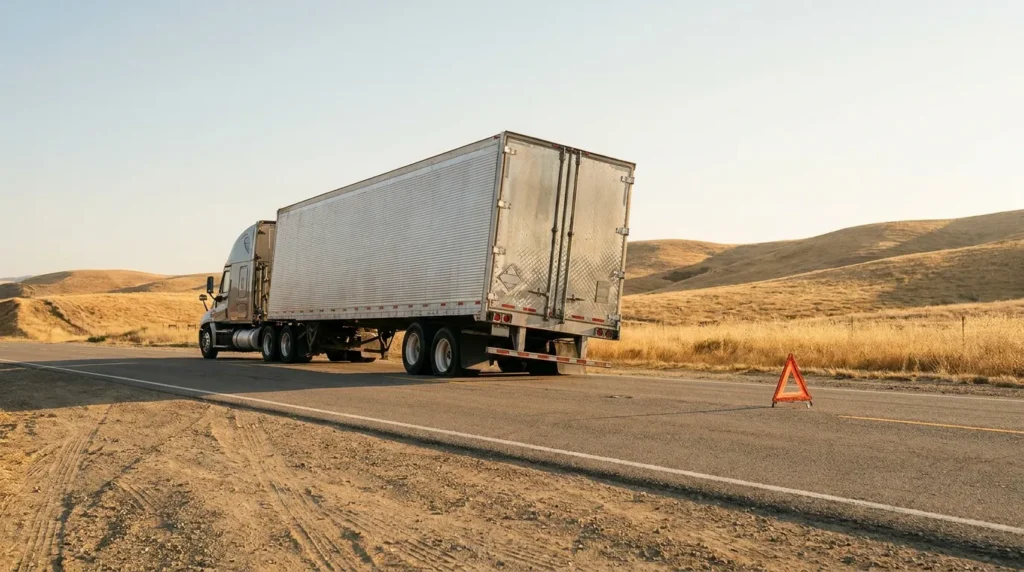
When a Truck Jackknifes, Liability Rarely Stops With the Driver
Key Takeaways: In California, liability for a jackknife truck accident may reach beyond the truck driver to the trucking company, dispatchers, shippers or third-party cargo loaders, maintenance and repair shops, intermodal chassis owners, and makers of defective parts. Trucking companies may be held responsible for their drivers’ negligence under respondeat superior, and may also be directly liable under the Vehicle Code for unlawful dispatch pressure or failed inspections. Contract clauses generally cannot shift responsibility for defects in an inspected intermodal chassis. Under California’s pure comparative negligence rule, injured victims may still recover damages even if partly at fault, but each defendant generally pays non-economic damages only up to its percentage of fault. That makes it critical to find every responsible party and their insurance coverage early. Missing the general two-year statute of limitations, or the six-month deadline for claims against public entities, can bar recovery.
After a jackknife crash, more than one party may be legally responsible. Under California law, liability may extend to the trucking company, the dispatcher who set the schedule, the shipper or third-party loader who packed the trailer, the company that maintained the brakes and coupling equipment, and in some cases the maker of a defective part. A jackknife truck accident happens when the trailer swings out at an angle to the cab. These crashes often trace back to decisions made well before the truck reached the highway. Each liable party may carry its own insurance. Serious injuries such as spinal cord damage, traumatic brain injury, and multiple fractures can cost far more than one policy will pay. Finding every responsible party early is often one of the most important steps in a truck crash claim.
If you or someone you love was hurt in a truck crash in Newport Beach or anywhere in Orange County, you can talk with a lawyer before you speak to any insurance adjuster. Bisnar Chase offers free consultations to injured truck crash victims and their families. You can reach us at 800-561-4887 or request your free case review online.
Why Trailers Jackknife and Why It Points to Fault
A jackknife usually happens when the cab and trailer stop moving together. Causes include hard braking, brakes out of adjustment, worn tires, a faulty coupling device, shifting cargo, or driving too fast for road conditions. The trailer may cut across several lanes, leaving nearby drivers almost no time to react.
Many of these causes lead back to a person or company with a legal duty. Brakes generally do not fall out of adjustment overnight, and properly secured cargo is unlikely to shift on its own. The answer often starts with the truck’s records.
The Driver and the Trucking Company
Investigators often look at the truck driver first. Speeding, following too closely, fatigue, distraction, and sudden braking on wet freeway ramps can all lead to a jackknife. But the driver’s conduct is often only part of the story.
Employer Responsibility for Drivers
California generally holds employers responsible for the negligence of employees acting within the scope of their work. This doctrine is called respondeat superior. California Civil Code § 2338 applies the same rule to principals and their agents. Disputes can arise when a carrier calls a driver an "independent contractor," but courts generally look at the actual working relationship rather than the label.
Direct Liability for Pressure and Dispatch Decisions
A trucking company can also be directly liable, apart from the driver’s own conduct. California Vehicle Code § 40001(a) makes it unlawful for an owner, or anyone who employs or directs a driver, to require or knowingly allow a vehicle to be driven on a highway in violation of the law. If a dispatcher pushed a driver to meet an unrealistic delivery window, or told the driver to keep going with known equipment problems, the company, and in some cases the dispatcher, may be liable. Federal FMCSA hours-of-service rules may also apply when fatigue is involved.
Cargo Loaders and Shippers Can Share the Blame
A poorly loaded or poorly secured trailer makes a jackknife far more likely. A load that is top-heavy, unbalanced, or loosely tied down can shift during braking or turning and push the cab out of line.
California’s cargo securement rules track federal standards. Under California Vehicle Code § 34500.3(a), the California Highway Patrol must adopt cargo securement rules consistent with the federal regulations in 49 CFR Part 393. These requirements are part of California’s motor carrier safety laws. They mainly bind motor carriers and drivers. Even so, a shipper or third-party loader that carelessly loads or secures a trailer may share fault under general negligence rules.
💡 Pro Tip: Bills of lading and loading records can show who packed and sealed a trailer. If the driver never saw the cargo before leaving, responsibility may shift toward the shipper or warehouse.
Maintenance Failures and Repair Shop Liability
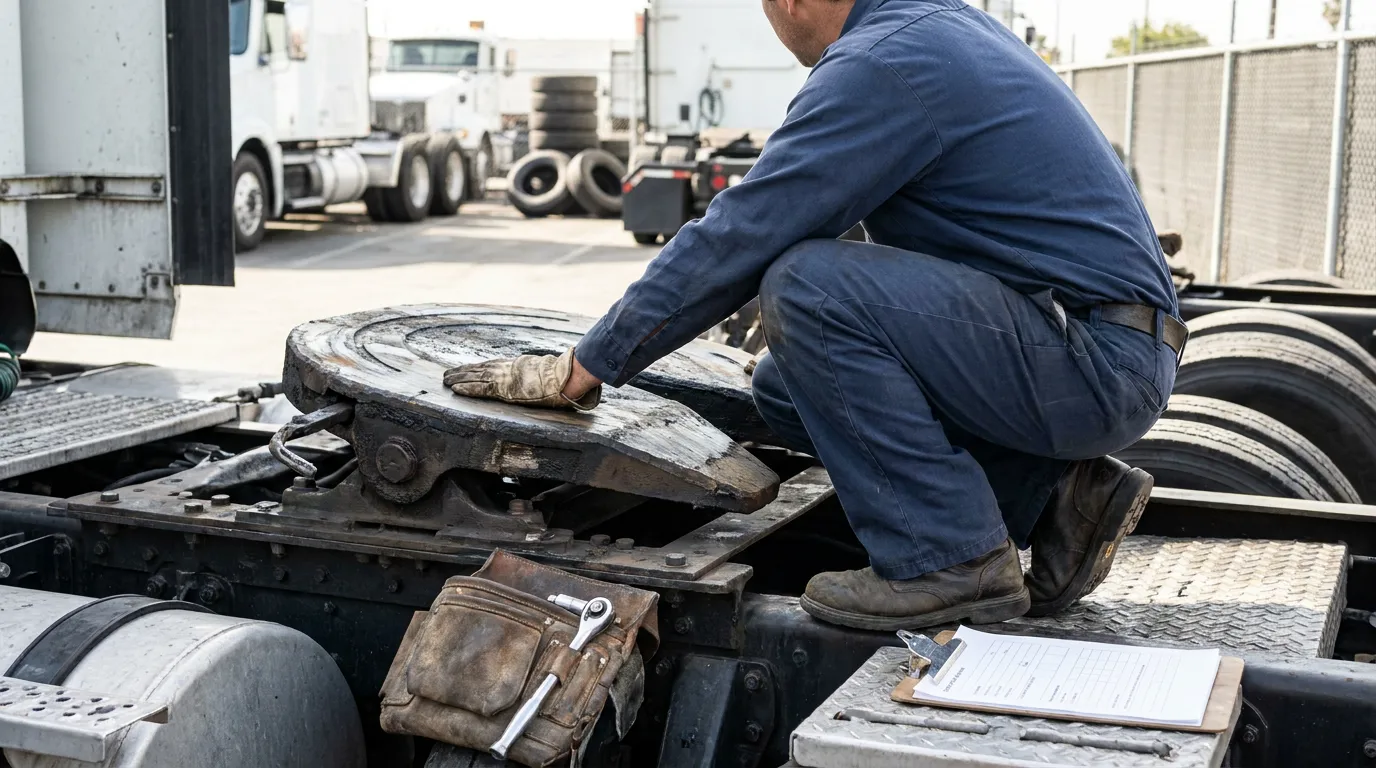
California sets specific inspection duties that often become key evidence. Under California Vehicle Code § 34505.5(a), motor carriers must have covered vehicles inspected at least every 90 days, or more often if needed for safe operation. The inspection must cover:
- Brake adjustment
- Brake system parts and leaks
- Steering and suspension systems
- Tires and wheels
- Vehicle connecting devices
Almost every item on that list relates directly to jackknife risk. Uneven brakes can lock one axle, and a worn fifth wheel or kingpin can let the trailer pivot without warning.
Driving With Known Defects
A truck generally may not return to the road until its defects are fixed. California Vehicle Code § 34505.5(b) says a vehicle may not be driven on the highway until every defect found in the inspection has been repaired, except to drive it to a repair shop. Driving a truck with known brake or coupling defects can be strong evidence of negligence. An outside repair shop that did careless work may also share the blame.
The Paper Trail Carriers Must Keep
Inspection records often show what went wrong. Under California Vehicle Code § 34505.5(c), carriers must keep inspection records at their terminals for two years, identifying the vehicle, the date and type of each inspection and repair, and including a signature confirming the repairs. Missing signatures or gaps can raise serious questions.
Intermodal Chassis and Void Indemnity Clauses
Port traffic around Long Beach and Los Angeles regularly brings intermodal chassis onto Orange County freeways. Under California Vehicle Code § 34505.9(d), hold harmless or indemnity clauses about defects in the physical condition of an inspected intermodal chassis are void as against public policy. This applies to contracts between chassis owners or lessees (or others responsible for inspection and maintenance) and motor carriers, and to contracts between motor carriers. It does not apply to chassis damage caused by the motor carrier’s negligent or willful failure to drive safely.
Who May Be Liable in a Jackknife Crash
The table below lists common defendants and the legal basis for each. Whether any is actually liable depends on the evidence.
| Potentially Liable Party | Possible Basis for Liability |
|---|---|
| Truck driver | Unsafe speed, fatigue, distraction, improper braking |
| Trucking company | Respondeat superior (see Civ. Code § 2338); unlawful direction (Veh. Code § 40001(a)); inspection failures (Veh. Code § 34505.5) |
| Shipper or third-party loader | Negligent loading or securement (see Veh. Code § 34500.3(a); 49 CFR Part 393) |
| Maintenance or repair provider | Negligent brake, tire, or coupling repairs |
| Chassis owner or lessee | Chassis defects; indemnity shields void (Veh. Code § 34505.9(d)) |
| Parts or vehicle manufacturer | Defective brakes, anti-lock systems, or couplings under product liability law |
Defendants often blame one another. Our related article explains how multiple parties can be sued after a truck crash.
What Happens When Fault Is Shared in a Jackknife Truck Accident
California follows a pure comparative negligence rule. The California Supreme Court adopted it in Li v. Yellow Cab Co. (1975) 13 Cal.3d 804. An injured person may recover damages even if partly at fault, though the award is reduced by his or her percentage of fault. Trucking insurers often argue that the injured driver braked suddenly or drove in the truck’s blind spot. Those arguments may reduce an award, but they generally do not wipe it out.
California also limits how non-economic damages are split among defendants. Under California Civil Code § 1431.2 (Proposition 51), each defendant is generally liable for non-economic damages, such as pain and suffering, only in proportion to its own share of fault. Economic damages, such as medical bills and lost wages, generally remain joint and several. If a party is left out, it may still be assigned a share of fault, and you could lose that share of your non-economic damages.
Deadlines That Can Affect Your Claim
California’s statute of limitations for personal injury is generally two years from the date of injury. This rule appears in California Code of Civil Procedure § 335.1, part of the state’s civil filing deadline rules. Property damage claims generally have a three-year deadline.
Claims against public entities follow a separate, shorter process. If a government vehicle or a dangerous public road played a role, California Government Code § 911.2 generally requires a written claim to the public entity within six months of the injury before you can sue. Missing the deadline can bar recovery, though a late-claim application may be possible in limited cases.
💡 Pro Tip: Ask a lawyer about sending evidence preservation letters right away. Electronic logging device data, dashcam footage, and engine control module data can be erased unless the carrier gets formal notice.
Frequently Asked Questions
1. Can I sue the trucking company if the driver was an independent contractor?
Possibly. Courts generally look at how much control the company actually had over the driver, not just the contract label. The carrier may also be directly liable under California Vehicle Code § 40001(a) or for failing its inspection duties under § 34505.5.
2. Do federal trucking rules apply to a crash in Orange County?
In many cases, yes. Interstate carriers must follow FMCSA regulations, and California has adopted many federal standards for intrastate carriers, including cargo securement rules under Vehicle Code § 34500.3(a).
3. What evidence matters most in a jackknife case?
Inspection and repair records under Vehicle Code § 34505.5(c) are often key. Driver logs, loading documents, dispatch messages, and the truck’s electronic data also matter.
4. Can a chassis owner avoid responsibility through its contract?
Generally, no. California Vehicle Code § 34505.9(d) voids hold harmless and indemnity clauses for defects in the physical condition of an inspected intermodal chassis. However, the rule does not cover damage caused by the carrier’s own unsafe driving.
5. Should I speak with the trucking company’s insurer?
Be careful. Adjusters may ask for recorded statements they can later use to shift blame onto you. Consider talking with a lawyer first.
Holding Every Responsible Party Accountable
A jackknife crash can involve a series of failures at the loading dock, the repair shop, and the dispatch office. California law places duties on drivers, carriers, loaders, repair shops, and chassis owners, and some of those duties generally cannot be shifted away by contract. An experienced California truck accident lawyer can help find out who failed and how those failures led to your injuries.
If a jackknife truck accident has changed your life, you do not have to sort out the liability questions alone. The team at Bisnar Chase works with injured truck crash victims throughout Newport Beach, Orange County, and Los Angeles. Call 800-561-4887 or contact us now for a free consultation.
Disclaimer: This content is for informational purposes only and is not legal advice. Every case is unique, and results may vary. Consult an attorney about your specific circumstances.