



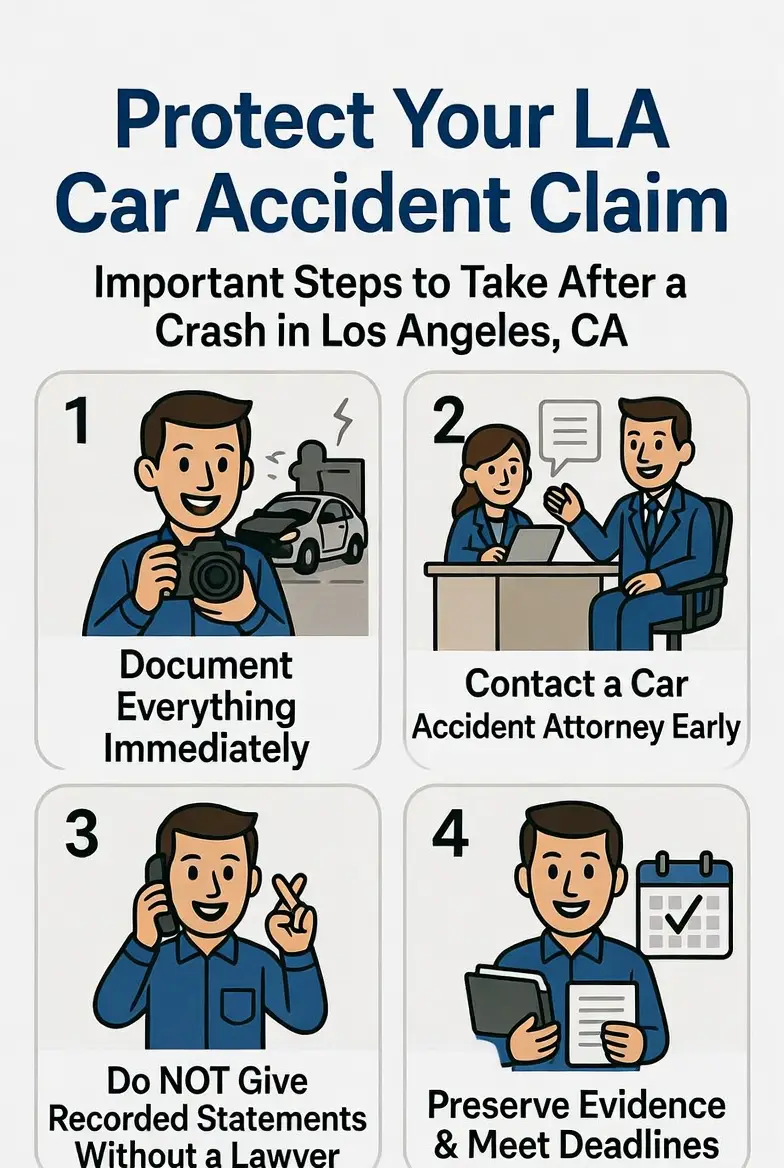
After a car accident in Los Angeles, the insurance company will launch an investigation into your claim, and understanding that process is critical to protecting your right to fair compensation.
Insurance carriers assign adjusters, collect evidence, assess fault, and calculate claim value. For injured parties across greater Los Angeles, knowing what to expect can mean the difference between a lowball offer and the recovery you deserve. California law imposes specific duties on insurers, and you have rights at every stage.
If you were hurt in a crash and need guidance on dealing with insurance after a car accident in LA, Bisnar Chase can help. Call 800-561-4887 or contact us today for a free consultation.
How the Insurance Investigation Begins After an LA Car Crash
The investigation typically starts within days of the insurer receiving notice of your claim. An adjuster is assigned to determine liability, evaluate damages, and resolve the claim for as little as possible. Under California law, the insurer’s duty to investigate arises after the insured presents a claim in compliance with the policy’s procedures.
The adjuster will gather information from multiple sources: police reports, witness contacts, medical records, and photos of vehicles and the accident scene. Car accident victims often feel overwhelmed by how quickly insurers start asking questions. That urgency is deliberate; the insurer wants to lock in your statements early, sometimes before you fully understand your injuries.
What the Adjuster Is Looking For
Insurance adjusters focus on three core questions: Who was at fault? How serious are the injuries? And how much will this claim cost? Under Cal. Civ. Code § 1714(a), everyone is responsible for injuries caused by their willful acts or lack of ordinary care. This negligence standard frames California car accident fault determination. Adjusters review traffic footage, skid marks, and police reports for any indication you may share responsibility.
California follows a pure comparative negligence rule, meaning your compensation can be reduced by your percentage of fault. If the investigation concludes you were 20% responsible, they reduce your payout by that amount. Adjusters actively seek evidence to assign partial blame.
💡 Pro Tip: Never give a recorded statement to the other driver’s insurance company without first speaking to an attorney. Adjusters are trained to ask questions designed to reduce your claim.

Key Evidence the Insurance Company Will Collect
The strength of your car accident claim depends largely on available evidence. California courts advise injured parties to preserve key evidence: photos, medical bills, witness statements, and police reports. The insurance company collects the same materials, but their goal is to minimize payout, not maximize your recovery.
Insurers typically gather:
- Police accident reports and citations
- Photos, dashcam footage, and video of the crash scene, vehicle damage, and road conditions
- Medical records, hospital bills, and treatment notes
- Witness contact information and statements
- Your driving history and prior claims history
Build your own evidence file simultaneously. Don’t rely on the insurance company to fairly document your losses.
💡 Pro Tip: Start a dedicated folder for your accident claim the same day the crash happens. Include text message screenshots, rideshare receipts for medical appointments, and a written journal of your pain levels and limitations.
How Fault Is Determined in a California Car Accident Investigation
Fault determination is the centerpiece of any insurance investigation. The adjuster weighs all evidence against the negligence standard in Cal. Civ. Code § 1714(a), which imposes a duty to exercise ordinary care to avoid injuring others. If that duty is breached and causes harm, the injured party may seek compensation for medical expenses, lost wages, and pain and suffering.
Comparative Fault and Its Impact on Your Claim
California’s pure comparative fault system means you can still recover damages even if partially at fault, but your recovery will be reduced proportionally. Insurance investigators seek evidence that you contributed to the collision, speeding, distracted driving, or failure to wear a seatbelt. This is why preserving your own evidence and having legal counsel review the insurer’s findings is critical.
| What the Insurer Investigates | Why It Matters to Your Claim |
|---|---|
| Police report and citations | Establishes initial fault assessment and traffic violations |
| Vehicle damage patterns | Helps reconstruct how the collision occurred |
| Medical records and timing | Links injuries directly to the accident |
| Witness statements | Corroborates or contradicts driver accounts |
| Prior medical history | Used to argue that injuries were pre-existing |
| Your recorded statements | Can be used to assign comparative fault |
💡 Pro Tip: If the police report contains errors, you may be able to request a correction or supplement. Ask your attorney about amending inaccurate reports in Los Angeles County.
Common Insurance Bad Faith Tactics to Watch For
Not every insurer plays fair, and California law holds insurance companies accountable when they don’t. Every insurance policy contains an implied covenant of good faith and fair dealing. When an insurance company violates this covenant, it may be liable for damages beyond the original claim value. Recognizing insurance bad faith tactics early helps protect your rights.
Lowball Offers and Delay Strategies
One common bad-faith tactic is to offer settlements significantly below the actual claim value. These lowball offers often come quickly, before you finish medical treatment or understand your long-term prognosis. The insurer may also request excessive documentation to create delays or discourage you from pursuing fair compensation.
Failure to properly investigate is another recognized form of bad faith. Under California case law, an insurer cannot reasonably deny payment without fully investigating. If your adjuster ignores calls, delays paperwork, or refuses to explain a denial, these are warning signs.
What You Can Do About Bad Faith
Document every interaction with the insurance company. Save emails, note phone call dates and times, and keep copies of every document submitted. If you believe the insurer is acting in bad faith, an experienced car accident attorney can evaluate the situation and advise you on options, which may include filing a bad faith claim.
💡 Pro Tip: If an adjuster pressures you to accept a quick settlement before completing medical treatment, that’s a warning sign. You’re under no obligation to accept the first offer.
Damages You Can Pursue After a Car Accident in Los Angeles
California personal injury law allows compensation for a wide range of losses caused by a car accident. When evaluating your claim, consider all harm: medical bills, lost wages, ongoing treatment costs, emotional harm, and future problems stemming from the injury.
Medical expenses often form the largest component: emergency room visits, surgeries, physical therapy, prescription medications, and future care. Lost wages cover missed paychecks and reduced earning capacity if injuries limit your ability to work. Non-economic damages, such as pain and suffering, are harder to quantify but can yield substantial recoveries.
Protecting Your Claim: Steps to Take After an LA Car Accident
Actions you take immediately after a crash directly affect the outcome of the investigation. Check whether your policy requires you to report the accident. If someone accuses you of causing the injury, notify your carrier promptly, even if you believe you were not at fault.
Meeting California’s Filing Deadlines
You generally have two years from the injury date to file a personal injury lawsuit in California, but shorter deadlines may apply. Claims against government entities require an administrative claim within six months under the California Tort Claims Act (Gov. Code § 911.2). Missing a deadline can permanently bar your claim. Visit Bisnar Chase for more guidance on protecting your legal rights after a crash.
💡 Pro Tip: Even if settlement negotiations are ongoing, be mindful of the statute of limitations. Insurance companies may deliberately drag out negotiations until your window to file closes.
Why a Car Accident Attorney in Los Angeles Matters During the Investigation
Legal representation during the insurance investigation levels the playing field
Adjusters handle hundreds of claims each year and work for the insurance company, not for you. A Los Angeles personal injury attorney experienced in car accidents can handle communications with the insurer, ensure proper documentation, and push back against bad faith tactics.
An attorney can also help you understand what your claim is truly worth before agreeing to a settlement
Many injury victims accept early offers because they’re unsure of their case’s full value. Legal counsel can assess your medical prognosis, calculate future damages, and negotiate from strength.
Frequently Asked Questions
1. How long does a car accident insurance investigation take in California?
The timeline varies depending on crash complexity, injury severity, and cooperation. Simple claims may resolve in weeks, while serious injury cases with disputed fault can take months. California law requires insurers to acknowledge claims promptly.
2. Can I handle the insurance investigation without a lawyer?
You have the right to handle your own claim, but doing so carries significant risk. Insurance adjusters are trained negotiators protecting the company’s bottom line. Without legal counsel, you may not recognize bad faith tactics, undervalue damages, or inadvertently make statements that hurt your case.
3. What should I avoid saying to an insurance adjuster?
Avoid apologizing, speculating about fault, or downplaying injuries. Phrases like “I’m fine” or “it was partly my fault” can be used against you. Stick to basic facts and let your attorney handle detailed discussions.
4. What if the insurance company denies my claim?
A denial doesn’t mean your case is over. Insurers sometimes deny claims based on incomplete investigations. Under California law, an insurer that fails to properly investigate before denying may be acting in bad faith. You may have the right to appeal, file a complaint with the California Department of Insurance, or pursue legal action.
5. Does California’s comparative fault rule affect my settlement?
Yes. If the investigation determines you share responsibility, your compensation may be reduced by your percentage of fault. However, even if partially at fault, you can still recover damages under California’s pure comparative negligence system. An attorney can help challenge unfair fault determinations.
Take Control of Your Car Accident Claim
Understanding the insurance investigation process puts you in a stronger position to protect your rights and pursue deserved compensation. From the moment the adjuster is assigned through final settlement negotiations, every step matters. California law provides important protections for injured parties, but those protections only work if you know they exist and act on them.
If you were injured in a car accident in Los Angeles, Orange County, or anywhere in Southern California, Bisnar Chase is here to help. Call 800-561-4887 or reach out to our team for a free consultation. Contact Bisnar Chase today.
Related: Should Injured Drivers Seek Medical Care After a Newport Beach Crash?