


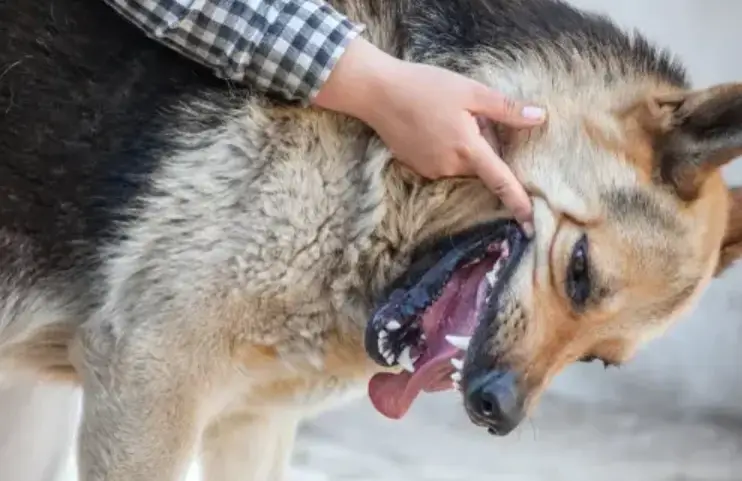
California dog bite strict liability generally makes a dog’s owner answer for a bite, even without proof of carelessness. If you or your child was bitten, a Newport Beach personal injury attorney can explain how the rule applies to your claim.
California imposes strict liability on dog owners, making it one of the best states for people who have been bitten. Under California Civil Code § 3342(a), the owner of any dog is liable for damages suffered by any person bitten while in a public place or lawfully in a private place, regardless of the dog’s former viciousness or the owner’s knowledge of such viciousness. Unlike “one-bite” states, California doesn’t require proving the dog had a dangerous history.
A person is lawfully on private property if they are there by express or implied invitation or are performing a legal duty. This protects mail carriers, delivery workers, guests, and service providers. However, the statute generally doesn’t apply if you were trespassing.
Note that California Civil Code § 3342 imposes strict liability only on the dog’s owner. If someone other than the owner had custody or control of the dog at the time, a claim against that person would typically be pursued under a negligence theory. California Civil Code § 3342(b) carves out an exception for governmental agencies using dogs in military or police work.
When a strict liability bite case goes to trial, the questions are narrow. The jury must answer whether the defendant’s dog bit the plaintiff, whether the plaintiff was lawfully on the property, and what damages the plaintiff suffered.
Don’t drop the idea of a claim just because you may have played a part in what happened. California’s pure comparative negligence rule allows recovery of damages reduced only by your percentage of responsibility.
One-Bite Rule Versus California’s Strict Liability Statute
California follows a strict liability statute regarding dog bites, differing from the “one bite rule” followed in some other jurisdictions. California Civil Code Section 3342 imposes strict liability on dog owners for any injuries caused by their dog biting someone, regardless of the dog’s prior behavior or the owner’s knowledge of its aggressive tendencies. This means that the owner is liable for damages caused by their dog’s bite, even if the dog has never bitten anyone before, regardless of the owner’s fault or negligence in preventing the attack.
The one-bite rule followed in certain states implies that a dog owner may only be held liable for injuries caused by their dog if they were aware of the dog’s prior aggressive behavior or had knowledge that the dog was dangerous. Essentially, the owner is given one free pass, absolving them from liability until the dog exhibits aggressive behavior or bites someone.
In contrast, California’s strict liability statute prioritizes victim protection by holding dog owners accountable for injuries caused by their pets’ actions, promoting a safer environment, and encouraging responsible pet ownership. This statute allows victims of dog bites to pursue compensation for their injuries without the burden of proving the dog’s prior viciousness or the owner’s negligence.
That does not mean every claim is automatic. Additionally, if the dog was provoked, the owner may use this as a partial or full defense, depending on the circumstances. Dog owners may raise assumption-of-risk defenses, applicable to certain professionals, such as veterinarians, whose occupations carry an inherent bite risk.
What Makes a Dog Bite Claim Different From a Dog Attack Claim
There is an important legal distinction in California between a dog bite and a dog attack that does not involve a bite. California Civil Code § 3342’s strict liability protection applies specifically to bites. If a dog knocks you down, scratches you, or causes injury without actually biting, the strict liability statute may not apply.
In Drake v. Dean (1993) 15 Cal.App.4th 915, the court held that negligence may be based on characteristics of the animal which, although not abnormal to its class, create a foreseeable risk of harm.
A bite does not have to be deep to count. The statute does not require broken skin, as confirmed in Johnson v. McMahan (1998) 68 Cal.App.4th 173. Even a bite through clothing, causing bruising, nerve damage, or soft tissue injury, can support a valid claim.
This distinction affects the legal strategy behind your case. A bite claim and a non-bite injury claim involve very different burdens of proof, even when the same dog caused the harm. Even if you are unsure whether your injury qualifies as a “bite” under the legal definition, consult with a dog bite attorney. Many injuries involve both bite and non-bite contact, and an attorney can evaluate which legal theories apply.
How Long Do You Have to File a Dog Bite Lawsuit in California?
California’s statute of limitations for personal injury claims, including dog bite cases, is generally two years from the date of injury under California Code of Civil Procedure § 335.1. This deadline applies regardless of the legal theory you pursue and applies to first-time dog bite liability cases just as it does to cases involving dogs with a known history.
Missing this deadline can mean losing your right to pursue compensation entirely. While certain limited exceptions may toll or extend the filing period, courts generally interpret these strictly.
Additionally, if the dog’s owner is a government employee or agency, you may be required to file an administrative claim within six months of the bite. The California Courts self-help guide provides general information about civil lawsuit deadlines.
Limited exceptions exist, such as tolling provisions for minors under California Code of Civil Procedure § 352, which generally pause the statute until the minor turns 18. Parents can learn more about dog bite claims brought for children.
Acting quickly allows your attorney to preserve evidence, identify witnesses, and build a stronger case. Our guide walks through reporting a bite to your county’s animal services agency.
Have a doctor look at the wound, however small it seems, and talk with a lawyer soon after. Some dog bite injuries, including infections and nerve damage, may not become fully apparent for days or weeks.
Civil Liability Versus Criminal Charges for Dog Owners
Everything above concerns civil liability, which decides whether an owner may have to pay for the harm a bite caused. The injured person, not the government, brings that claim.
Beyond civil liability, a dog owner may face criminal charges in cases of gross negligence or recklessness. For example, if an owner knowingly keeps a dangerous dog without proper precautions and the dog fatally attacks someone, they could be charged with involuntary manslaughter or face other criminal charges.
In such situations, prosecutors typically consider the severity of the injuries, the dog owner’s knowledge of the dog’s aggressive tendencies, any prior incidents, and whether the owner took reasonable steps to prevent the attack when determining whether to press criminal charges. That is a very different question from the civil one, where the owner’s knowledge usually does not matter for a bite.
The two cases also have different goals. A criminal case aims to punish conduct and protect the public, while a civil claim aims to pay the injured person for medical bills, lost income and other losses. A criminal case generally does not pay those losses, so a bite victim’s own claim still matters even when charges are filed.
The reverse is true as well. A civil claim does not usually depend on whether prosecutors bring charges. An owner who is never charged with a crime may still be responsible for the harm a bite caused.
Owners may face legal action requiring confinement, muzzling, or even euthanasia if the animal poses an ongoing threat. Our post on whether negligent dog owners are being held accountable looks at how these cases are handled.
What Damages Can You Recover After a Dog Bite?
For victims who suffer scarring, disfigurement, or injuries requiring plastic surgery, non-economic damages can be substantial.
Parents of children who are bitten may also pursue compensation for emotional trauma and long-term psychological impact. Children may need ongoing reconstructive procedures, and the psychological impact can last for years. Our post on the psychological effects of dog attacks on children looks at this harm more closely.
Looking past the owner to every party who might share the blame can raise what you recover. The dog owner is typically the primary defendant, but liability may extend to landlords who had actual knowledge of a tenant’s dog’s vicious propensities and ability to control the animal’s presence or to dog walkers who had custody of the animal. Landlord liability is based on negligence or premises liability theories, not strict liability under § 3342.
A lawyer who handles bite cases can sort out which people or businesses may be responsible. Insurance policies, such as homeowner’s or renter’s insurance, often cover dog bite claims, but coverage may exclude specific breeds or incidents involving prior aggression. In 2024, 2,417 dog bite liability claims were filed in California, the most of any state, with a national average cost of approximately $69,272 per claim, according to the Insurance Information Institute and State Farm, which would put California’s estimated total at roughly $167 million statewide.
Keep detailed records of every medical appointment, prescription, and therapy session related to your dog bite. Good records back up both the financial losses and the personal harm in your claim. Our post on what to do after a dog bite covers the first steps.

Brian Chase
Articles, blogs, and content have been reviewed by our legal in-house staff prior to publishing. Brian Chase is the managing partner of Bisnar Chase Personal Injury Attorneys, LLP. He is the lead trial lawyer and oversees cases handling dangerous and defective products that injure consumers. Brian is a top-rated injury attorney with numerous legal honors and awards for his work relating to auto defects and dangerous products. His firm has recovered over $1B for its clients. Brian is a frequent speaker for CAOC, Dordick Trial College, and OCTLA, covering personal injury trial techniques.