


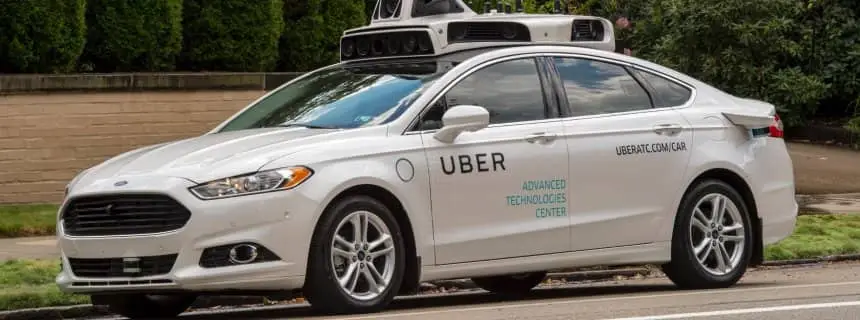
The Verge reports the National Transportation Safety Board’s (NTSB) finding that this defect may have played a significant role in a fatal March 2018 pedestrian accident in Tempe, Arizona. In that case, the NTSB found that the SUV did not start to stop until about a second before impact, simply because it wasn’t designed to recognize a pedestrian outside a crosswalk.
Uber’s Failure to Recognize Pedestrians
The NTSB’s investigation also indicated that multiple factors contributed to the crash. The pedestrian would probably be alive if Uber had not blocked its car’s built-in automatic emergency brake. Another huge problem was the software’s inability to identify a person in the car’s field of view and to predict how that person would move into the vehicle’s path.
The NTSB report states that Uber’s system essentially perceived the pedestrian as a vehicle, a bicycle, and an “unknown object” seconds before the impact.
This revelation that Uber failed to account for jaywalkers has fueled long-standing objections from critics and safety advocates who have raised concerns about companies like Uber rushing to deploy driverless vehicles, which are not ready for public streets.
These findings certainly cast doubt on automakers, who appear eager to lead on groundbreaking technology but are not doing enough to strengthen safety measures as they continue to test these vehicles in the real world.
Not Ready for Public Streets
As Jason Levine, executive director of the Center for Auto Safety, stated, even the most inexperienced human driver knows to expect that people sometimes walk outside of crosswalks. Levine says this type of testing on public roads, which “essentially chooses to ignore the realities of how people interact with public infrastructure,” is hazardous.
Our California auto defect attorneys agree with safety advocates such as Levine that we need more federal regulation regarding driverless cars. It took the death of that pedestrian in Arizona for Uber to make “critical program improvements,” so the system is now able to handle scenarios such as jaywalking.
But we don’t know what else they are withholding. What else are these vehicles failing to do in real-life situations? If the technology is not ready, companies should not use the public as guinea pigs. It’s unconscionable.

Brian Chase
Articles, blogs, and content have been reviewed by legal in-house staff. Brian Chase is the managing partner of Bisnar Chase Personal Injury Attorneys, LLP. He is the lead trial lawyer and oversees cases handling dangerous and defective products that injure consumers. Brian is a top-rated injury attorney with numerous legal honors and awards for his work relating to auto defects and dangerous products. His firm has recovered over $1B for its clients. Brian is a frequent speaker for CAOC, Dordick Trial College, and OCTLA, covering personal injury trial techniques.